

Why Tap Selection for CNC is Critical?
Date:2026-01-20Number:16331. The Five Fundamental Differences Between CNC and Manual Tapping
Before diving into tap types, understand the unique challenges of the CNC environment:
Synchronization Demand: CNC tapping requires perfect synchronization between spindle rotation and Z-axis feed (via rigid tapping or a tension-compression holder). Any mismatch causes pitch error or tap breakage.
Cooling & Chip Evacuation: High-speed continuous cutting generates significant heat and chips. Poor chip evacuation is the leading cause of CNC tap failure.
Unattended Operation: The machine operator cannot "feel" the cut, making tool reliability paramount.
Material Variety: A modern CNC may process aluminum, stainless steel, and titanium in a single day, requiring adaptable tools.
Cost Considerations: The true metric is total cost—not just tap price, but also tool life, downtime, and scrap rate.
2. Key Features of CNC-Optimized Taps
1. Optimized Geometry
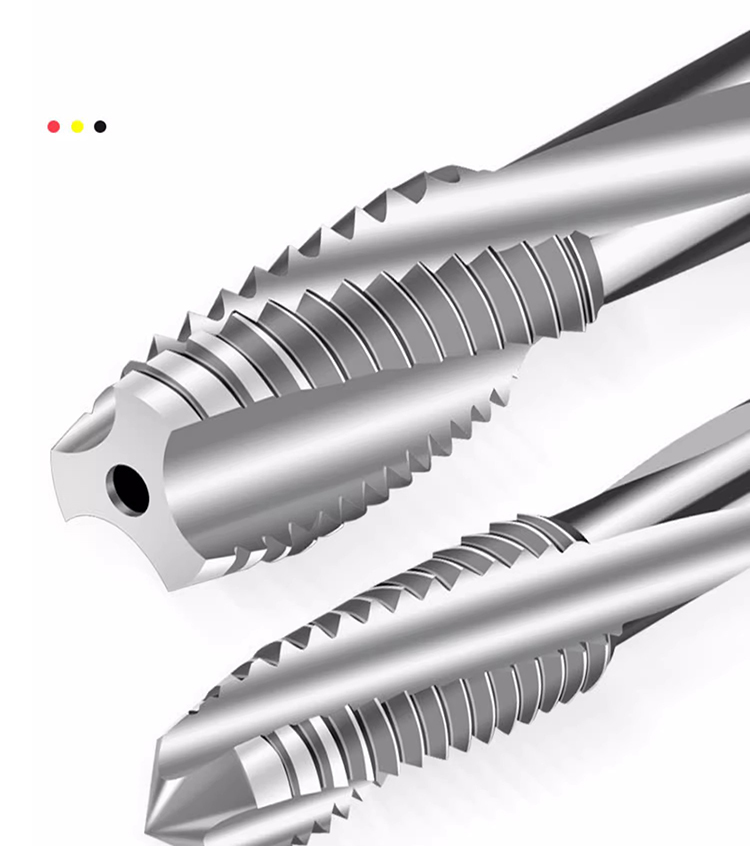
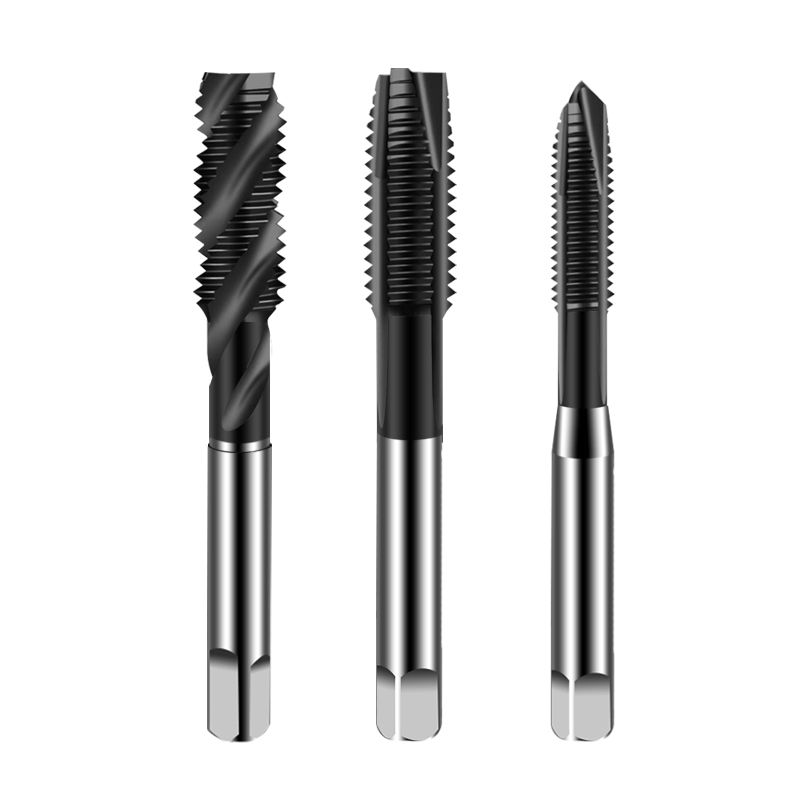
Spiral Flute Taps: Often the first choice for CNC. The helical flutes act like a screw conveyor to pull chips up and out of the hole, solving chip evacuation in blind holes. Typical helix angles are 30-45°. A higher angle improves chip removal but slightly reduces edge strength.
Best for: Blind holes, stringy materials (stainless steel, aluminum, low-carbon steels).
Spiral Point Taps (Gun Taps): Chips are pushed forward, out the bottom of the hole. This requires a through-hole but produces excellent thread finish as chips don't scratch the finished threads.
Best for: Through-holes, high-finish requirements, brittle materials like cast iron.
Straight Flute Taps: Limited use in CNC, primarily for short-chip materials (cast iron, brass) or where maximum edge strength is critical.
2. Material & Coatings: Beyond HSS
Powder Metallurgy HSS (PM-HSS): Offers more uniform carbide distribution than conventional HSS, increasing wear resistance by 30-50%. The baseline for high-performance CNC taps.
Solid Carbide Taps: Used for hard materials (HRC>45), high-silicon aluminum, or high-volume production. Expensive, but offer unmatched life and speed in difficult materials.
Advanced Coatings:
TiN (Titanium Nitride): General-purpose, reduces friction.
TiCN (Titanium Carbo-Nitride): Harder and more wear-resistant than TiN, excellent for stainless and alloy steels.
TiAlN (Titanium Aluminum Nitride): Exceptional heat resistance, ideal for high-speed or near-dry tapping.
Proprietary Coatings: Brand-specific coatings like "SLB," "TIN-HC," etc., optimized for particular materials.
3. Tolerance Class: What Do You Really Need?
ISO 1 / H1: Standard tolerance for most applications.
ISO 2 / H2 (Most Common): Slightly oversized (0.0004-0.0006 inches) to account for plating or post-heat-treat shrinkage.
ISO 3 / H3: For applications requiring a larger final thread size, like after thermal coating or in soft materials.
Pro Tip: For roll form (thread forming) taps, size selection is more critical and requires precise calculation of material displacement.
3. Material-Specific CNC Tap Selection (Practical Guide)
For Stainless Steel (303, 304, 316)
Challenges: Work hardening, gummy chips, poor heat conduction.
Solutions:
Choose a high-helix (45°+) spiral flute tap for absolute chip control.
Use TiCN or a stainless-steel-specific coating.
Reduce SFM (e.g., HSS: 10-15 SFM, Carbide: 30-50 SFM).
Example: OSG EXOTAP or Emuge Tappex series.
For Aluminum (6061, 7075)
Challenges: Material adhesion, built-up edge, hole size dilation.
Solutions:
Sharp cutting edge, highly polished finish or Al-specific coating.
Use spiral point taps for through-holes (best finish), spiral flute for blind holes.
Consider uncoated, polished taps.
High speeds possible (Carbide: 200+ SFM).
For Titanium Alloys (Ti-6Al-4V)
Challenges: High strength, very poor heat conduction, chemical reactivity.
Solutions:
High-quality solid carbide taps are essential.
Low-helix or straight flute design for strength.
Very low SFM (15-25 SFM), abundant coolant (preferably high-pressure through-tool).
Consider skip-tooth taps to reduce contact area and torque.
4. CNC Tapping Process Optimization: Parameters & Techniques
1. Tapping Cycle Selection
Rigid Tapping (G84): Standard on modern CNCs. Requires precise spindle synchronization. Eliminates need for costly tension-compression holders, but machine dynamic response must be good.
Tapping with Tension-Compression Holder: Traditional method for older machines, allows for minor synchronization errors.
2. Cutting Parameter Calculation
Speed (RPM) Formula: RPM = (SFM x 3.82) / Tap Diameter (inches)
*Example: 1/4-20 tap in aluminum at 100 SFM*
RPM = (100 x 3.82) / 0.250 = 1528 RPM
Feed Rate MUST match thread pitch exactly: Feed (IPM) = RPM x Pitch (inches)
*Same example, pitch is 1/20 = 0.050 inches*
Feed = 1528 x 0.050 = 76.4 IPM
3. Coolant Strategy
High-Pressure Through-Tool Coolant (>500 psi): Ideal. Effectively evacuates chips and cools, especially in blind/deep holes.
Flood Coolant: Ensure ample flow directed into the hole.
MQL (Minimum Quantity Lubrication): Suitable for some aluminum and general machining; clean and environmentally friendly.
Warning: Avoid chlorine-containing coolants with titanium to prevent stress corrosion cracking.
5. Advanced Solutions for Special Challenges
1. Deep Hole Tapping (Depth > 3x Diameter)
Use parabolic flute taps for increased chip cavity volume.
Employ peck tapping cycles that fully retract to break and clear chips.
Consider undersized taps to reduce friction.
2. Hard Material Tapping (HRC 45-60)
Solid carbide or CBN (Cubic Boron Nitride) taps are the only option.
Extremely low SFM (5-15 SFM).
Evaluate thread milling as an alternative process.
3. High-Volume Production Optimization
Invest in indexable tap systems (e.g., by Emuge, Gühring). High initial cost, but only the inexpensive insert is replaced, offering long-term savings.
Implement preventive replacement schedules based on thread count, not tool failure, to avoid unplanned downtime.
6. Tap Maintenance & Troubleshooting Quick Reference
| Problem | Likely Cause | Solution |
| Early Tap Breakage | Speed too high / Feed sync error | Check and calibrate tapping cycle synchronization |
| Undersized Thread | Tap worn or wrong tolerance class | Replace tap; verify H2/H3 selection |
| Poor Chip Evacuation | Helix angle too low or wrong flute | Switch to a high-helix spiral flute tap |
| Rough Thread Surface | Worn cutting edge / insufficient coolant | Replace tap; increase coolant flow/pressure |
| Tap Seizure (breaks on reversal) | Chip packing / no clearance in blind hole | Ensure adequate blind hole depth; use correct chip-evacuating tap |
Conclusion: Invest in Knowledge, Not Just Tools
Selecting taps for your CNC machining center is not a simple commodity purchase—it's a process engineering decision. The most expensive tap isn't always the most economical, and the perfect tap for today's material may not suit tomorrow's job.
Recommended Action Plan:
Start with a Benchmark Test: For your 2-3 most common materials, test two different tap types/brands. Record life, quality, and cycle time.
Collaborate with Your Supplier: A good tooling supplier provides material-specific parameters and may offer onsite support.
Standardize: Once you find the best combination, standardize it across your shop to reduce setup time and errors.
By following this guide, you can reduce the frustration of broken taps and scrapped parts, transforming the tapping operation from a potential failure point into an efficient, reliable pillar of your CNC process. Improved thread quality, reduced downtime, and lower total cost are the competitive advantages of professional manufacturing.
Disclaimer: The parameters provided are general starting points. Always conduct tests and make adjustments based on your specific machine condition, material batch, and coolant setup. Always prioritize the latest official recommendations from the tap and machine tool manufacturer.
person: Mr. Gong
Tel: +86 0769-82380083
Mobile phone:+86 15362883951
Email: info@jimmytool.com
Website: www.jimmytool.com


