

Carbide Burr for Aluminum: Which Types, Cuts & Sizes Actually Work Best
Date:2026-03-11Number:1784If you've ever grabbed a standard carbide burr and tried to shape aluminum with it, you know the frustration: within seconds, the flutes are packed with gummy aluminum, the tool stops cutting, and you're left with a scorched, rough surface. The problem isn't your technique. It's the wrong tool. Aluminum is one of the trickiest metals to work with rotary burrs — it's soft, sticky, and quick to heat up. The right carbide burr makes all the difference.
In this guide, we break down exactly which carbide burr bits for aluminum work best, why clogging happens (and how to stop it), the correct RPM settings for your die grinder, and which shapes to reach for depending on your job. We also cover how the same logic applies when choosing the best die grinder bits for metal more broadly.
Most rotary cutting tools are engineered with steel or cast iron in mind. Those metals are hard enough that chips break off cleanly and fall away. Aluminum behaves completely differently.
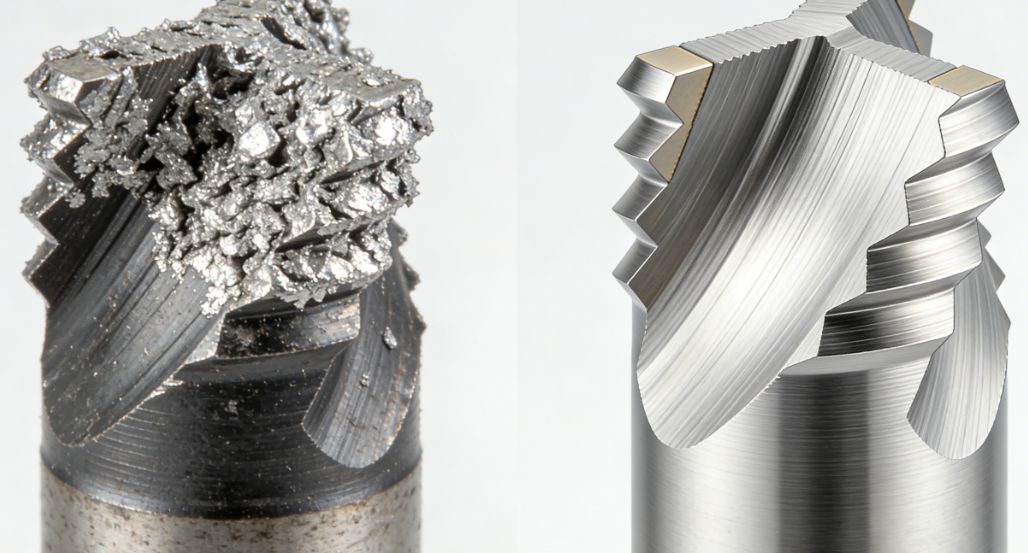
Because aluminum is soft and has a low melting point, friction from a spinning burr can cause it to partially melt and weld itself directly into the burr's flutes. Machinists call this loading or clogging — and once it starts, the burr effectively stops cutting. Instead of removing material, you're dragging a glob of your own workpiece across the surface.
The solution is using burrs specifically designed for non-ferrous materials, combined with the right speed, pressure, and lubrication. Let's start with the most important decision: cut type.see our deep-dive on carbide drill bits for aluminum for alloy-specific guidance.

Carbide burrs come in several cut configurations, and not all of them perform equally well on aluminum. Here's what actually matters:
Aluma Cut burrs — sometimes called NF (non-ferrous) or single-flute burrs — are purpose-built for aluminum, copper, brass, and other soft metals. Their defining feature is a specialized flute geometry with wide chip clearance channels that actively eject aluminum chips before they can pack in and clog.
These are the burrs experienced metalworkers and engine builders reach for first when working aluminum. They cut aggressively, stay clean, and produce far less heat than standard burrs on soft metals.
Best for: Wide flute spacing prevents aluminum from packing in
Stands out because: Fast material removal without gumming
Typical uses: Automotive porting, casting cleanup, general aluminum shaping
our guide on cobalt vs carbide drill bits breaks down the real-world differences.
Single-cut burrs have teeth that spiral in one direction. On aluminum, they produce a smooth, controlled cut with minimal chatter. They remove material more slowly than Aluma Cut burrs, but they deliver a noticeably finer surface finish — making them the go-to for finishing passes and detail work.
Single-cut burrs generate less heat, which is critical for thin aluminum
They're less aggressive, so they're easier to control on small or delicate pieces
Use with a wax lubricant for best results — simply touch the stationary burr to a block of beeswax before starting
Double-cut burrs have a cross-hatch tooth pattern that removes material quickly on harder metals. On aluminum, they work — but only if you manage your speed and keep them lubricated. Without those precautions, the finer tooth geometry traps aluminum chips faster than single-cut or Aluma Cut options.
That said, double-cut burrs are an excellent all-arounder if you're working with a mix of metals. At 60–70% of your die grinder's maximum speed with consistent lubrication, they'll handle aluminum reasonably well for light to medium stock removal.check our guide to the best drill bits for hardened steel for a dedicated breakdown.
Here's a quick visual comparison of how the main cut types stack up on aluminum:
|
Burr Type |
Best For |
Material Removal |
Clogging Risk |
Finish Quality |
|
Aluma Cut (NF) |
Rough shaping, bulk removal |
Fast |
Very Low |
Medium |
|
Single-Cut |
Finishing, detail work |
Slow |
Low |
Very Smooth |
|
Double-Cut |
General purpose |
Medium-Fast |
Medium |
Medium-Fine |
|
Diamond-Cut |
Curved surfaces, ports |
Medium |
Low |
Fine |
Cut type tells you how the tool removes material. Shape determines where and how you can apply it. Matching the right shape to your job is what separates a clean result from a frustrating one.
Cylinder (barrel): Ideal for flat surfaces, squaring slots, and cleaning up machined faces. The most common all-purpose shape for aluminum work.
Ball-nose (ball end): Best for creating or blending curved contours, cavities, and radius transitions. Essential for automotive porting.
Oval (egg): A versatile middle ground — great for chamfering, deburring, and working inside recesses with a curved floor.
Flame / taper: Perfect for getting into tight corners, grooves, and V-shaped recesses.
Inverted cone: Used for spotfacing bolt holes, countersinking, and clean edge preparation on aluminum plate.
For most automotive and general aluminum fabrication work, start with a 1/4" cylinder Aluma Cut burr and a 1/4" ball-nose as your two primary tools. Add a flame burr when you need access to angles or tapered features.
When people search for the best die grinder bits for metal, they're often working across multiple materials — not just aluminum. The right bit depends heavily on what you're cutting. Here's a practical breakdown:
|
Metal |
Best Burr Cut |
Shank Size |
RPM Range |
Lubrication? |
|
Aluminum |
Aluma Cut / Single-Cut NF |
1/4" |
8,000–18,000 |
Yes — wax or WD-40 |
|
Mild Steel |
Double-Cut |
1/4" or 1/2" |
5,000–10,000 |
Optional |
|
Stainless Steel |
Double-Cut (fine) |
1/4" |
3,000–6,000 |
Yes — cutting oil |
|
Cast Iron |
Double-Cut or Single-Cut |
1/4" or 1/2" |
5,000–8,000 |
Dry preferred |
|
Copper/Brass |
Single-Cut NF |
1/4" |
10,000–20,000 |
Yes — wax |
Key insight: Uncoated tungsten carbide burrs are almost always the best choice for aluminum. Coatings like TiN (titanium nitride) or TiAlN are engineered for steel and can actually create adhesion issues on non-ferrous metals. If you're buying carbide burr bits specifically for aluminum, skip the coated options.
Even the best Aluma Cut burr will underperform if used incorrectly. Here's the practitioner's playbook for clean, clog-free aluminum work:
This is where most beginners go wrong. Higher RPM does not mean faster cutting on aluminum — it means more heat, more clogging, and a ruined burr. Aluminum requires moderate, controlled speeds.
|
Burr Diameter |
Recommended RPM |
Notes |
|
1/8" or smaller |
15,000 – 25,000 RPM |
Fine detail work, tight access |
|
3/16" – 1/4" |
10,000 – 18,000 RPM |
Most common range for general use |
|
3/8" – 1/2" |
5,000 – 12,000 RPM |
Bulk removal, wider passes |
|
Over 1/2" |
3,000 – 6,000 RPM |
Heavy shaping; use light pressure |
Lubrication is non-negotiable for aluminum burr work. The goal is to create a barrier that prevents aluminum from welding to the cutting edges. Here are the most effective options, ranked by performance:
Beeswax or paraffin wax (best overall): Melts slightly into flutes before use; re-apply by touching stationary burr to block every few minutes. Excellent for shop use.
Transmission fluid (second choice): Better penetration into tight flutes; prevents loading during extended cuts.
WD-40 (good backup): Widely available and effective for light work, but needs more frequent reapplication.
Aluminum cutting fluid: Specialty formulations designed for aluminum machining — excellent for production environments.
Hold the burr at a 15–30 degree angle to the work surface. This angle lets chips clear away naturally and prevents the burr from digging in. Use light, consistent pressure — let the tool cut rather than forcing it through the material. If you need to press hard, your RPM is too low or the burr is starting to clog.
Aluminum heats up fast. Work in 15–30 second intervals on any one area, then move to a different section or pause briefly. This prevents thermal buildup that causes aluminum to smear rather than cut cleanly.
When clogging does occur, stop immediately. Clean the burr with a brass wire brush — soft enough not to damage carbide, firm enough to clear packed aluminum. Never continue working with a loaded burr; you'll score your workpiece and damage the teeth.
Carbide burrs run at high RPM and throw chips with significant force. These safety basics are non-negotiable:
Safety glasses with side shields or a full face shield — aluminum chips are sharp and travel fast
Hearing protection — die grinders produce sustained high-frequency noise above safe exposure levels
Respirator or dust mask — aluminum particulate is harmful when inhaled in quantity
Cut-resistant gloves that preserve dexterity — avoid loose-fitting gloves near rotating tools
Inspect the shank and tool body before each use — cracks or bent shanks cause dangerous vibration
Q: What is the best carbide burr for aluminum?
A: Aluma Cut (single-flute NF) carbide burrs are the best choice for aluminum. Their wide chip clearance geometry prevents clogging, cuts faster, and generates less heat than standard double-cut burrs. For finishing work, follow up with a single-cut burr.
Q: Can I use a double-cut carbide burr on aluminum?
A: Yes, but with precautions. Run at 60–70% of maximum speed, use lubrication consistently, and clean the burr frequently. Double-cut burrs work fine for light aluminum work, but Aluma Cut burrs will outperform them for heavy shaping or extended sessions.
Q: What RPM should I use for carbide burrs on aluminum?
A: For 1/4" burrs — the most common size — aim for 10,000–18,000 RPM. Smaller burrs (1/8" or less) can go up to 25,000 RPM. Larger burrs (1/2"+) should be kept below 8,000 RPM to prevent overheating. Always start at the lower end and adjust.
Q: What's the difference between Aluma Cut and single-cut carbide burrs?
A: Both are designed for non-ferrous metals, but Aluma Cut burrs have a more specialized flute geometry with extra chip clearance designed specifically for aluminum. Single-cut burrs work well on aluminum too, but are optimized more for smooth finishing than bulk material removal.
Q: Do I need a coated carbide burr for aluminum?
A: No. Standard uncoated tungsten carbide burrs perform best on aluminum. Coatings like TiN or TiAlN are designed for steel and harder metals — on aluminum, they can actually increase friction and adhesion, worsening clogging.
Q: What shank size should I choose for die grinder work on aluminum?
A: A 1/4" shank is the most versatile and fits the majority of die grinders and rotary tools. Use a 1/8" shank for Dremel-style tools and fine detail work. A 1/2" shank provides extra rigidity for heavy material removal on larger benchtop grinders.
Working aluminum with carbide burrs doesn't have to be a battle against clogging, overheating, and poor finishes. The formula is straightforward: use an Aluma Cut or single-flute burr, keep your RPM in the right range, lubricate consistently, and let the tool do the work.
Whether you're porting a cylinder head, cleaning up a weld, fabricating custom brackets, or shaping aluminum castings — the right burr matched to the right technique will cut your finishing time in half and leave a surface you're proud of.
For die grinder work across multiple metals, the approach is the same: match the cut geometry to the material, manage your speed, and invest in quality carbide over cheap alternatives. The cost difference is minimal compared to the time you'll save.
Ready to Get the Right Burr for the Job?
Stop fighting clogged burrs and wasted aluminum. JimmyTool carries a hand-picked selection of premium carbide burr bits for aluminum — including Aluma Cut sets, die grinder starter kits, and pro-grade tungsten carbide burrs built for non-ferrous metals.
person: Mr. Gong
Tel: +86 0769-82380083
Mobile phone:+86 15362883951
Email: info@jimmytool.com
Website: www.jimmytool.com


