

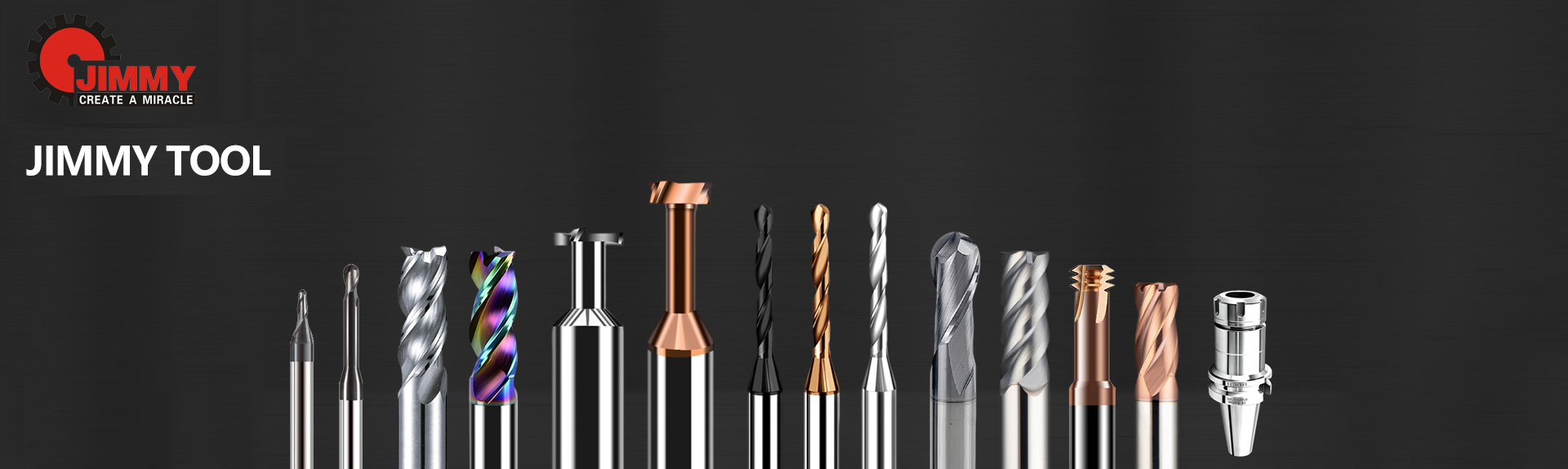
Custom Form Tools: How One Tool Replaces 3+ Operations (Valve Body Case Study & ROI)
Date:2026-05-08Number:1100Walk into any shop machining hydraulic valve bodies, and you'll see a familiar scene: a chamfer tool does its work, then a spot drill, then drill one, then drill two, then an end mill to profile the sealing face—five tools, four tool changes, and three minutes of non-cutting time before the first good part comes off. The cycle repeats hundreds of times per batch.
Now imagine all of that—chamfer, spot, both hole diameters, and the profile—done by a single custom form tool in one continuous pass. No tool changes. No concentricity stack-up. No extra setup. One tool, one stroke, done.
This isn't hypothetical. Shops across aerospace, hydraulic, medical, and automotive manufacturing are replacing multi-tool sequences with purpose-ground solid carbide form tools—and they're cutting cycle times by 40–60%, reducing tooling inventory by half or more, and in some cases eliminating entire machining centers from the process.
At JimmyTool, we've designed and manufactured custom form tools for over 15 years. In this article, we'll walk through a detail-rich hydraulic valve body case study—with real numbers you can adapt to your own cost model—and show you exactly how one custom form tool replaced four standard tools, slashed cycle time, and delivered a 3-month payback on the tooling investment.
Most shops focus on the purchase price of each individual tool. A 40chamfertool,a25 spot drill, two 35drills—about135 total for the four tools needed to machine a typical hydraulic valve body cavity. Look reasonable? The problem is that purchase price captures less than 15% of the real cost of running those tools.
The hidden costs compound across every part:
1. Tool Change Time is Non-Value-Added Time
Every tool change on a CNC machine—spindle stop, tool retract, turret index or tool changer cycle, spindle start, rapid to position—costs 3–8 seconds on a modern machine. For a sequence requiring four tool changes per part, that's 12–32 seconds per part of pure lost production. At 5,000 parts per year, that's 17–44 hours of machine time spent doing nothing but swapping tools. At a
150/hourshoprate,that′s2,550–$6,600 per year—before a single chip is cut.
2. Setup Time Multiplies Across Production Runs
Every tool in a multi-tool sequence must be touched off, measured, and offset individually. A GWS Tool Group case study demonstrated this clearly: a hydraulic valve manufacturer used four tools (spot drill, drill one, drill two, chamfer tool) to machine a single valve cavity. The setup time to dial in all four tools was approximately 5 hours per part number, with annual setup costs reaching $43,200 across five part numbers. When setup time exceeds actual cutting time, the process economics are broken.
3. Concentricity Stack-Up Destroys Precision
When three or four different tools machine a bore cavity—each with its own toolholder runout, collet variation, and spindle orientation—the cumulative concentricity error can be 0.001–0.003″. For hydraulic valve bodies requiring spool-to-bore clearance of 0.0004–0.0008″, this stack-up produces scrap parts that look perfect to a micrometer but leak under pressure. The GWS case highlighted exactly this: tight tolerances of +0/−0.0004″, with scrap rates driven by concentricity issues and finish problems that were frequent and costly under the multi-tool approach.
4. Inventory and Tool Management Burden
Each tool in the sequence must be stocked, tracked, reordered, and replaced. For a shop running 10 different valve body configurations, each with 4–5 tools, that's 40–50 unique tool part numbers to manage. The administrative cost of tool procurement, inventory, and replenishment—estimated at 10–15% of tool purchase cost annually—adds up quickly across dozens of part numbers.
Upload Your Drawing for a Custom Form Tool Quote →
Now let's walk through a detailed case study built from JimmyTool's application engineering experience with hydraulic component manufacturers. The numbers are based on real-world data from documented form tool conversions.
| Parameter | Value |
|---|---|
| Part | Hydraulic directional control valve body |
| Material | 360 Brass (C36000), high-volume production |
| Feature Being Machined | Internal valve cavity with two bore diameters, an angled chamfer between diameters, and a sealing face profile |
| Tolerance | Bore diameters: +0/−0.0004″; Chamfer angle: ±0.5°; Concentricity between bores: ≤0.0004″ |
| Annual Volume | 5,000 parts (one shift) |
| Machine | CNC Lathe with live tooling; $150/hour shop rate |
Under the existing process, the internal valve cavity was produced using four separate tools in sequence:
| Operation | Tool | Cycle Time (per part) | Tool Life (parts per edge) |
|---|---|---|---|
| 1. Spot drill to center the cavity | 90° carbide spot drill | 8 sec | 1,200 |
| 2. Drill bore ID #1 (smaller diameter) | Solid carbide twist drill, Ø0.312″ | 12 sec | 800 |
| 3. Drill bore ID #2 (larger diameter) | Solid carbide twist drill, Ø0.437″ | 14 sec | 800 |
| 4. Chamfer and sealing face profile | Solid carbide chamfer end mill + separate profiling pass | 22 sec (combined) | Chamfer: 1,500; Profile: 600 |
How long does a single tool change actually take?
Tool change time can vary depending on the machine type, but for a typical CNC lathe with a turret, a single tool change cycle averages 4–8 seconds (turret index, lock, approach). For a machining center with an automatic tool changer, it's 3–5 seconds. In our case study, we'll use a conservative 5 seconds per tool change—a realistic number that aggressive shops often beat with optimized programming, but that represents the cost of changing tools rather than making chips. With four tool changes per part, that's 20 seconds per part gone. Over 5,000 parts, that adds up to nearly 28 hours of non-cutting, non-value-added machine time per year.
Total cycle time per part (original process):
Cutting time: 8 + 12 + 14 + 22 = 56 seconds
Tool changes: 4 × 5 = 20 seconds
Total: 76 seconds per part
Annual costs (original process):
| Cost Category | Calculation | Annual Cost |
|---|---|---|
| Machine time (5,000 parts × 76 sec ÷ 3,600 × $150/hr) | Direct shop rate cost | $15,833 |
| Tool consumption (spot drills, drills, chamfer tools, profile end mills) | Based on tool life and per-part edge cost | $2,450 |
| Setup labor (4 tools per changeover, 5 changeovers/year) | 5 setups/yr × 5 hours × $120/hr | $3,000 |
| Scrap and rework (estimated 2% scrap rate at $45/part material + machining cost) | 100 scrapped parts × $98/part | $9,800 |
| Total Annual Cost (Original Process) | $31,083 |
The customer was losing nearly $10,000 annually to scrap alone, primarily from concentricity issues and surface finish rejects—both driven by the multi-tool stack-up problem.
Our application engineering team analyzed the valve cavity print and designed a single solid carbide form tool that combines all four operations into one continuous pass:
Step 1 (tip section): Self-centering spot geometry precisely positions the tool—no separate spot drill needed. This geometry establishes concentricity from the very first engagement.
Step 2: Drills bore ID #1 (smaller diameter) at optimal feed, with polished parabolic flutes clearing chips upward through continuous through-coolant flow.
Step 3: Intermediate angled cutting edge simultaneously produces the chamfer between the two bore diameters—concentric to both by design since it's ground on the same tool body in one setup.
Step 4: Larger diameter section drills bore ID #2 and incorporates the sealing face profile on the same pass.
The tool body is ground from a single ultra-fine-grain carbide blank with AlCrN coating for thermal stability and polished flutes for chip evacuation in 360 brass.
Why tool changes kill productivity more than you think—and how one form tool eliminates them
Every time a machine stops cutting to change a tool, three things happen: the spindle stops rotating (losing momentum), the turret or tool changer cycles (mechanical time), and the new tool must rapid back to position and stabilize before resuming feed. On a 5-second tool change, the actual "chip-to-chip" time can be 6–8 seconds when spindle acceleration and deceleration are included. Four of these interruptions per part add up, but more importantly, they break rhythm—operators can't walk away, lights-out machining becomes unreliable, and every tool-change interface is a potential failure point. One form tool means zero tool changes during the entire cavity machining operation, transforming an interrupted, stop-and-go process into a continuous, rhythm-driven cut that can run unattended with predictable results.
New cycle time: All operations combined into one pass = 28 seconds. No tool changes.
JimmyTool form tool specifications:
| Parameter | Specification |
|---|---|
| Tool type | Custom solid carbide combination step drill/form tool |
| Material | Ultra-fine grain carbide (0.5–0.8 µm grain size) with AlCrN PVD coating |
| Operations combined | Spot, drill ID #1, chamfer, drill ID #2, sealing face profile |
| Tool life | ~900 parts per edge before resharpening (approximately 3× increase vs. the previous profiling end mill at 600 parts) |
| Cycle time | 28 seconds (single pass) — a 63% reduction vs. the 76-second multi-tool sequence |
| Tool cost | 480each;resharpeningcost 65 per edge after the initial grind |
| Tool cost per part (amortized) | 0.53/partinitial;0.07/part resharpened |
Annual costs (JimmyTool form tool process):
| Cost Category | Calculation | Annual Cost |
|---|---|---|
| Machine time (5,000 parts × 28 sec ÷ 3,600 × $150/hr) | Direct shop rate cost | $5,833 |
| Tool consumption (5,000 ÷ 900 = ~6 tools/year × $480) | New tool amortization | $2,880 |
| Setup labor (single tool per changeover, 5 changeovers/year) | 5 setups/yr × 1.5 hours × $120/hr | $900 |
| Scrap and rework (estimated 0.3% scrap rate; concentricity stack-up eliminated by design) | 15 scrapped parts × $98/part | $1,470 |
| Total Annual Cost (JimmyTool Solution) | $11,083 |
| Metric | Original 4-Tool Process | JimmyTool 1-Tool Solution | Improvement |
|---|---|---|---|
| Total cycle time per part | 76 seconds | 28 seconds | 63% faster (2.7× throughput) |
| Number of tool changes per part | 4 | 0 (single pass) | 100% eliminated |
| Setup time per changeover | 5 hours | 1.5 hours | 70% reduction |
| Annual scrap cost (360 brass) | $9,800 | $1,470 | 85% scrap reduction |
| Annual total process cost | $31,083 | $11,083 | $20,000 saved per year |
| Throughput (parts per 8-hour shift) | ~379 | ~1,029 | 172% throughput gain |
ROI Calculation:
Investment: Custom form tool engineering ( 600NRE,one−time),firsttool(480), and integration support ( 300)=1,380 upfront
Annual savings: $20,000 (recurring every year)
Payback period: Approximately 3.5 weeks (( 1,380÷20,000) × 52 weeks)
Year 1 ROI: 1,349% (( 20,000−1,380) ÷ $1,380 × 100%)
As one manufacturer reported after a similar form tool conversion: "We were using two machines to get the job done. First, the part was turned on a Swiss-style lathe and parted off. Then it took a field trip to a milling center, where multiple tools were needed to shape the part just right." After switching to a custom form tool, the result was "no more milling center required. Cycle time slashed from minutes to seconds. Freed up a whole machining center for more production. Annual savings ringing in at $280,000".
This case study aligns with broader industry data. Independent reports confirm that custom form tools can reduce cycle times by as much as 40%, with tools ground individually according to customer specifications and capable of holding a tolerance as low as ±0.01 mm. Seco tooling similarly documented cycle time reductions of nearly 60% through tooling optimization in comparable valve production settings. In aerospace gearbox housing applications, PCD forming tools achieved similar results: reducing required tools from 14 to 11, cutting processing time from 3 minutes 47 seconds to 2 minutes 23 seconds, and delivering 4× longer tool life (8,000 to 35,000 parts).
Upload Your Drawing for a Custom Form Tool Quote →
Not every form tool works. Many shops have tried combination tools that chattered, wore unevenly, or broke prematurely—and then abandoned the approach entirely. The difference between a failed attempt and the results above lies in five engineering variables that catalog tool manufacturers can't optimize for your specific part, but that JimmyTool's custom manufacturing precisely controls.
1. Coolant Delivery
Single-pass form tools engage more cutting edges simultaneously than a single-function drill, generating proportionally more heat. Through-tool coolant isn't optional—it's essential. The JimmyTool solution incorporates internal coolant channels positioned to deliver high-pressure coolant (minimum 500 PSI) directly to each cutting edge. Continuous coolant flow forces chips to travel in one direction: out. Our form tools for brass and aluminum also benefit from polished flutes that reduce friction and prevent chip adhesion, maintaining the surface finish quality that hydraulic sealing surfaces demand.
Further reading: For a comprehensive look at through-coolant technology, see our article on 7+ Tips for Mastering Deep Hole Drilling with Through-Coolant Drills.
2. Material-Specific Edge Preparation
360 brass machines easily—but it's also gummy, prone to built-up edge, and demands razor-sharp cutting geometry. A form tool designed for free-machining brass needs high-positive rake angles (12–18°) and minimal edge hone. The same form tool geometry would fail immediately in 304 stainless, which needs a controlled edge radius to resist chipping. Custom edge preparation—matched to your specific material—is the variable that separates form tools that run for 900 parts from those that fail at 50.
3. Concentricity-Ground in One Setup
When a step drill is ground on a single CNC grinding machine in one fixturing setup, the concentricity between all diameter steps is inherently near-perfect—typically 0.0002″ total indicator reading (TIR) or better. This is fundamentally impossible to achieve with four separate tools, each in its own holder. The multi-step sequence problem—concentricity errors accumulating across tool changes—is eliminated by design when all features share the same tool axis.
4. Vibration Damping Through Core Geometry
Form tools with abrupt diameter transitions tend to chatter at the step shoulders. The solution is progressive core geometry: variable web thickness that's thicker near the shank for rigidity and thinner near the tip for chip space, with smooth radius transitions eliminating sharp corners where vibration nodes develop. Researchers have demonstrated that variable web thickness and optimized flute geometry effectively prevent tool breakage and chip clogging in deep-hole drilling applications—and these same principles apply directly to multi-step form tool design.
5. Coating Selection for the Application Temperature Range
AlCrN PVD coating was selected for this application because of its thermal shock resistance up to 1,100°C and low coefficient of friction—critical for a form tool where multiple cutting edges generate heat simultaneously at different diameters. For stainless steel or nickel alloy applications, TiAlN or AlTiN coatings with post-coating polishing may be more appropriate. The point is that coating selection must be matched to the specific workpiece material and the tool's multi-edge thermal profile—not picked from a generic catalog cross-reference.
Related Product: Explore our Custom Carbide Form Tools for Hydraulic Valve Body Machining with application-specific geometry, through-coolant integration, and coating packages tailored to your workpiece material and production volume.
A custom form tool isn't for every job. Here's when it makes economic sense—and when it doesn't.
A. Production Volume Justifies the NRE
[Diagram: Break-even analysis table]
| Annual Volume | Number of Tools Combined | Break-Even Point (Approximate) | Recommendation |
|---|---|---|---|
| <100 parts | 2–4 tools | May not justify NRE cost | Stay with standard tooling unless the precision gain is critical |
| 100–500 parts | 2–4 tools | 2–6 months | Custom form tool viable; calculate specific ROI first |
| 500–5,000 parts | 2–4 tools | 1–3 months | Custom form tool strongly recommended; fast payback |
| >5,000 parts | 2–4 tools | <1 month | Custom form tool is the clear economic winner |
B. Precision Gains Alone Justify the Investment
Even at lower volumes, if your current multi-tool process is producing scrap or rework due to concentricity stack-up or surface finish variation, a custom form tool may be justified purely on quality grounds. As the hydraulic valve body case demonstrates, eliminating $9,800 in annual scrap cost alone covered the tooling investment many times over—even before accounting for the cycle-time savings.
C. Existing Machine Can Support the Form Tool
Custom form tools typically require slightly more spindle torque than single-function drills because multiple cutting edges engage simultaneously. Verify your machine has adequate rigidity, spindle power, and coolant pressure. For most applications in brass, aluminum, and carbon steels, a standard CNC lathe or mill with through-spindle coolant and 10+ HP spindle is sufficient. Heavy cuts in stainless or alloy steels may require 20+ HP.
D. The Workpiece Material is Suited to Form Tool Machining
Free-machining materials (brass, aluminum, carbon steel) are ideal for form tools because chip formation is predictable. Work-hardening materials (304/316 stainless, Inconel, titanium) require more conservative approaches—form tools are still viable, but tool design becomes more critical and the payback period may be longer.
Application checklist: 5 questions to ask before ordering a custom form tool
Are you combining at least 3 operations? (Form tools make the most economic sense when consolidating multiple steps.)
Is your annual volume at least 100 parts per year? (Below this, standard tooling may be more cost-effective.)
Is concentricity between features critical? (Form tools inherently eliminate multi-tool concentricity errors.)
Do you have through-spindle coolant capability? (Essential for form tools combining drilling and profiling.)
Is your machine rigid with minimal spindle runout? (Form tools amplify the effects of runout across multiple cutting edges.)
Ordering a custom form tool isn't complicated—but providing the right information upfront ensures the tool is designed correctly on the first iteration. Here's what our application engineering team needs:
Required Information:
Part print (PDF or STEP file) showing all features the form tool must produce—diameters, chamfer angles, shoulder depths, corner radii, and surface finish callouts.
Workpiece material and condition—alloy grade, hardness (HRC or HB), and any prior processing (heat treat, forging, casting).
Current process data—what tools are you using now, what cycle time are you getting, and what problems are you experiencing (scrap rate, tool life, surface finish, chatter).
Machine specifications—spindle taper, max RPM, through-coolant pressure, and turret/tool changer configuration.
Production volume—annual parts per year and batch size.
What We Design:
Custom solid carbide form tool profile, ground to your exact feature dimensions
Coolant through-tool with ports positioned at each cutting edge
Variable core geometry for vibration resistance
Application-specific coating (AlCrN, TiAlN, TiB2, DLC—selected for your material)
Edge preparation tailored to material machinability
Resharpening-friendly design where possible (standard shank interface, accessible geometry)
Delivery: Typical lead time is 2–3 weeks for custom form tools, with rush service available. Each tool ships with a dimensional inspection report, including certified cutting edge dimensions per your print callouts.
Real-World Starting Points: For hydraulic valve bodies similar to our case study, form tool pricing typically ranges from 350–700 depending on complexity, number of steps, and diameter. Annual resharpening costs average 50–80 per edge. The ROI typically arrives within 1–3 months, even at moderate volumes (500–2,000 parts/year).
Ready to eliminate tool changes and scrap from your process?
Send us your part print and current process data. Our application team will design a custom form tool optimized for your exact part geometry and production volume—and show you the ROI before you commit. Quote with documented dimensional tolerance guarantee within 12 hours.
Upload Your Drawing for a Custom Form Tool Quote →
The hydraulic valve body case study isn't unique—it reflects a pattern we've seen repeatedly across hundreds of applications: a multi-tool sequence producing acceptable but expensive parts, converted to a single custom form tool that runs faster, holds tighter tolerances, and costs less per part.
The math is straightforward. If you're running three or more separate tools to machine a single cavity or feature, and you're making at least a few hundred parts per year, a custom form tool will almost certainly pay for itself within the first production batch. The savings come from four directions simultaneously: eliminated tool-change time, reduced tooling inventory burden, near-zero concentricity scrap, and setup time that's a fraction of the multi-tool equivalent.
For shops machining hydraulic components, aerospace housings, medical implant features, or any part where concentricity and surface finish matter—and where cycle time drives profitability—a custom form tool isn't an expense. It's the fastest path to a more predictable process and a lower cost per part.
Q1: What exactly is a custom form tool?
A custom form tool is a purpose-ground solid carbide (or sometimes brazed carbide) cutting tool designed to machine multiple features—bores, chamfers, profiles, steps, and sealing faces—in a single pass. Unlike standard catalog tools that perform one operation each, a form tool combines the geometry of several tools into one precision-ground profile. The key advantage is that all features are machined concentrically in one setup, eliminating tool-change time and concentricity stack-up errors. Applications include grooving, drilling, milling, and threading across diverse industries.
Q2: How many separate operations can a single form tool replace?
Typically two to five operations, though more complex designs can consolidate additional steps. Documented cases include GWS Tool Group replacing four separate tools (spot drill, two drills, chamfer tool) with a single step drill/chamfer combination tool, reducing setup time from 5 hours to 30 minutes and delivering approximately $40,000 in annual savings. In another published case, Schwanog form tools reduced cycle times by as much as 40% while tools were ground individually to customer specifications and held tolerances as low as ±0.01 mm.
Q3: What's the typical ROI on a custom form tool investment?
Investment payback typically arrives within one to three months for volumes exceeding 500 parts per year. The JimmyTool case study in this article showed:
1,380upfrontinvestmentdelivering20,000 annual savings—a 1,349% Year 1 ROI with payback in approximately 3.5 weeks. Results vary by part complexity and volume. In one documented case, a Fullerton custom form tool eliminated an entire machining center from the production process and saved the customer $280,000 annually. In high-volume valve production, Seco tooling optimization produced documented cycle time reductions of nearly 60% and eliminated the need for a second machine.
Q4: Can a form tool hold the same tolerances as separate tools?
Form tools can hold tolerances as tight as ±0.01 mm (±0.0004″). They often hold tighter effective tolerances than multi-tool sequences because all features are ground in one fixturing on the same CNC grinding machine—ensuring near-perfect concentricity (typically 0.0002″ TIR). In multi-tool sequences, concentricity errors accumulate across each tool change, holder, and collet, and a 0.001–0.003″ stack-up is common. The form tool eliminates these cumulative errors by producing all features from the same cutting edge axis on a single tool body.
Q5: What materials can be machined with a custom form tool?
Form tools excel in free-machining materials where chip formation is predictable: 360 brass, 6061 aluminum, 12L14 carbon steel, and cast iron. They are also viable in more challenging materials (304/316 stainless, 4140 alloy steel, titanium, Inconel) with appropriate edge preparation, coating, and coolant strategy. The material determines the edge geometry—high-positive rake angles with minimal hone for soft/gummy materials, controlled edge radius for hard/abrasive materials—so providing the workpiece specification during design ensures the tool is engineered correctly.
Q6: Do I need a special machine to run a custom form tool?
No special machine is required. Modern custom solid carbide form tools are designed to run on standard CNC lathes, mills, and Swiss-type machines. The primary requirements are sufficient spindle power (10+ HP for most applications, 20+ HP for heavy cuts in alloy steels) and through-spindle coolant capability (500+ PSI recommended). The insertable tooling systems that form tools are part of can be used on any type of machine, including Swiss-type, conventional and multispindle automatic lathes, rotary transfer machines, and horizontal and vertical milling centers.
Q7: What information do I need to provide to order a custom form tool?
You'll need five items: (1) Part print (PDF or STEP file) showing all features the form tool must produce, including diameters, chamfer angles, shoulder depths, corner radii, and surface finish callouts. (2) Workpiece material and condition—alloy grade, hardness (HRC or HB), and any prior processing (heat treat, forging, casting). (3) Current process data—what tools are you using now, what cycle time are you getting, and what problems are you experiencing? (4) Machine specifications—spindle taper, max RPM, through-coolant pressure, and turret configuration. (5) Production volume—annual parts per year and batch size.
Q8: Are custom form tools worth it if my production volume is low?
For volumes below 100 parts per year, the engineering cost (NRE) may not justify the investment unless precision gains are the primary driver. That said, even at moderate volumes (500–2,000 parts/year), the return on investment arrives quickly—typically in 1–3 months once you account for setup time, tool-change time, and scrap reduction. For volumes exceeding 5,000 parts per year, a custom form tool is almost always the most economical process choice, delivering payback in under one month and saving tens of thousands of dollars annually in a typical hydraulic valve body application.
person: Mr. Gong
Tel: +86 0769-82380083
Mobile phone:+86 15362883951
Email: info@jimmytool.com
Website: www.jimmytool.com


