

Dovetail Cutter for Metal: Expert Guide to Angles, Types & Applications
Date:2026-03-05Number:1625A dovetail cutter for metal is a special tool used to make angled cuts in the material. It is used to make very precise cuts in machines and equipment used in the aerospace, automotive and industrial industries. Solid carbide versions with an AlTiN coating are the best for hardened steels and stainless steel.
A dovetail cutter for metal is a tool used to cut metal in a certain way. It has an angled cutting edge and is used to make a special type of cut that is called a "dovetail." Dovetail cutters are different from standard end mills, which cut vertical walls. Dovetail cutters extend their cutting edges out to a defined angle — typically between 30° and 90° — to create an undercut geometry that mechanically locks mating parts together.
These tools are not the same as woodworking dovetail bits. Metal-cutting dovetail tools must be able to handle a lot more force, heat and wear and tear. That's why they're almost always made from solid carbide or have carbide inserts, rather than high-speed steel (HSS), for most applications.
The geometry is very useful for engineering: a dovetail joint that has been properly machined cannot be pulled apart at a right angle to the slot, which makes it ideal for sliding ways, turbine blade retention, and machine tool guideways.
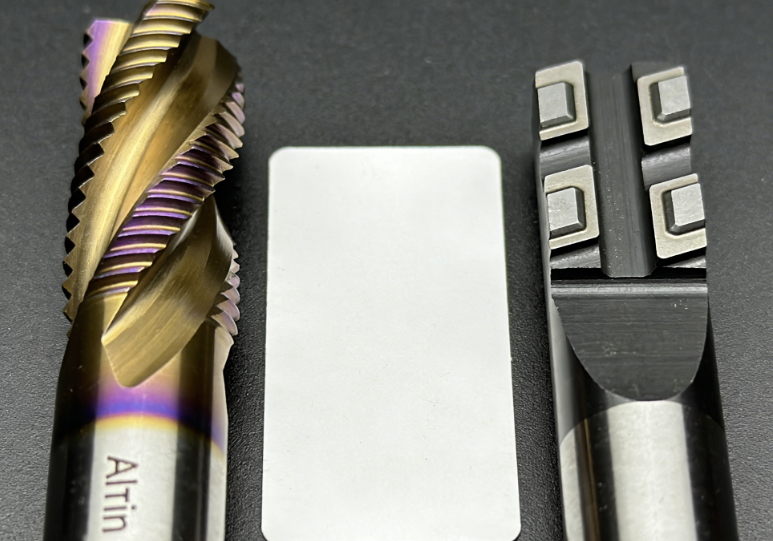
Solid carbide dovetail cutters are machined from a single piece of tungsten carbide. The cutting geometry — flutes, relief angles, rake angles — is ground directly into the blank.
Best for: High-precision finishing, tight tolerances (±0.0005″), detail work in medium-to-hard materials.
Available configurations:
Key specifications to check:
Typical cost: $40–$150+, depending on diameter and coating
Indexable versions use a steel or carbide body fitted with replaceable carbide inserts secured by screws or clamps.
Best for: High-volume production, heavy material removal, large-diameter cuts (1″+) where solid carbide blanks become prohibitively expensive.
Advantages:
Disadvantage: Slightly reduced precision vs. solid carbide due to insert seating tolerances. Not ideal for tight-fit applications requiring better than ±0.001″.
High-speed steel dovetail cutters still exist in the market, primarily for:
Cobalt-enriched HSS (M42, 8% Co) extends heat resistance modestly, but remains inferior to carbide in nearly every metalworking context. For any production or CNC environment, carbide is the correct choice.
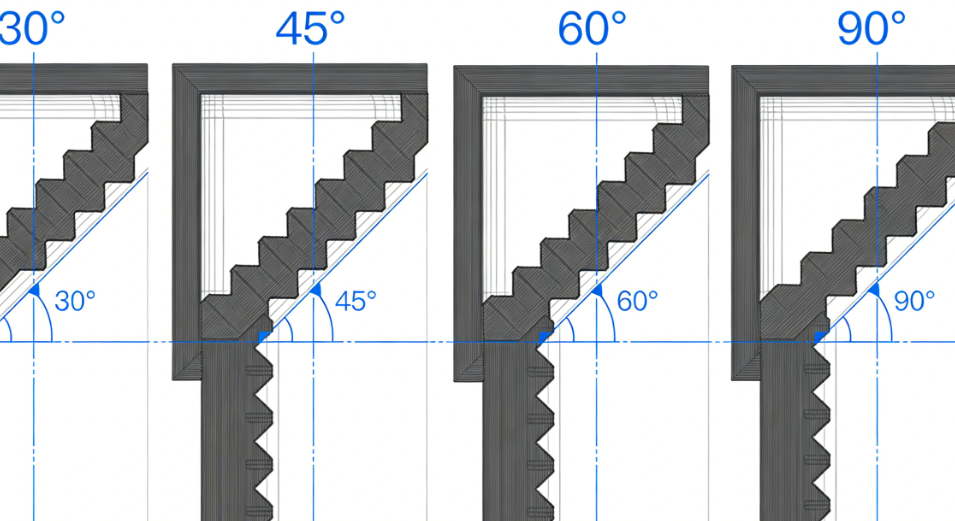
The included angle of your dovetail cutter is not an arbitrary preference — it directly determines joint strength, machinability, and application suitability.
| Angle | Joint Strength | Material Removal | Common Applications |
|---|---|---|---|
| 30° | Very High | Difficult | Secure locking slots, small profiles |
| 45° | High | Moderate | General-purpose fixtures, vise jaws |
| 60° | Very High | Moderate-Hard | Heavy-load ways, aerospace blade slots |
| 90° | Moderate | Easiest | T-slots, chamfer undercuts |
| 55° | High | Moderate | T-slot machining (DIN standard) |
Engineering insight:
If you have wider angles (60°+), the load is spread over a larger surface area, which makes it more resistant to wear and tear. However, they make the tool tips thinner and more fragile, which means you need to use more rigid setups and conservative cutting parameters.
For most first-time dovetail applications in steel, a 45° solid carbide cutter is the best option.
Coating selection can be the difference between a tool that lasts 50 parts and one that lasts 500.
| Coating | Max Temp | Best Materials | Notes |
|---|---|---|---|
| Uncoated | ~600°C | Aluminum, copper, brass | Sharpest edge, lowest friction on non-ferrous |
| TiN (Titanium Nitride) | ~600°C | General steel | Entry-level coating, gold color |
| TiAlN (Titanium Aluminum Nitride) | ~900°C | Stainless, alloy steel | Good all-rounder |
| AlTiN (Aluminum Titanium Nitride) | ~1000°C | Hardened steel, Inconel, titanium | Best for high-heat applications |
| DLC (Diamond-Like Carbon) | ~400°C | Aluminum, composites | Near-zero friction, excellent for non-ferrous |
jimmytool recommendation: For steel and stainless steel applications, specify AlTiN-coated solid carbide. For aluminum, go uncoated or DLC-coated — AlTiN can actually cause aluminum adhesion problems.
Aluminum is the most forgiving metal for dovetail cutting, but "soft" doesn't mean simple.
Stainless is work-hardening and abrasive — the most demanding common application.
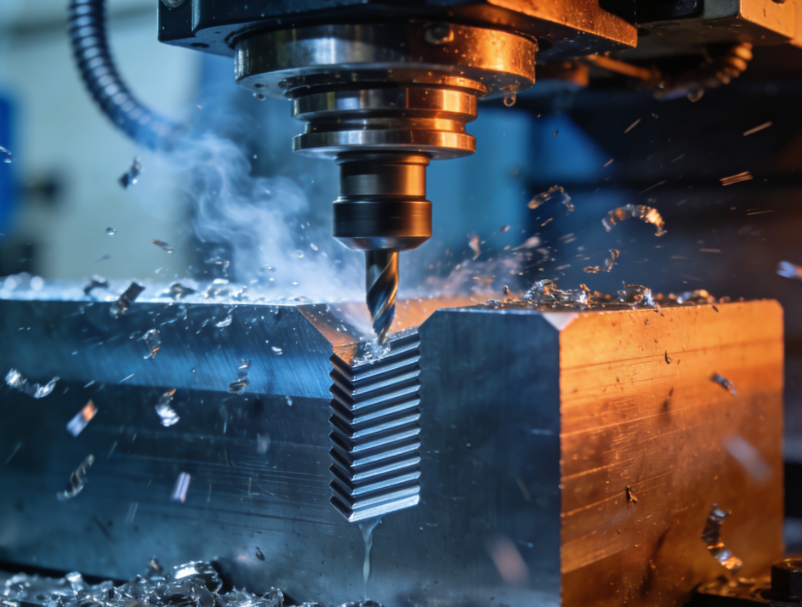
This is where most guides fall short — here is a complete, tested workflow for CNC dovetail machining.
Never plunge a dovetail cutter into solid material. The tool has no bottom cutting capability and will break.
Use a standard end mill to rough out the slot first:
Dovetail cutters have an unusually long gauge length relative to their cutting diameter. Incorrect tool length offset is one of the most common causes of scrapped parts.
Do not cut both walls simultaneously on your first finishing pass. Cut one wall, then the other.
For the final 0.005″–0.010″ wall finish pass, switch to climb milling. This reduces cutting forces on the fragile cutter tip and dramatically improves surface finish.
Use a dovetail comparator or precision gauge pins to verify the angle and width. For sliding fits:
The tips of dovetail walls are prone to sharp burrs. A careful pass with a hand deburring tool or a light stone removes these without disturbing the precision geometry.
Dovetail cutters cannot center-cut. Always pre-machine a clearance slot.
The thin tip of a dovetail cutter is the weakest point. Aggressive depth = snapped tool. Start with 0.030″ depth per pass and build from there.
Intermittent coolant on stainless causes thermal cycling and micro-cracking of the carbide edge. Use continuous flood or cut dry — never on/off.
The SFM should be calculated at the effective cutting diameter — the largest diameter of the dovetail profile — not the shank diameter. Using the wrong value leads to incorrect spindle speed and premature wear.
For any precision dovetail application, cut a test piece in scrap material first. It costs minutes; skipping it can cost hours of recovery work.
The most demanding application of dovetail technology. Fir-tree and dovetail slots in titanium and nickel-alloy turbine disks require tolerances as tight as ±0.0003″. These slots must retain turbine blades against centrifugal forces measured in tons. AlTiN-coated solid carbide cutters with custom angles are standard.
Lathe beds, milling machine columns, and linear guideways use dovetail profiles for their inherent rigidity and adjustability. Cast iron and hardened steel ways are machined to allow for gib adjustment over the machine's working life.
Modular fixturing systems in automotive body shops rely heavily on standardized dovetail profiles for rapid reconfiguration. The "dovetail rail" system used by Bluco, Siegmund, and others uses precise 45° and 60° profiles machined into thick steel plates.
Surgical instrument handles, endoscope components, and implantable device housings use dovetail connections for clean, sterilizable joints without threads or fasteners. Titanium and 316L stainless are common materials here.
Linear actuators, end-effector mounts, and modular robot arm joints use dovetail profiles for repeatable, tool-free reconfiguration. The self-aligning nature of the joint improves repeatability in multi-axis systems.
Answer these five questions before purchasing:
1. What material are you cutting?
2. What joint angle is required by design?
3. What is your machine — CNC or manual?
4. What is your production volume?
5. What tolerance is required?
| Symptom | Likely Cause | Fix |
|---|---|---|
| Tool breakage on first pass | Plunging without clearance slot / too aggressive DOC | Pre-machine slot, reduce DOC to 0.030″ |
| Chatter marks on walls | Insufficient workholding rigidity | Add more clamps, reduce overhang |
| Undersized dovetail width | Tool deflection during cut | Reduce feed rate, add finishing pass |
| Built-up edge on cutter | Wrong coating for material | Switch to uncoated (aluminum) or higher-temp coating (steel) |
| Inconsistent angle | Worn cutter tip | Replace or resharpen tool |
| Poor surface finish | Conventional vs. climb milling | Use climb milling for finish pass |
| Work hardening (stainless) | Dwelling or stopping mid-cut | Keep tool moving, never stop in cut |
Q: What angle dovetail cutter should I use for a machine tool way?
A: Most machine tool manufacturers use 55° or 60° dovetails for slideways, as the wider angle provides greater load-bearing surface and resistance to lift-off forces. If you're repairing or matching an existing way, measure the existing angle with a precision angle gauge before selecting your cutter.
Q: Can I use a dovetail cutter for metal on a manual Bridgeport-style mill?
A: Yes, but with important cautions. Use HSS or cobalt cutters rather than solid carbide (more resistant to chatter breakage), take very light passes (0.020″–0.030″ DOC), and ensure your quill lock is fully engaged with the table locked on all axes not in use.
Q: What's the difference between a dovetail cutter and a T-slot cutter?
A: Both create undercut slots, but the geometry differs. A T-slot cutter has a flat bottom and straight sides — it creates a T-shaped profile. A dovetail cutter has angled sides — it creates a trapezoidal profile. T-slot cutters are used for standard T-slot tables; dovetail cutters are used for mechanical joints and ways.
Q: How deep can I cut with a dovetail cutter?
A: Cutting depth is limited by the cutter's "length of cut" specification — the axial extent of the cutting edges. Most standard dovetail cutters have a length of cut between 0.100″ and 0.300″. Exceeding this risks rubbing the non-cutting relief on the workpiece and can cause tool fracture.
Q: Do I need coolant when using a dovetail cutter for metal?
A: For steel and stainless steel — yes, continuous flood coolant is strongly recommended. For aluminum, mist coolant or compressed air often works well. For hardened steel above 50 HRC, dry cutting or minimum quantity lubrication (MQL) may actually outperform flood due to thermal shock concerns.
Q: How do I know when my dovetail cutter is worn out?
A: Look for: (1) increased cutting force/chatter, (2) surface finish degradation on the dovetail walls, (3) visible wear flat on the cutting edge under 10x loupe, (4) dimensional drift where the cutter cuts slightly undersize. Replace or resharpen before complete failure to avoid workpiece scrapping.
Q: Can dovetail cutters be resharpened?
A: Yes — solid carbide dovetail cutters can typically be resharpened 2–4 times by a qualified tool grinding service. The cutter will be slightly smaller in diameter after each regrind, so factor this into your tooling inventory planning. Indexable cutters simply require insert replacement.
Q: What runout tolerance should I target for my dovetail cutter setup?
A: For general metalworking: under 0.001″ TIR is acceptable. For precision fits (±0.0005″ or tighter): target under 0.0003″ TIR. Use a precision collet or shrink-fit holder — standard ER collets with worn collets can easily introduce 0.001–0.002″ runout, which will directly translate to wall angle error.
Dovetail cutting in metal rewards precision planning. The variables — angle, material, coating, machine setup, and cutting strategy — all interact. Get one wrong and you'll either scrap a part or break an expensive tool.
The most important principles to take away:
Whether you're machining a single prototype or running hundreds of parts per shift, the right dovetail cutter selection from a reliable manufacturer makes the difference between a smooth operation and a frustrating one.
At jimmytool, we manufacture solid carbide dovetail cutters built to perform in real production environments — not just catalogues.
Our dovetail cutter range includes:
Every jimmytool dovetail cutter is:
1.Ground on CNC 5-axis tool grinders for consistent geometry
2.100% inspected for runout and dimensional accuracy
3.Available with full material certifications
4.Backed by our technical engineering support team
Ready to find the right tool for your application?
Browse jimmytool Dovetail Cutters — or contact our applications engineers directly for a custom specification quote.
person: Mr. Gong
Tel: +86 0769-82380083
Mobile phone:+86 15362883951
Email: info@jimmytool.com
Website: www.jimmytool.com


