

What Is a Carbide Cutting Tool?
Date:2025-12-07Number:1873By Andy, CNC Machinist & Tooling Specialist with Over 15 Years in Precision Manufacturing
If you’ve spent any time around a machine shop—whether you’re programming a 5-axis CNC, running production on a Haas VF-2, or troubleshooting chatter on a deep-pocket aluminum part—you’ve almost certainly used, specified, or at least heard about carbide cutting tools. But what exactly is a carbide cutting tool? And more importantly, why does it matter so much in modern machining?
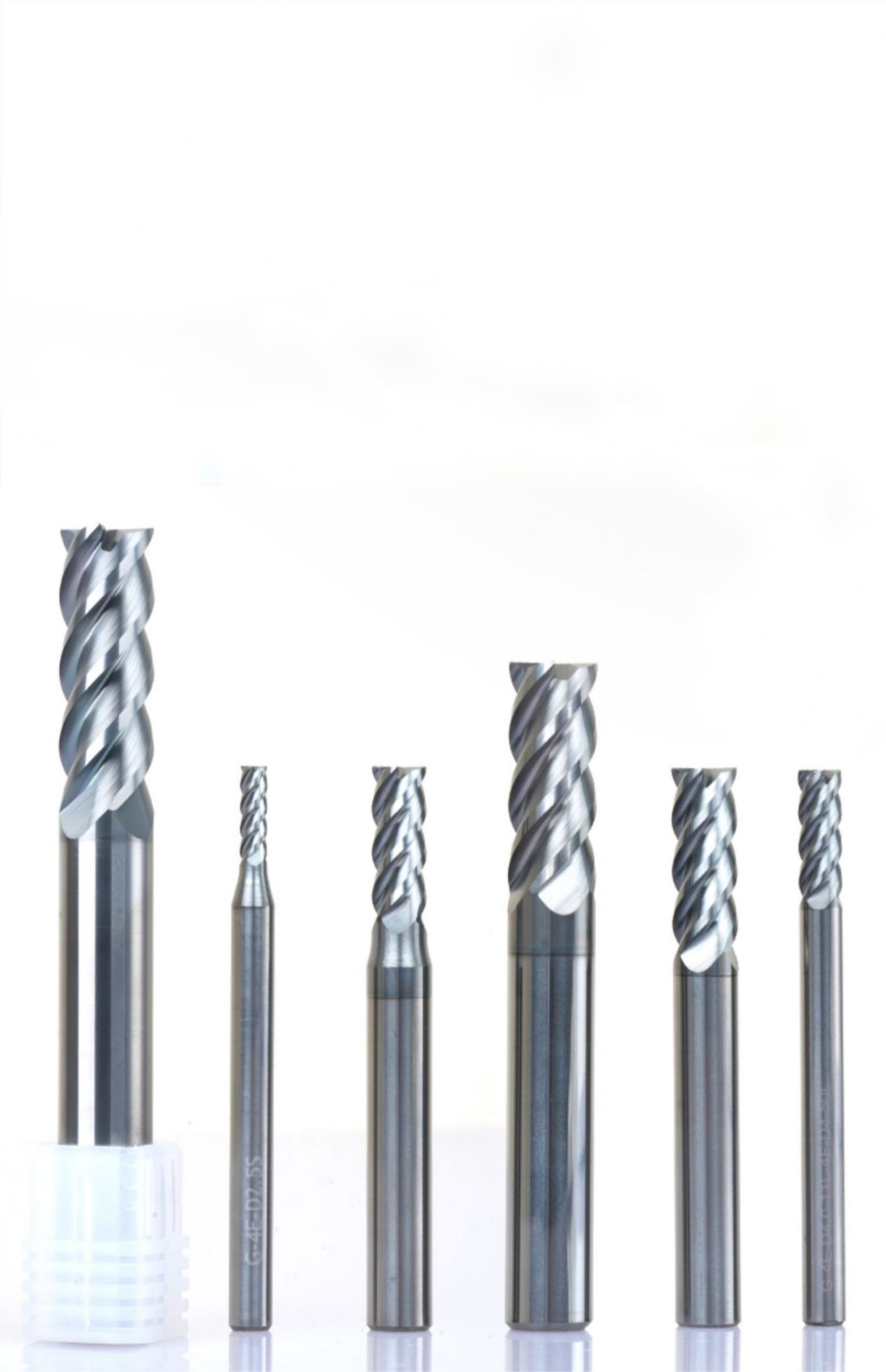
In this article, I’ll break down the fundamentals of carbide cutting tools from the perspective of someone who’s held them in their hands, dialed in feeds and speeds, and seen firsthand how the right (or wrong) choice can make or break a job. We’ll dive into material science, geometry, applications—and yes, we’ll zero in on one of the most widely used variants: the carbide end mill cutter.
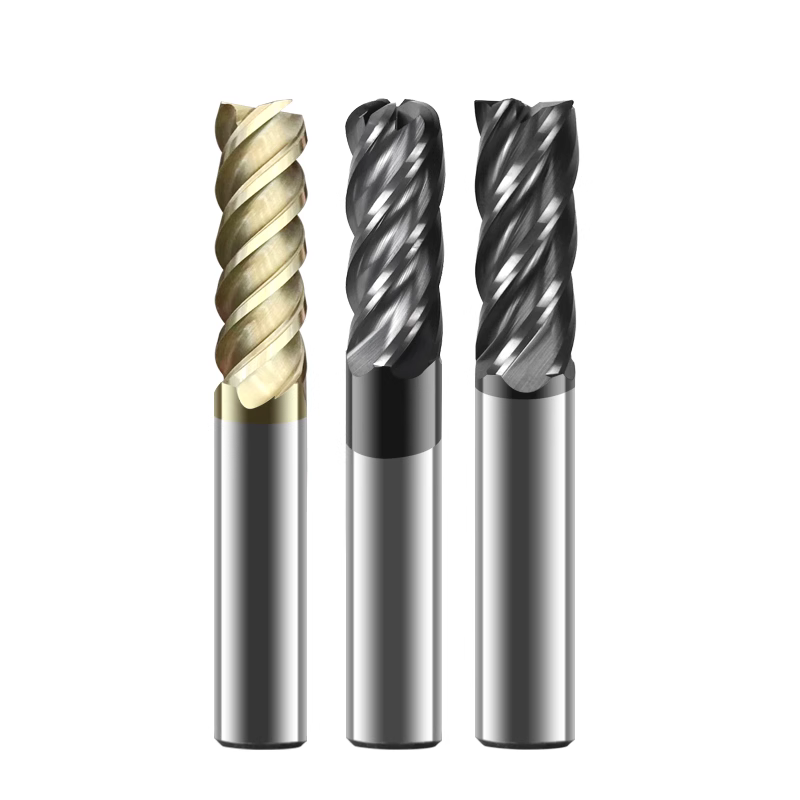
At its heart, a carbide cutting tool is made primarily from tungsten carbide (WC)—a compound of tungsten and carbon—bound together with a metallic binder, usually cobalt. This isn’t your average steel. Tungsten carbide is incredibly hard (8.5–9.5 on the Mohs scale), wear-resistant, and maintains its edge integrity at high temperatures far better than high-speed steel (HSS).
When I first started in the trade, we still ran HSS drills for softer materials. But as shops pushed for higher throughput, tighter tolerances, and harder workpieces—from hardened tool steels to Inconel—the shift to solid carbide became inevitable. Today, if you’re not using carbide where appropriate, you’re leaving money on the table.
Let me be blunt: carbide isn’t just “better”—it’s necessary for modern manufacturing demands. Here’s why:
Heat Resistance: Carbide retains hardness up to 1,000°F (538°C). That means you can run significantly higher surface feet per minute (SFM) without softening the cutting edge.
Wear Resistance: Especially critical in abrasive materials like composites, graphite, or fiberglass-reinforced plastics.
Rigidity: Higher modulus of elasticity than HSS—less deflection under load, which translates to better dimensional accuracy and surface finish.
Longevity: A single carbide end mill can outlast dozens of HSS tools in the right application.
I remember a job we had machining titanium aerospace brackets. Switching from coated HSS to a premium carbide end mill cutter with specialized geometry didn’t just double our tool life—it cut cycle time by 40%. That’s the kind of ROI that gets noticed on the shop floor and in the boardroom.
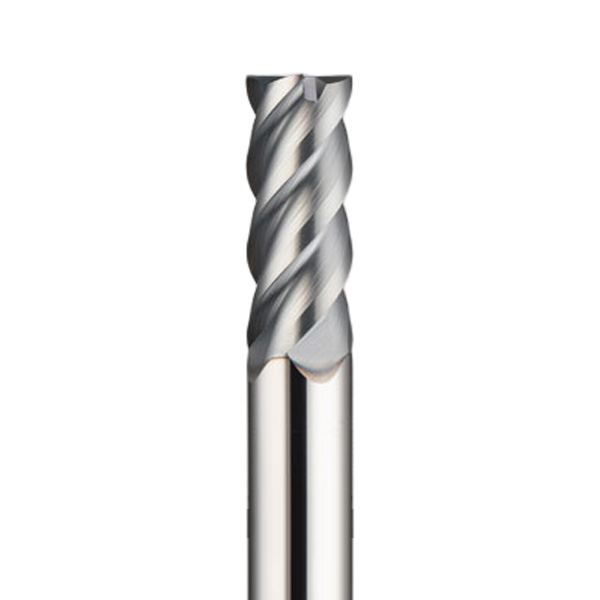
Among all carbide tools, the carbide end mill cutter is arguably the workhorse of the CNC world. Whether you’re slotting, profiling, plunging, or finishing, there’s likely a carbide end mill designed specifically for your task.
But not all carbide end mills are created equal. Let’s unpack what matters:
1. Material Grade Matters
Carbide comes in different grades based on grain size and cobalt content:
Fine grain + low cobalt: Harder, more brittle—ideal for finishing hardened steels.
Coarse grain + higher cobalt: Tougher, better for roughing or interrupted cuts in stainless or cast iron.
I once ruined a $200 end mill because I used a fine-grain grade on a roughing pass in 4140 pre-hard. Lesson learned: match the grade to the operation.
2. Geometry Dictates Function
Flute count: 2-flute for aluminum (chip clearance), 4+ flutes for steel (more cutting edges = smoother finish).
Helix angle: High helix (e.g., 45°+) for soft materials; low helix (30°–35°) for rigidity in hard metals.
Corner radius vs. square end: Radius adds strength—critical for deep cavities or high-feed applications.
3. Coatings Extend Capability
TiN, TiCN, AlTiN, diamond-like carbon (DLC)—coatings aren’t just marketing fluff. AlTiN, for instance, forms a protective aluminum oxide layer at high temps, making it perfect for dry machining stainless or superalloys. On a recent medical implant job in 17-4 PH, switching to an AlTiN-coated carbide end mill cutter extended tool life by 3x.
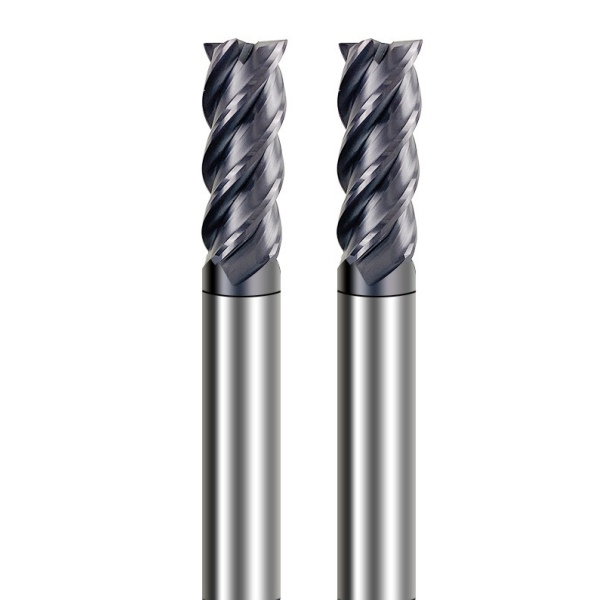
Over my career, I’ve seen carbide end mills used everywhere:
Aerospace: Machining Inconel 718 turbine blades—requires sharp, polished flutes and vibration-dampening toolholders.
Automotive: High-volume aluminum transmission housings—high helix, polished flutes, through-coolant capability.
Mold & Die: Hardened P20 or H13 steel—micro-grain carbide with corner prep and tight tolerance on runout.
Medical: Titanium spinal implants—often use 6-flute, short-length end mills for stability and surface finish.
One thing remains constant: success hinges on selecting the right carbide end mill cutter for the specific material, machine rigidity, and desired outcome.
Let’s address some misconceptions I still hear on the shop floor:
Myth #1: “Carbide is unbreakable.”
Reality: It’s hard, not tough. Drop it on concrete? It chips. Run it with excessive runout? It fractures. Handle it like precision equipment—because it is.
Myth #2: “More flutes always mean better finish.”
Not true. In gummy materials like 303 stainless, too many flutes cause chip packing and heat buildup. Sometimes a 3-flute is the sweet spot.
Myth #3: “All ‘solid carbide’ tools are the same.”
Absolutely false. The powder metallurgy process, sintering temperature, and post-grind quality control vary wildly between manufacturers. I’ve tested “budget” carbide that wore out in 8 minutes versus premium brands lasting 2+ hours under identical conditions.
After thousands of hours behind the controls, here’s my hard-won advice:
1. Never skip tool presetting – Runout kills carbide faster than anything.
2. Use proper coolant or air blast – Even if the coating claims “dry cutting,” heat management is non-negotiable.
3. Start conservative, then optimize – Especially with exotic alloys. Ramp in gradually.
4. Store tools properly – Keep them in foam-lined cases. A nicked edge ruins micro-geometry.
5. Track performance data – Note RPM, feed, DOC, material batch, and tool life. Patterns emerge over time.
I keep a digital log for every major job. When a new carbide end mill cutter arrives, I test it against benchmarks—not just on cost per part, but on consistency, surface finish, and machine load.
The industry isn’t standing still. We’re seeing:
Nano-structured carbides with enhanced toughness
Variable pitch/helix designs to disrupt harmonic vibrations
Integrated RFID chips for tool tracking in automated cells
Hybrid substrates combining carbide with ceramics or CBN tips for extreme applications
But even as tech evolves, the fundamentals remain: understand your material, respect your tool, and never assume. Carbide gives you performance—but only if you wield it wisely.
So, what is a carbide cutting tool? It’s more than just a piece of tungsten and cobalt. It’s a precision-engineered extension of the machinist’s skill—a bridge between design intent and physical reality. And when it comes to versatility, reliability, and performance in high-demand environments, the carbide end mill cutter stands as one of the most indispensable tools in our arsenal.
If you’re still relying on outdated tooling strategies or treating all carbide as interchangeable, I urge you: dig deeper. Talk to your tooling rep. Run side-by-side tests. Because in today’s competitive landscape, the difference between profit and scrap often comes down to a few microns of edge preparation—and the right carbide end mill cutter in the spindle.
Stay sharp,
Andy
CNC Machinist Tooling Consultant Precision Manufacturing Advocate
person: Mr. Gong
Tel: +86 0769-82380083
Mobile phone:+86 15362883951
Email: info@jimmytool.com
Website: www.jimmytool.com


