

Tungsten Carbide Drill Bits for Metal: The Professional Guide
Date:2026-02-10Number:2701Need to drill through hardened steel, 316 stainless steel, or strong alloys fast? Choosing the right tungsten carbide drill bits for metal is super important for getting things done quickly.
In tests cutting metal above 45HRC, good carbide drill bits lasted 12 times longer than M35 cobalt high-speed steel. They also cut down the time it takes to drill each hole by almost 70%.
I" ll break down what makes carbide drill bits so good. I’ll also give you CNC cutting info from real-world tests and share tips from big companies on how to keep your drill bits from breaking.
When dealing with tough materials in today's factories, regular high-speed steel drill bits can lose their hardness in seconds because of friction and heat. The main thing that makes tungsten carbide drill bits great is their red hardness. This means they can stay sharp even when the temperature is over 800°C.
Tungsten carbide is created from tiny tungsten carbide pieces and a cobalt binder. It's super hard, about 9-9.5 on the Mohs scale, which is just below diamond. So, when you're working with really rough stuff like cast iron or titanium, the drill bit edges won't wear down too quickly.
In real-world work, people use carbide drill bits for more than just getting higher speeds. They also help make sure everything is the exact size it needs to be. Because the material is so stiff, the drill bit won't bend easily when you push down hard. This keeps the holes straight and round.
Keep in mind that even though metal tungsten carbide drill bits are really hard, they can also be brittle. If you use them on a shaky drill press or even a handheld drill, they can break very easily.
When working with hard metals, the drill bit's tip shape controls how cutting force is spread out. For tungsten carbide drill bits used on metal, the most common and best design is the 135° split point. This is very different from the 118° point usually used for wood or softer metals.
The 135° angle helps make the chisel edge shorter, which greatly lowers the force needed to drill straight. This means when drilling into very hard surfaces, the bit won't wander or move off-center like a 118° bit might. Instead, it cuts right into the material, making sure it stays exactly where it should.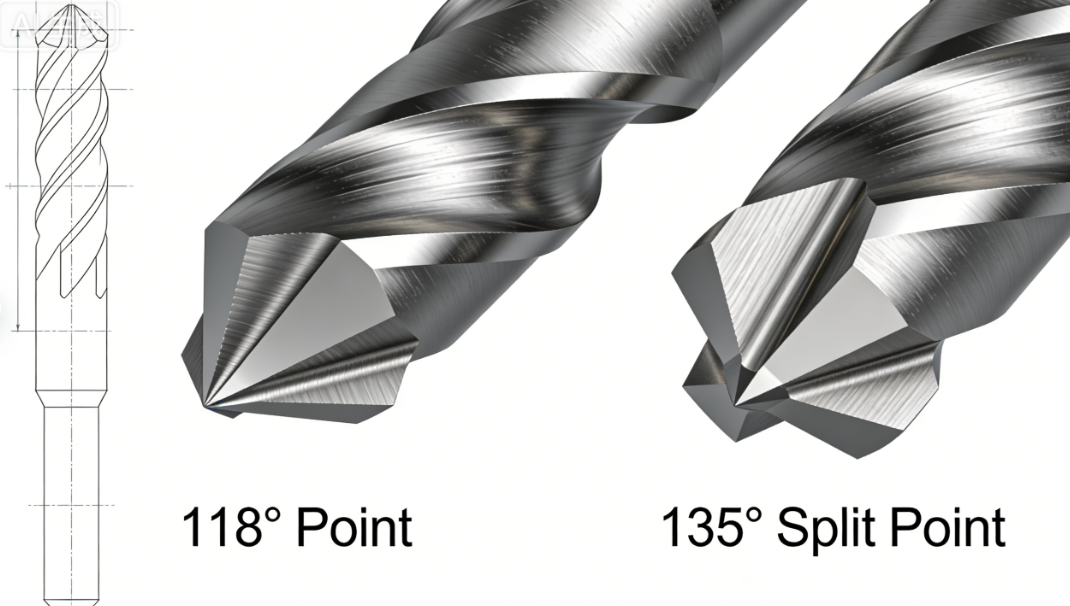
Also, the split point turns the chisel edge, which doesn't normally cut, into another cutting edge. This is super important when working with stainless steel or cold-rolled steel. This design breaks up metal pieces quickly, and along with the carbide's stiffness, it keeps the hole walls very smooth. Sometimes, you don't even need to ream the hole afterward.
If you see the machine shaking a lot or the holes are not round when drilling, it's usually because you're using the wrong tip angle. When using a 135° tungsten carbide drill bit with an internal cooling system in a CNC machine, you can feed it twice as fast as a regular drill bit without it getting too hot.
Tungsten carbide drill bits are very brittle, so even small sideways forces or vibrations can ruin them right away. To get the most out of them, think stiffness first.
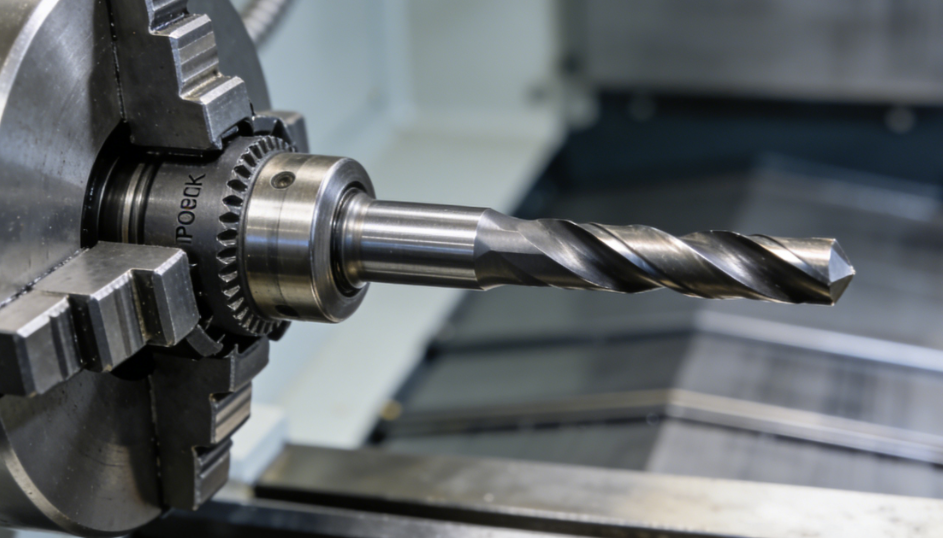
When you use these bits, keep the radial run-out under 0.02mm. Standard self-tightening drill chucks won't cut it; you'll need to use shrink fit holders or high-accuracy ER collet chucks. Too much run-out means one cutting edge of the bit takes on double the load, which can cause chipping.
For settings, go with high speed, constant feed. When you first cut into the metal, I advise lowering the feed rate by 30%. Once the full cutting edge is in the material, go back to your normal settings. For deep holes more than three times the diameter (3D), you have to use machines with high-pressure cooling. This forces chips out and stops the bit from getting stuck due to recutting.
A usual mistake is trying to use tungsten drills on manual drill presses or handheld tools. The axial play in these tools can cause the drill bit to get caught and snap when it breaks through the bottom of the metal. Without stiff setups, expensive carbide bits often don't last as long as cheaper cobalt high-speed steel bits.
When using tungsten carbide drill bits for metal, you have to use very different cutting methods depending on the metal. A big problem when working with stainless steel is work hardening. If you stop feeding the drill, the cutting edge will rub against the hardened layer, which can quickly ruin the bit.
When drilling 304 or 316 stainless steel, it's important to keep constant pressure and a slow cutting speed. Carbide drill bits for metal with an AlTiN (aluminum titanium nitride) coating are a good choice. This coating creates a protective layer of aluminum oxide at high temperatures. Tests show that maintaining a cutting speed of 35-50 m/min with enough coolant gives you the best tool life.
For brittle materials like cast iron, the drilling method is totally different. Cast iron chips are powdery and easily wear down the drill tip. You should use the high hardness of tungsten drill bits and use faster, dry cutting speeds or a minimal quantity lubrication (MQL) system. When working with hardened steel above 50HRC, you need to pick a carbide material with tiny grains to prevent chipping when hitting hard spots.
Not only is it possible, but it is currently the only industrial-grade solution for machining hardened steel ranging from 45HRC to 65HRC. The key lies in selecting tungsten carbide drill bits featuring a negative rake angle design. This design enhances edge strength, enabling the bits to withstand the immense impact forces encountered when penetrating the hardened layer.
90% of drill bit breakage stems from “non-rigid environments.” If you experience frequent drill bit breakage, check whether the shank runout exceeds 0.015mm. Additionally, during manual feed operations, human hand movements cannot guarantee 100% constant speed. These minute feed fluctuations prove fatal for extremely brittle carbide drill bits for metal
Due to the extremely high hardness of tungsten carbide, standard aluminum oxide grinding wheels (white or green wheels) cannot effectively sharpen it. You must use a 200-400 grit diamond wheel. During sharpening, strictly restore the original 135° split point geometry; otherwise, the drill bit will lose its self-centering capability, leading to reaming or deviation.
In B2B procurement decisions, one cannot simply compare the unit price of individual drill bits. While a high-quality tungsten carbide drill bit may cost 5-8 times more than an HSS drill bit, its overall cost advantage (Total Cost of Ownership) is overwhelming.
By calculating the cost per hole, you'll discover that tungsten carbide drill bits enable higher feed rates per revolution (IPR), reducing machine tool hours by over 50%. In high-volume production, fewer tool changes translate directly to increased machine utilization rates.
If your project involves high-volume metal drilling or materials exceeding 35HRC hardness, investing in tungsten carbide drill bits for metal represents the optimal path to reduce defect rates and enhance production line profitability.
For tungsten carbide drill bits for metal, exceptional performance stems not from hardness alone, but from the perfect balance of material, geometry, and operational precision. When working with high-hardness metals, switching from HSS to tungsten carbide represents more than a tool upgrade—it signifies a shift in your production process from consumption-driven to efficiency-driven.
Ensure your equipment possesses sufficient rigidity and matches the correct cutting parameters. These high-performance drill bits will become your production line's profit-generating tools, boosting yield rates while significantly reducing the overall cost per hole.
Upgrade Your Precision with Jimmytool
Seeking drill bits to conquer the toughest metal challenges? Jimmytool delivers industrial-grade tungsten carbide drill bits for metal, engineered for high-precision CNC machining and hard metal cutting. Our products feature microcrystalline carbide substrates paired with advanced AlTiN coatings, ensuring razor-sharp edges even under extreme temperatures.
person: Mr. Gong
Tel: +86 0769-82380083
Mobile phone:+86 15362883951
Email: info@jimmytool.com
Website: www.jimmytool.com


