

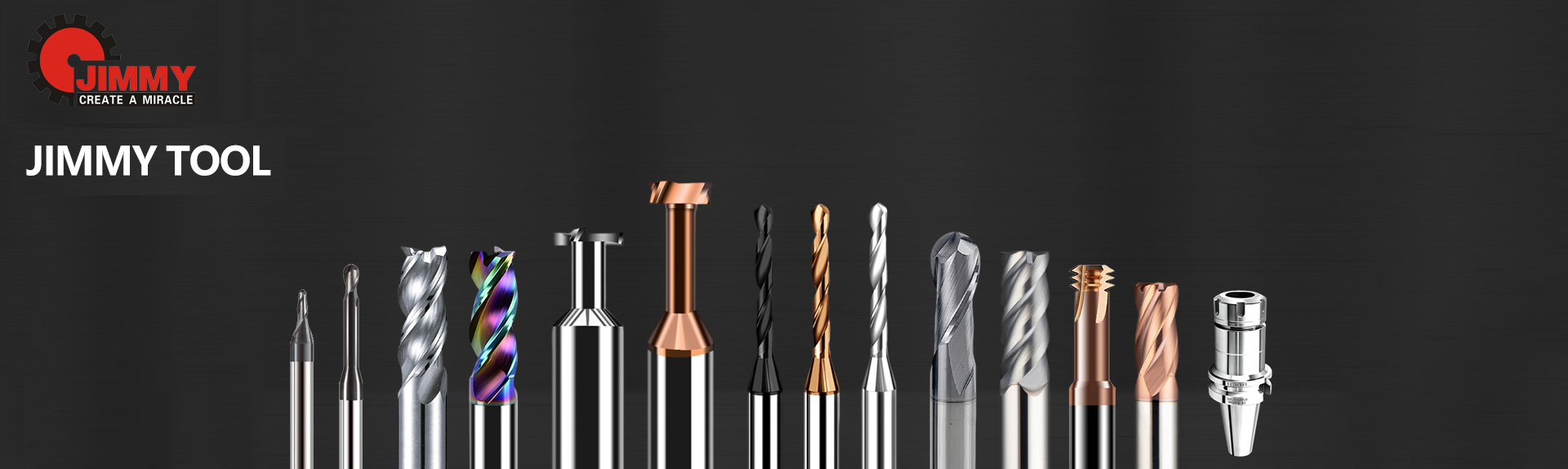
Carbide End Mills Complete Guide to Selection, Application, and Optimization
Date:2026-01-22Number:1979In the evolution of metal cutting tools, the advent of carbide end mill cutter represents a paradigm shift comparable to the transition from hand tools to power equipment. While high-speed steel (HSS) tools still have their place, carbide has become the undisputed workhorse of professional CNC machining, responsible for approximately 85% of all milling operations in modern manufacturing facilities.
The superiority of carbide isn't merely incremental—it's exponential. Consider these performance differentials:
Cutting speeds 3-5 times higher than HSS
Tool life extended by 10-20 times in equivalent applications
Material capabilities expanded to include hardened steels, titanium, and composites
Tolerances held more consistently over extended production runs
This guide will navigate you through the complex world of carbide end mills, providing not just definitions but actionable intelligence for tool selection, application optimization, and cost justification.
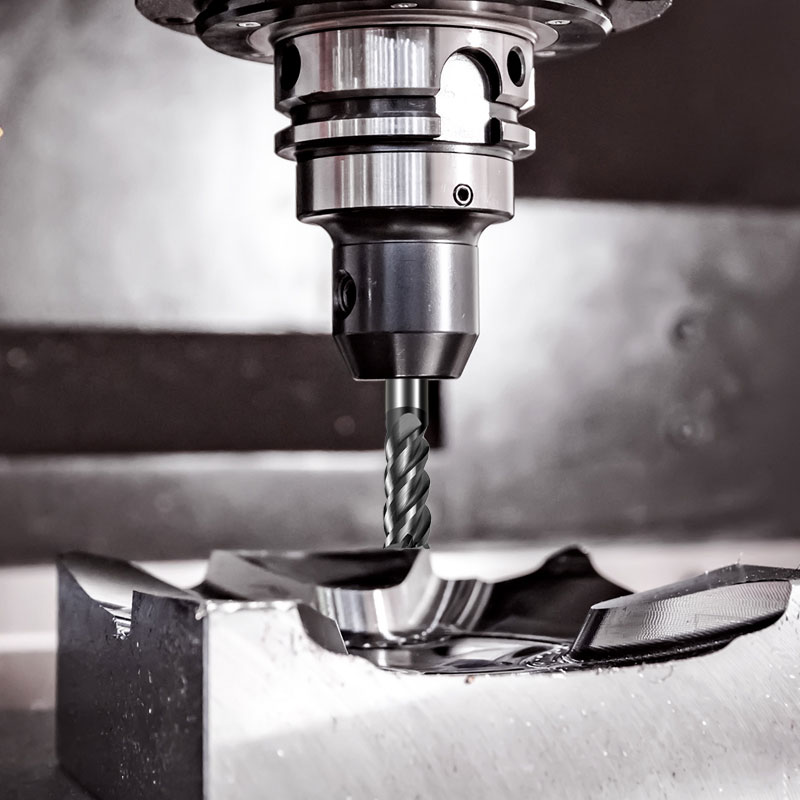
Cemented carbide—the proper technical term—is not a single material but a carefully engineered composite:
Cemented Carbide = Tungsten Carbide (WC) particles + Cobalt (Co) binder
Typical Composition Ratios:
94% WC, 6% Co: Ultra-hard, brittle grade for finishing
90% WC, 10% Co: General purpose balanced grade
86% WC, 14% Co: Tough grade for roughing/interrupted cuts
Advanced Additives for Specialized Performance:
Titanium Carbide (TiC): Increases crater wear resistance
Tantalum Carbide (TaC): Improves thermal deformation resistance
Niobium Carbide (NbC): Enhances edge strength in high-temp alloys
Conventional Powder Metallurgy Process:
WC powder milling with Co binder
Pressing into "green" state
Sintering at 1400-1600°C (vacuum or HIP)
Final grinding of cutting edges
Micrograin & Submicrograin Carbide:
Grain sizes below 1.0 micron (conventional: 3-5 microns)
Requires specialized sintering controls
Delivers 30-50% higher transverse rupture strength
Essential for small-diameter tools (< 1/8") and high-temp applications
Quality Indicators to Verify:
Density: Should be ≥ 14.9 g/cm³ (near theoretical maximum)
Hardness: HRA 90-94 (Rockwell A scale)
Surface finish: Grinding lines should be uniform and consistent
| Category | Flute Count | Helix Angle | Best Application | Material Focus |
|---|---|---|---|---|
| Roughing | 3-5 | 30-45° | High MRR, chip breaking | Steel, cast iron |
| Finishing | 4-6+ | 40-55° | Surface quality, tight tolerances | Aluminum, molds |
| High Performance | 5-10 | Variable | High-speed machining | All materials |
| High Feed | 2-4 | Low (~10°) | Low radial force machining | Hard materials, dies |
| Ball Nose | 2-6 | 30-40° | 3D contouring | Molds, complex surfaces |
Variable Helix/Variable Pitch Design:
Problem solved: Harmonic vibration/chatter
Mechanism: Uneven tooth spacing disrupts resonant frequencies
Performance gain: 2-3x tool life in problematic setups
Application sweet spot: Overhung tools (L:D > 4:1), thin walls, titanium
Corner Radius End Mills:
Radius range: 0.005" (micro) to 0.250" (large)
Strength multiplier: R.010 increases edge strength 8-10x vs sharp corner
Surface finish improvement: Prevents visible tool marks
Critical for: Hard milling (>45 HRC), die/mold work, interrupted cuts
Undercut/Backdraft Tools:
Design feature: Larger diameter at cutting end than shank
Application: Internal dovetails, undercut features, mold drafts
Manufacturing note: Must be ground from solid (not indexable)
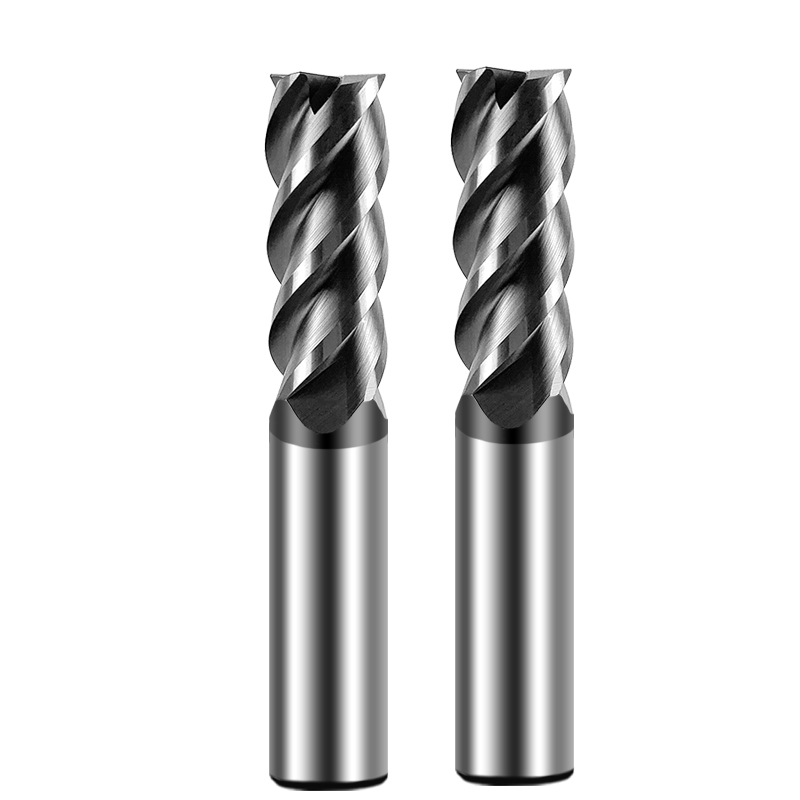
| Coating | Thickness (micron) | Max Temp (°C) | Color | Best For | Not Recommended For |
|---|---|---|---|---|---|
| TiN | 1-4 | 500 | Gold | General purpose, HSS tools | High-temp alloys |
| TiCN | 2-5 | 400 | Blue-gray | Abrasive materials, stainless | Aluminum (sticks) |
| TiAlN | 2-5 | 800 | Purple-black | High temp, dry machining | Soft, gummy materials |
| AlTiN | 2-5 | 900 | Black | Hard materials, high speeds | Aluminum, copper |
| ZrN | 1-3 | 600 | Brass | Aluminum, non-ferrous | Steel (dissolves) |
Nanostructured Coatings:
Composition: Multiple layers at nanometer scale
Advantage: Combines hardness with toughness
Example: TiAlN/AlTiN nanolaminate (70+ layers)
Performance: 30-50% longer life vs conventional coatings
DLC (Diamond-Like Carbon):
Hardness: 3000-5000 HV (2x carbide)
Friction coefficient: <0.1 (extremely slippery)
Application: Graphite machining, composites, non-ferrous
Limitation: Maximum 300°C working temperature
Proprietary Coatings:
Examples: Sandvik's GC, Kennametal's KC, Iscar's IQ
Development: Often 5-10 years R&D per coating
Value proposition: Optimized for specific material groups
Selection tip: Match manufacturer's recommended grades to your materials
Critical Challenges:
Material adhesion (built-up edge)
Chip evacuation in deep slots
Thermal expansion of workpiece
Optimal Tool Specifications:
Substrate: Fine grain carbide (0.8-1.2 micron)
Geometry: High helix (45-55°), 3-4 flutes for diameters >1/2"
Coating: Uncoated polished or ZrN
Special features: Large flute valleys, polished rake face
Parameter Guidelines:
SFM = 800-1200 (soft Al) to 400-600 (high-silicon Al)
Chip load = 0.004-0.010" per tooth
Axial DOC = 0.5-2.0 × diameter
Radial DOC = 30-50% of diameter

Pro Tip: For aluminum, avoid Ti-based coatings (TiN, TiAlN, etc.) as aluminum chemically reacts with titanium,
causing coating failure and material welding.
Material Classification Guide:
P Materials (ISO): Carbon & alloy steels (P1x-P4x)
M Materials (ISO): Stainless steels (M1x-M3x)
K Materials (ISO): Cast iron (K1x-K3x)
Tool Selection by Material Group:
| Steel Type | HRC | Carbide Grade | Coating | Helix | Flutes |
|---|---|---|---|---|---|
| Mild Steel | <30 | Medium (10% Co) | TiCN | 35-40° | 4-5 |
| Alloy Steel | 30-45 | Fine grain | TiAlN | 30-35° | 4-6 |
| Stainless | Various | Tough (8-12% Co) | AlTiN | 30-40° | 4-5 |
| Tool Steel | 45-60 | Ultra-fine grain | AlTiN multilayer | 30° | 5-6+ |
| Hardened | >60 | Submicrograin | Specialized | 20-30° | 6+ |
Material-Specific Strategies:
Titanium (Ti-6Al-4V):
Tool: Fine grain, 10-12% Co, AlTiN coating
Geometry: Reduced neck, variable helix, corner radius
Parameters: Conservative! 80-120 SFM, light chip loads
Critical: Maintain constant feed - never dwell!
Inconel 718/Waspaloy:
Tool: Submicrograin, tough grade
Strategy: Peck milling, high pressure coolant
Parameters: 50-80 SFM, very light radial engagement (5-10%)
Observation: Expect crater wear rather than flank wear
Composites (CFRP/GFRP):
Tool: Diamond-coated or PCD-tipped
Geometry: Specialized for fiber cutting (compression spirals)
Health warning: Carbon fiber dust requires specialized extraction
Dynamic Milling with Carbide:
Optimal radial engagement = 5-15% of diameter
Feed rate multiplier = 2-3x conventional milling
Advantage: Constant chip load, reduced heat, longer tool life
Trochoidal Slotting:
For slot widths = 1.0-1.5 × tool diameter
Circular interpolation with small stepover
Particularly effective in difficult materials
CAM requirement: True trochoidal algorithm (not just zig-zag)
Plunge Milling:
Using end mill center cutting capability
For: Deep cavities, corner cleaning, high axial engagement
Tool requirement: True center cutting geometry
Limitation: Poor surface finish on walls
Carbide's stiffness (Young's modulus ~600 GPa, 3× steel) means it won't flex—it will fracture if overloaded. The complete system must be considered:
Tool rigidity: Diameter, length, core size
Holder rigidity: Shrink fit > hydraulic > collet chuck
Spindle rigidity: Bearing type, taper contact
Machine rigidity: Frame construction, way systems
Rule of Thumb: For every 1× diameter of stickout, tool deflection increases by approximately 8×. If you must use long reach, reduce radial engagement proportionally.
Simplified Total Cost Model:
Total Cost = (Tool Cost / Parts per Tool) + (Machine Rate × Cycle Time) + Secondary Operations Cost
Real-World Comparison Example:
Milling 4140 steel, 1" deep slot, 10" long
| Metric | HSS End Mill | Carbide End Mill |
|---|---|---|
| Tool Cost | $18 | $65 |
| SFM | 100 | 350 |
| Feed Rate | 15 IPM | 50 IPM |
| Cycle Time | 40 min | 12 min |
| Parts per Tool | 1 | 6 |
| Cost per Part | $52.50 | $23.42 |
*Assumptions: Machine rate $75/hour, secondary ops equal*
Break-even Quantity = (Carbide Tool Cost - HSS Tool Cost) / [(Machine Rate × Time Saved) + (HSS Tool Cost × (1 - HSS Life/Carbide Life))]Interpretation: If the result is less than your batch size, carbide is economically justified.
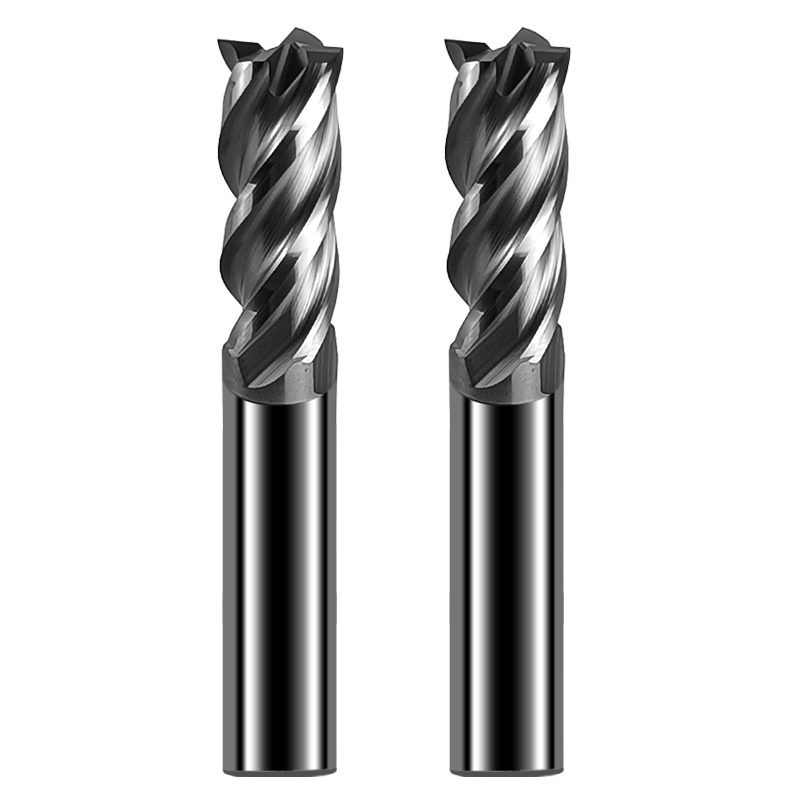
Pre-Use Inspection:
Visual: Chips, discoloration, edge condition
Measurement: Diameter, length, corner radius
Runout: Should be < 0.0002" TIR for finishing, < 0.001" for roughing
Balance: Critical for tools > 10,000 RPM or diameters > 1"
In-Process Monitoring:
Sound: Changes indicate wear or chip packing
Surface finish: Deterioration signals edge breakdown
Chip color: Blue chips in steel = too hot; silver = optimal
| Failure Mode | Visual Indicators | Root Causes | Corrective Actions |
|---|---|---|---|
| Flank Wear | Uniform wear land on clearance face | Abrasive material, high SFM | Reduce speed, change coating |
| Crater Wear | Depression on rake face | Chemical interaction, heat | Reduce feed, improve coolant |
| Chipping | Small pieces missing from edge | Interrupted cut, unstable setup | Use tougher grade, reduce engagement |
| Catastrophic Fracture | Tool broken in multiple pieces | Excessive load, crash, chip packing | Check programming, improve chip evacuation |
| Thermal Cracking | Perpendicular cracks on face | Thermal cycling, inadequate coolant | Maintain constant cut, use through-tool coolant |
person: Mr. Gong
Tel: +86 0769-82380083
Mobile phone:+86 15362883951
Email: info@jimmytool.com
Website: www.jimmytool.com


