

Carbide vs Diamond Drill Bits: Which One Dominates High-Precision Machining?
Date:2026-01-27Number:1543
Choosing between carbide vs diamond drill bits often determines whether a production run ends with perfect tolerances or a pile of scrapped parts. In high-speed CNC environments, using diamond tipped drill bits can extend tool life by over 500% when tackling abrasive non-ferrous alloys compared to standard carbide.
At Jimmytools, we’ve analyzed thousands of machining cycles to help you master the gap in thermal stability, material compatibility, and cost-per-hole.
The main difference is what they're made of and how they cut. Carbide is tough and can be used for many things, but diamond is super hard and better for certain jobs.
Carbide Bits:These tools are made from really strong tungsten carbide. They use a metal mix to be both hard and able to take a beating. They're made to cut through stuff.
Diamond Bits: This tool has synthetic diamond bits in the tip. Since diamonds are the hardest stuff around, they're made to cut through really tough stuff that would mess up other tools super fast.
| Feature | Carbide Drill Bits | Diamond Tipped Drill Bits |
| Vickers Hardness | ~1,600 HV | ~8,000+ HV |
| Cutting Action | Shearing / Slicing | Grinding / Abrading |
| Best For | Steel, Stainless, Wood | Aluminum, CFRP, Ceramics, Glass |
| Failure Mode | Gradual Flank Wear | Brittle Chipping |
Carbide drill bits are a common tool in machining, especially when you're working with iron-based metals and woodworking. They're pretty essential.
Ferrous Metal and General Purpose Mastery
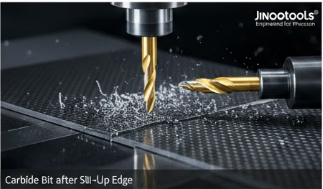
When working with stainless steel (like 304/316L), cast iron, or regular alloy steel, carbide's toughness really helps it handle the stress of cutting. A good speed to keep things running smoothly is usually around 35-60 meters per minute. This helps balance getting rid of shavings and keeping the heat down.
Affordability and Maintenanc
For woodworking or small production runs, carbide is a better value. Unlike diamond bits, carbide bits can be easily sharpened with standard tools. This means regular upkeep can make them last longer, even with heavy use.
Structural Rigidity and Flexibilit
If you're using equipment that's not super sturdy, like a hand drill, carbide tools are more forgiving. They can handle little vibrations without breaking, which makes them good for working with softer stuff like plastics, wood, and basic metals.
Diamond drill bits work great and last a long time, even when you're drilling into really tough, abrasive stuff. They also give you really precise holes.
Managing High-Silicon Aluminum & Composite
When working with aluminum alloys that have more than 12% silicon, or with carbon fiber (CFRP), regular tungsten carbide tools can fail quickly due to built-up edge or wear. On the other hand, diamond drills have a very low friction, which keeps the hole wall finish under Ra 0.6 and really stops the composite material from splitting.
Extreme Heat Resistance and Accurac
Diamonds are great at moving heat away, much better than hard metal mixes. This means diamond drill bits stay cool when drilling for a while. Because of this, parts stay the right size without heat messing things up.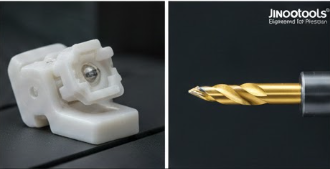
Enhanced Safety and Stabilit
Becausediamond tools are super hard, they don't vibrate much when drilling into glass, tile, or hard metal. This keeps your CNC spindle safe and also means less dust, so your workspace stays cleaner and safer.
Diamond burr bits are a must-have for fine finishing. They work great on metal, but they're also awesome on hard, non-metal stuff, too:
Hardened Steel & Mold Making: They can remove tiny burrs on materials harder than HRC 60+.
Ceramics and Glass: They're used to grind medical implants or lenses to be super smooth.
Stone & Tiles: They can drill through stone and tile better than regular drill bits, which is useful for construction and art projects.
Before switching to diamond drill bits, verify the following core parameters:
Spindle Taper and Run-out Control
Diamond tools are extremely sensitive to runout. Spindle runout must be controlled within 0.003mm. It is recommended to use shrink-fit toolholders to prevent brittle chipping caused by vibration.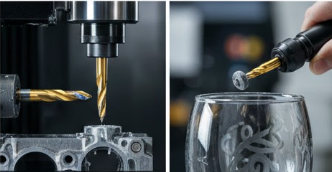
The “Iron & Soft Material” Traps
Prohibited Zone: Strictly prohibit machining ferrous metals. At high temperatures, carbon atoms in diamond can dissolve into iron (chemical wear).
Avoid Pitfalls: Avoid machining extremely soft plastics or soft aluminum. These materials are prone to “hot melt adhesion,” which clogs diamond abrasive grains and causes tool failure.
TCO (Total Cost of Ownership) Calculation
In high-volume production (>2,000 holes), despite a higher unit price, diamond drill bits achieve a significantly lower cost per hole than carbide bits by reducing tool change downtime by 80%.
In the carbide vs. diamond drill bits showdown, there is no absolute winner:
Choose Carbide:For machining steel, stainless steel, wood, or small-batch production with budget constraints.
Choose Diamond:For machining high-silicon aluminum, composites, ceramics, glass, or large-scale automated production demanding ultra-stable Cpk.
Partner with Jinootools for Precision
At Jimmytools, we don't just manufacture cutting tools—we deliver optimized machining solutions. With deep expertise in PCD and tungsten carbide technology, we help manufacturers worldwide tackle the toughest material challenges.
Ready to boost your throughput? Contact Jimmytools today for a custom tool life analysis or to request a quote for our diamond-tipped drill bits. Let's hit those tight tolerances together.
Q: Can diamond tipped drill bits be used on steel?
A: No. Diamond has a high chemical affinity for iron. At high temperatures, the carbon atoms in the diamond drilling bit will dissolve into the steel, leading to rapid chemical wear. Use carbide bits for all ferrous metals.
Q: Why are diamond bits more expensive than carbide?
A: The cost of synthetic diamonds and the complex PCD/CVD manufacturing process drive the price up. However, when comparing diamond vs carbide in mass production, diamond’s extreme tool life results in a lower cost-per-hole.
Q: Are carbide bits better for woodworking?
A: Yes. Carbide drill bits are more economical and versatile for softer materials like wood and plastic, as they are easier to sharpen and maintain for general-purpose tasks.
person: Mr. Gong
Tel: +86 0769-82380083
Mobile phone:+86 15362883951
Email: info@jimmytool.com
Website: www.jimmytool.com


