

How PCD Milling Cutters Transform Machining?
Date:2026-01-27Number:1391In today's competitive manufacturing landscape, PCD milling cutters (Polycrystalline Diamond) represent a quantum leap in cutting tool technology. These diamond-tipped tools aren't just incremental improvements—they're transformational solutions that deliver 50-100 times longer tool life than carbide in specific applications. For manufacturers machining high-silicon aluminum, composites, and abrasive non-ferrous materials, PCD technology is no longer a luxury but a strategic necessity.
The unique properties of PCD—extreme hardness, exceptional wear resistance, and superior thermal conductivity—make it the ultimate solution for applications where conventional tools fail prematurely. This comprehensive guide explores when, why, and how to implement PCD milling cutters to maximize productivity, quality, and profitability.
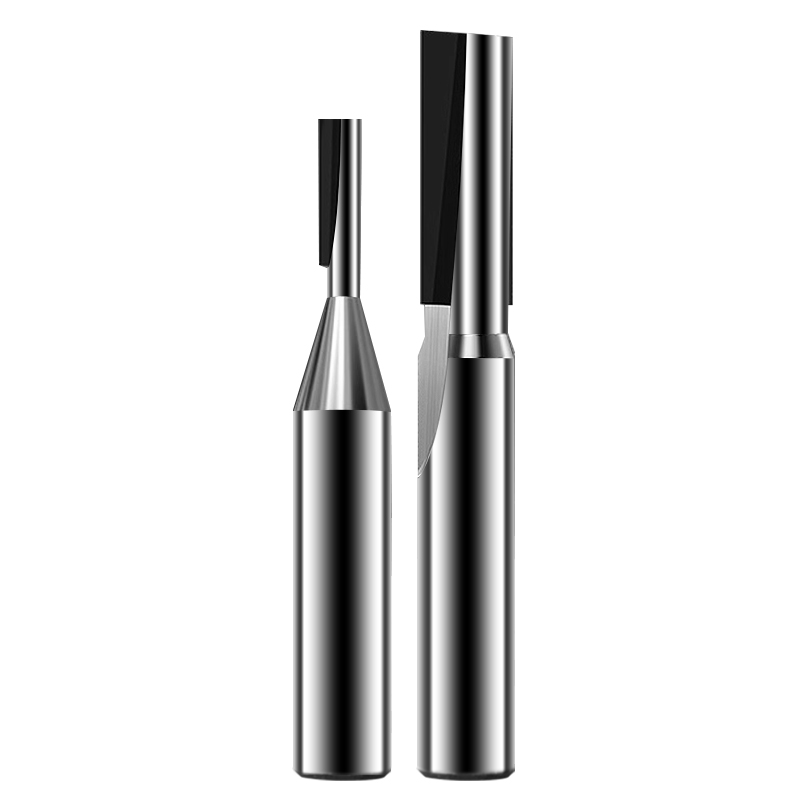
Polycrystalline Diamond is engineered through an advanced high-pressure, high-temperature (HPHT) process that bonds micron-sized diamond particles into a solid, uniform structure. Unlike natural single-crystal diamonds with cleavage planes, PCD's polycrystalline structure provides isotropic properties—equal strength in all directions.
Key Advantages of PCD:
Exceptional Hardness: 50-70 GPa (3-4 times harder than carbide)
Superior Wear Resistance: Lasts 50-100× longer in abrasive applications
Excellent Thermal Conductivity: 500-700 W/mK (dissipates heat effectively)
Low Friction Coefficient: Reduces cutting forces and power consumption
Chemical Inertness: Resists material adhesion and built-up edge
| Material | Hardness | Best For | Limitations |
|---|---|---|---|
| PCD | 50-70 GPa | Non-ferrous, composites, abrasives | Not for ferrous materials |
| Carbide | 16-20 GPa | General purpose, steels | Wears quickly in abrasives |
| CBN | 35-45 GPa | Hardened steels, cast iron | Limited to hard materials |
| HSS | 8-10 GPa | Low-volume, manual machining | Low heat resistance |
PCD performance varies significantly based on diamond grain size:
Fine Grain (0.5-2 μm): Excellent edge sharpness, superior surface finish
Medium Grain (5-10 μm): Balanced wear resistance and toughness
Coarse Grain (15-25 μm): Maximum abrasion resistance for severe applications
Selection Rule: Match grain size to material abrasiveness—finer grains for finishing, coarser grains for roughing abrasive materials.
1. High-Silicon Aluminum Alloys
Aluminum alloys with silicon content above 8% rapidly wear carbide tools. PCD excels here:
Typical Alloys: AISi9Cu3, AISi12, AISi17Cu4Mg (390 Aluminum)
Performance: 50-100× longer tool life vs. carbide
Applications: Automotive cylinder heads, transmission cases, engine blocks
Economic Impact: Despite higher initial cost, lower cost per part
2. Composite Materials
Carbon fiber, fiberglass, and other composites destroy conventional tools:
Challenge: Abrasive fibers are harder than carbide
PCD Solution: Diamond's hardness exceeds composite abrasives
Additional Benefit: Cleaner cuts with minimal delamination
Applications: Aerospace components, sporting goods, automotive panels
3. Other Non-Ferrous Materials
Copper & Brass: For burr-free machining and extended tool life
Magnesium: Fire-resistant properties important for safety
Wood Composites: MDF, particle board (200-400× longer life)
Reinforced Plastics: Glass-filled or carbon-filled polymers
PCD is NOT suitable for:
Ferrous Materials (steel, iron, stainless steel)
Reason: Diamond reacts chemically with iron at cutting temperatures
Result: Rapid chemical wear and catastrophic failure
High Nickel Alloys
Titanium (limited success, generally not recommended)
Rule of Thumb: If the workpiece material contains significant iron, nickel, or cobalt, avoid PCD tools.
1. Standard PCD End Mills
2-3 Flutes: For aluminum, maximum chip evacuation
4+ Flutes: For finishing, higher feed rates
Helix Angles: 30°-45° depending on material
Coatings: Usually uncoated or specialized diamond coatings
2. Specialized PCD Geometries
Ball Nose PCD: For 3D contouring and complex surfaces
Corner Radius PCD: Increased edge strength (R0.5-R3.0)
Chamfer Mills: For deburring and edge preparation
Thread Mills: For high-volume thread production in aluminum
3. PCD Face Mills
Indexable Inserts: Most common, economical
Solid PCD Face Mills: For superior finish quality
High-Feed Designs: Small lead angles for reduced cutting forces
Applications: Large surface facing operations
When choosing a PCD milling cutter, consider:
Material Being Machined
Silicon content in aluminum
Fiber type in composites
Abrasiveness level
Operation Type
Roughing vs. finishing
Slotting vs. peripheral milling
Depth of cut requirements
Machine Capability
Spindle speed (PCD requires high RPM)
Rigidity and vibration control
Coolant system capability
Economic Factors
Production volume
Current tooling costs
Quality requirements
.jpg "pcd milling cutter 3 (convert.io).jpg")
For Aluminum (AISi9Cu3):
Tool: 10mm 3-flute PCD end mill
SFM: 800-1200 m/min (2625-3937 ft/min)
RPM: 25,000-38,000
Feed per Tooth: 0.15-0.30 mm (0.006-0.012")
Feed Rate: 11,250-34,200 mm/min (443-1346 IPM)
Axial DOC: 0.5-2.0 × diameter
Radial DOC: 10-50% of diameter
For Carbon Fiber Composites:
Tool: 8mm 2-flute PCD end mill
SFM: 200-400 m/min (656-1312 ft/min)
Feed per Tooth: 0.05-0.15 mm (0.002-0.006")
Coolant: Dry with vacuum or minimum lubrication
Strategy: Climb milling preferred
1. Rigidity is Paramount
PCD tools are brittle compared to carbide. Any vibration or deflection can cause chipping:
Use shortest possible tool extension
Ensure machine and workpiece are rigid
Consider dampened tool holders for long reach
2. Coolant Strategy
Through-tool coolant: Essential for chip evacuation
Pressure: 500-1000+ PSI recommended
Filtration: <10 micron to prevent nozzle clogging
Concentration: 8-12% for aluminum machining
3. Toolpath Optimization
Climb milling: Generally preferred for better surface finish
Constant engagement: Avoid sudden direction changes
Corner slowing: Reduce feed in corners to prevent chipping
Chip evacuation: Ensure chips are cleared to prevent re-cutting
Running Too Slow: PCD requires high surface speeds to work effectively
Insufficient Coolant: Leads to thermal shock and premature failure
Poor Chip Evacuation: Causes chip packing and tool damage
Using on Ferrous Materials: Results in rapid chemical wear
Improper Tool Handling: PCD edges are brittle and can chip if mishandled
Case Study: Aluminum Cylinder Head Production
Material: AISi10Mg aluminum
Annual Volume: 20,000 pieces
Operation: Deck face milling and port machining

Carbide Solution:
- Tool cost: $8,000 annually
- Tool change time: 150 hours/year
- Cycle time: 5.2 minutes/part
- Scrap rate: 1.5% ($18,000)
- Total annual cost: $112,400

PCD Solution:
- Initial PCD investment: $25,000
- Annual tool cost: $2,000
- Tool change time: 25 hours/year
- Cycle time: 4.4 minutes/part (15% faster)
- Scrap rate: 0.3% ($3,600)
- Total annual cost: $67,600

Annual Savings: $44,800 (40% reduction)
Payback Period: 6.7 months
5-Year Net Savings: $199,000
Consider PCD when ANY of these conditions apply:
High Production Volume: >10,000 parts annually
Expensive Material: Workpiece value >$50/part
High Machine Rate: >$75/hour machine cost
Critical Quality Requirements: Tight tolerances or superior finish needed
Secondary Operations: Can eliminate deburring or polishing
Current High Tooling Costs: Carbide tool life <100 parts
TCO = (Tool Purchase Price ÷ Parts per Tool)
      + (Tool Change Time × Machine Rate ÷ Parts per Tool)
      + (Cycle Time × Machine Rate)
      + (Scrap Cost ÷ Good Parts Rate)
Key Insight: While PCD tools cost 5-10× more than carbide, their 50-100× longer life typically results in lower total cost per part.
Phase 1: Pilot Program
Identify one problematic application
Work with a reputable PCD supplier
Conduct controlled tests with measurement
Document parameters and results
Phase 2: Parameter Development
Start at 80% of recommended speeds
Gradually increase based on results
Optimize for your specific conditions
Create standardized setup sheets
Phase 3: Full Implementation
Train operators on PCD handling
Establish tool management procedures
Implement preventive replacement schedules
Track performance metrics
Proper Storage:
Store in original containers
Protect cutting edges from contact
Keep in controlled environment
Installation Precautions:
Clean tool holder thoroughly
Check runout (<0.005 mm)
Use correct torque for retention
Verify coolant flow before starting
Monitoring Tool Condition:
Regular visual inspection
Monitor cutting sounds
Track surface finish changes
Measure dimensional consistency
| Problem | Likely Cause | Solution |
|---|---|---|
| Edge Chipping | Vibration, interrupted cuts | Increase rigidity, adjust parameters |
| Rapid Wear | Incorrect material, too slow | Verify material, increase SFM |
| Poor Finish | Dull tool, wrong parameters | Replace/resharpen, optimize feed |
| Breakage | Excessive load, deflection | Reduce DOC, improve setup |
PCD milling cutters are evolving rapidly. Emerging trends include:
Nano-PCD Grades: Sub-micron grain sizes for mirror finishes
Advanced Geometries: Optimized for specific applications
Hybrid Tools: Combining PCD with other materials
Smart Tools: Embedded sensors for condition monitoring
Improved Accessibility: Lower-cost options for smaller shops
Final Recommendation:
Start your PCD journey with a single, well-chosen application. The learning curve is manageable, and the potential rewards are substantial. For the right applications—particularly high-silicon aluminum and composites—PCD technology offers one of the highest ROI opportunities in modern machining.
Remember: The most expensive tool isn't the one with the highest price tag—it's the one that doesn't meet your production needs. For many manufacturers, PCD milling cutters represent not an expense, but a strategic investment in productivity, quality, and competitive advantage.
person: Mr. Gong
Tel: +86 0769-82380083
Mobile phone:+86 15362883951
Email: info@jimmytool.com
Website: www.jimmytool.com


