

How to Choose Slot Milling Cutters for Precision Work?
Date:2026-01-28Number:1358Slot milling represents one of the most demanding operations in machining, requiring specialized tools designed specifically for creating precise slots, grooves, and keyways. Unlike general-purpose milling, slot cutting involves unique challenges including simultaneous cutting on both tool sides, significant chip evacuation demands, and the need for dimensional accuracy that often falls within thousandths of an inch tolerance. Slot milling cutters are engineered solutions to these challenges, offering geometries and features optimized for specific slot profiles and materials. Their importance extends across manufacturing sectors from machine tool production to automotive components and aerospace assemblies, where precise slots ensure proper mechanical function, secure fastening, and reliable performance. Understanding the range of available slot milling cutters and their proper application forms a critical skill set for modern machinists and manufacturing engineers seeking to optimize their slotting operations for quality, efficiency, and cost-effectiveness.
The world of slot milling cutters encompasses several specialized categories, each designed for specific slot profiles and applications. Plain slot milling cutters serve as the foundation of slotting operations, featuring cutting teeth only on their periphery to create straight, flat-bottomed slots of precise width. These tools range from simple designs for general-purpose work to more advanced versions with staggered teeth that reduce vibration and improve chip removal. Their primary applications include creating grooves for seals, channels for wiring, and slots for mechanical retention in components ranging from simple brackets to complex machinery parts. While economical and widely applicable, plain slot cutters perform best in materials that produce manageable chips and where slot depth doesn't exceed certain proportions relative to cutter diameter.
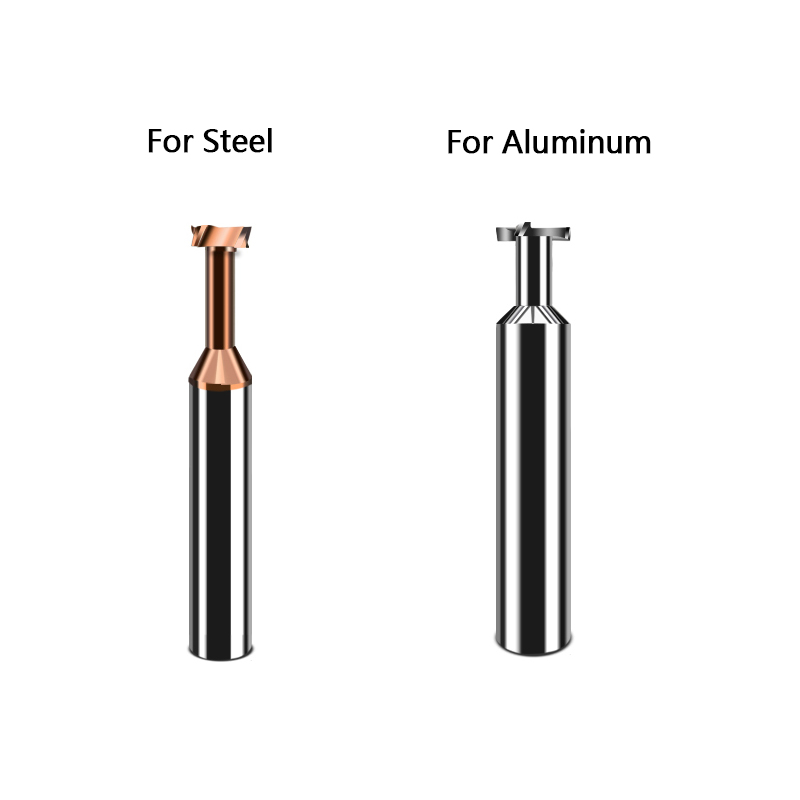
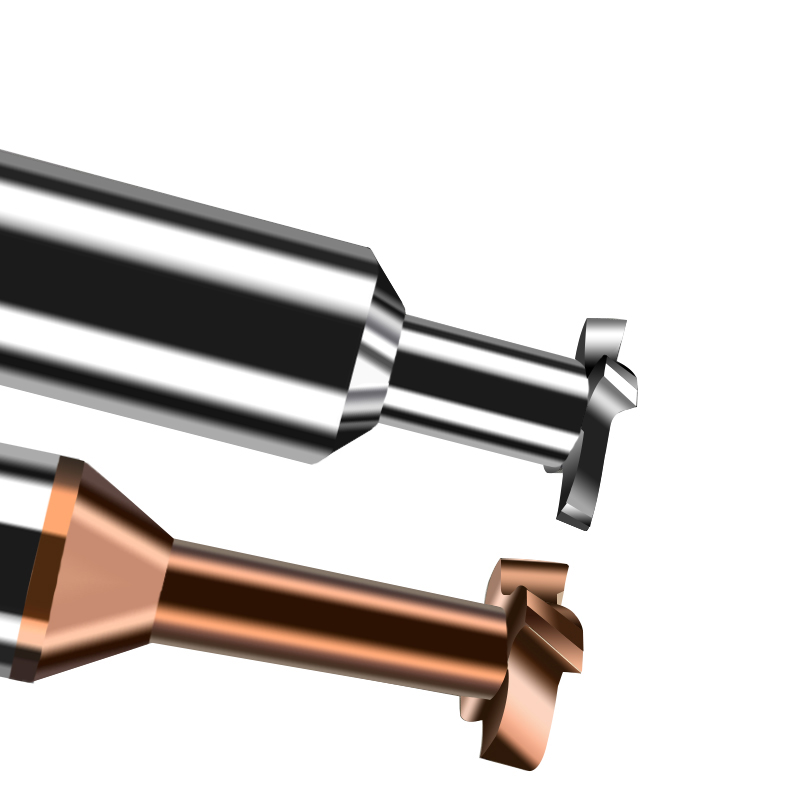
T-slot milling cutters address the specific need for creating the undercut slots essential for machine tool tables, fixture plates, and modular workholding systems. These specialized tools feature a distinctive design with a small-diameter shank and larger cutting head perpendicular to it, enabling them to create the characteristic T-shaped profile that accommodates standard T-bolts and fixtures. The machining process typically involves two steps: first milling a straight slot with a standard end mill to create clearance for the cutter's neck, followed by the T-slot cutter forming the undercut portion. This two-operation approach requires precise coordination but yields accurately dimensioned T-slots ready for immediate use with standard clamping components. Proper T-slot milling ensures secure workpiece fixturing and contributes to overall machining accuracy and safety.
Woodruff keyseat cutters represent another specialized category designed specifically for creating semicircular keyways in shafts and other cylindrical components. These disk-shaped cutters with peripheral teeth come in standardized sizes corresponding to Woodruff key dimensions, ensuring precise fits for power transmission applications in machinery, automotive systems, and industrial equipment. Their curved cutting profile creates the exact radius needed for Woodruff keys, providing superior torque transmission compared to straight keyways while being easier to install and remove. The precision of these cutters directly affects the fit and function of keyed connections, making proper selection and application critical for reliable mechanical performance.
Dovetail slot cutters cater to applications requiring angled slots with precise included angles, commonly found in machine tool slides, precision fixtures, and mechanical assemblies requiring accurate linear motion. These cutters feature cutting edges ground to specific angles—typically 45, 60, or 90 degrees—creating the characteristic dovetail profile that provides excellent load-bearing capability and alignment accuracy. Their application often involves complementary cutting operations to create matching male and female dovetail features, requiring careful setup and alignment to ensure proper fit and smooth operation. The precision of dovetail machining directly impacts the accuracy and longevity of machine components, making these specialized cutters essential for high-precision manufacturing environments.
The selection of appropriate slot milling cutters begins with understanding the workpiece material and its machining characteristics. Different materials present unique challenges that influence tool material selection, geometry choices, and cutting parameters. Aluminum and its alloys, common in aerospace and automotive applications, require slot milling cutters with sharp cutting edges, polished flutes, and adequate chip clearance to prevent material adhesion and chip packing. The relatively soft nature of aluminum allows for higher cutting speeds but demands attention to chip evacuation, particularly in deep slotting applications. Tools with specialized aluminum coatings and optimized helix angles typically provide the best results in these materials, delivering clean cuts with minimal burr formation.
Steel and cast iron present different challenges, generating higher cutting forces and more heat during machining. Slot milling cutters for these materials require greater edge strength, advanced heat-resistant coatings, and robust construction to withstand the demanding conditions. Steel applications benefit from tools with reinforced cutting edges and geometries that balance chip formation with evacuation efficiency. The abrasive nature of cast iron necessitates excellent wear resistance and designs that facilitate removal of the powder-like chips characteristic of this material. Stainless steels add further complexity with their work-hardening tendencies, requiring sharp cutting edges, specialized geometries, and careful parameter selection to prevent excessive heat generation and premature tool wear.
Exotic materials such as titanium alloys and high-temperature superalloys demand the most from slot milling technology. Titanium's poor thermal conductivity and tendency to work-harden require specialized tool geometries, sharp cutting edges, and meticulous attention to heat management and chip evacuation. Composite materials, particularly carbon fiber and fiberglass reinforced polymers, present entirely different challenges with their abrasive reinforcing fibers that rapidly wear conventional tooling. These applications often necessitate diamond-coated or polycrystalline diamond (PCD) slot milling cutters to achieve acceptable tool life and cutting quality. Beyond material considerations, production volume and precision requirements significantly influence tool selection. High-volume production environments may justify premium tooling with advanced features that maximize productivity and minimize changeover time, while prototype or low-volume applications might prioritize flexibility and economy over ultimate performance.
Successful slot milling operations depend on proper technique implementation beginning with secure workpiece fixturing. The significant cutting forces generated during slotting demand rigid setups to prevent vibration, deflection, and resulting inaccuracies. Proper clamping not only ensures dimensional accuracy but also contributes to tool life by minimizing chatter and unstable cutting conditions. Cutting parameter selection represents another critical aspect, balancing productivity with tool longevity and surface quality. While manufacturers provide recommended starting parameters, these must be adapted to specific machine capabilities, workpiece conditions, and desired outcomes. Progressive testing methodology, beginning with conservative settings and methodically increasing based on results, typically yields optimal parameters for each unique application.
Coolant application and chip management prove particularly important in slot milling operations. Effective coolant delivery to the cutting zone serves multiple purposes: controlling heat generation, improving surface finish, extending tool life, and facilitating chip removal. Through-tool coolant systems provide the most direct delivery method, particularly valuable in deep slot applications where chips tend to accumulate. Alternative approaches include high-pressure external coolant directed precisely at the cutting interface or specialized air blast systems for materials where liquid coolants prove impractical. Chip evacuation demands special attention in slot milling, as accumulated chips can lead to recutting, increased tool wear, dimensional inaccuracies, and potential tool damage. Programming techniques such as peck cycles or periodic retract moves help clear chips in deep slotting applications, though their impact on cycle time must be considered.
Tool path strategy significantly influences slot milling results, with climb milling generally preferred for better surface finish and reduced cutting forces. However, conventional milling may offer advantages in specific situations, particularly when machining materials with hard surface scales or when machine rigidity limitations exist. Modern CNC systems offer advanced tool path options including adaptive clearing routines that maintain constant tool engagement and optimize chip formation. These advanced strategies can dramatically improve slot milling performance, particularly in difficult materials or challenging geometries. Monitoring and maintenance practices complete the operational picture, with regular inspection of cutting edges, attention to cutting sounds and forces, and systematic tool management based on documented performance data. Implementing these best practices transforms slot milling from a problematic operation into a reliable, repeatable process that consistently delivers precision results.
The economics of slot milling extend beyond simple tool purchase prices to encompass total operational costs including tool life, machining time, setup efficiency, and quality outcomes. While specialized slot milling cutters typically command higher prices than general-purpose tools, their optimized performance often justifies the investment through extended tool life, improved productivity, and superior quality results. True cost analysis must consider factors such as tool change frequency, setup time, scrap rates, and secondary operation requirements. In many production environments, the precision provided by purpose-designed slot milling cutters eliminates subsequent operations such as broaching, grinding, or hand fitting, providing substantial overall savings despite higher initial tooling investment.
Return on investment calculations become particularly favorable in high-volume production scenarios or applications demanding tight tolerances and consistent quality. Modern manufacturing increasingly recognizes that the most expensive tool is not necessarily the one with the highest purchase price, but rather the one that fails to meet production requirements efficiently. This perspective encourages investment in premium slot milling solutions when they deliver measurable improvements in overall manufacturing economics. Implementation typically follows a phased approach beginning with pilot testing on selected applications, progressing through parameter optimization and operator training, and culminating in full-scale deployment with performance monitoring and continuous improvement.
Looking forward, slot milling technology continues evolving with advancements in tool materials, coatings, and digital integration. New substrate materials promise enhanced toughness and wear resistance, while advanced coatings offer improved heat management and friction reduction. Digital manufacturing trends are beginning to influence slot milling through tools with embedded sensors for condition monitoring and systems that enable predictive maintenance and adaptive parameter adjustment. These developments point toward increasingly automated, optimized slot milling processes integrated within digital manufacturing ecosystems. For manufacturers, mastering current slot milling technology while remaining receptive to emerging developments ensures that their slotting operations contribute effectively to overall manufacturing excellence, quality, and competitiveness in an evolving industrial landscape.
person: Mr. Gong
Tel: +86 0769-82380083
Mobile phone:+86 15362883951
Email: info@jimmytool.com
Website: www.jimmytool.com


