

How Carbide Milling Cutters Improve Machining Performance?
Date:2026-01-29Number:1282In the intricate world of modern machining, carbide milling cutters stand as the universal standard, bridging the gap between high-speed steel's toughness and the extreme performance of specialty materials like PCD and CBN. These remarkable tools, born from the marriage of tungsten carbide particles and cobalt binders, have revolutionized manufacturing floors worldwide. Their adoption represents more than just a tooling choice—it signifies a commitment to productivity, precision, and profitability in an increasingly competitive global market.
The transition from high-speed steel to carbide marked one of the most significant advancements in machining history. Where HSS tools would soften and fail, carbide maintained its cutting edge, enabling faster speeds, deeper cuts, and unprecedented consistency. Today, approximately 75% of all milling operations in industrial settings employ carbide cutters, a testament to their versatility and performance across materials ranging from aluminum and plastics to stainless steels and even some hardened materials.
This comprehensive guide explores the technical sophistication behind carbide milling cutters, providing practical insights into selection, application, and optimization. Whether you're running a high-production automotive line or a precision job shop, understanding carbide technology is essential for maximizing machine investment and achieving consistent, high-quality results.
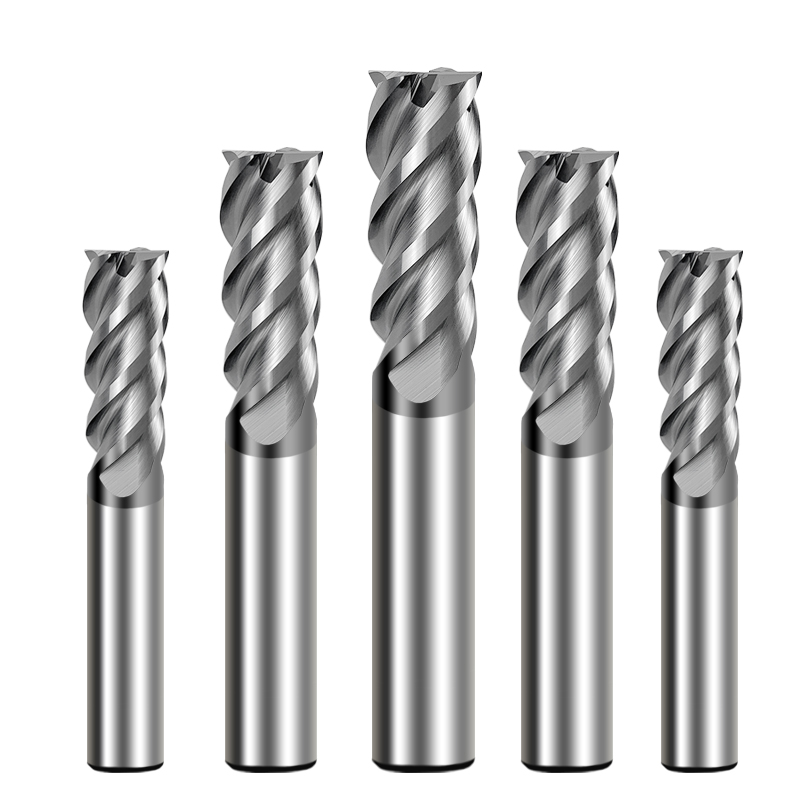
At their core, carbide milling cutters derive their exceptional properties from a sophisticated material science foundation. Tungsten carbide, the primary component, provides extraordinary hardness and wear resistance, while the cobalt binder offers crucial toughness and fracture resistance. The magic lies in the precise balance between these elements and the manufacturing processes that transform powder into precision cutting tools.
The manufacturing journey begins with micron-sized tungsten carbide powders carefully blended with cobalt binders in proportions typically ranging from 3% to 12% cobalt by weight. Lower cobalt content yields harder, more wear-resistant grades suitable for finishing operations and stable cutting conditions. Higher cobalt percentages create tougher substrates capable of withstanding the shocks and vibrations of interrupted cuts and roughing applications. This powder mixture undergoes pressing and sintering at temperatures approaching 1,400°C, transforming into the dense, homogeneous structure that defines quality carbide tools.
Modern advancements have introduced micrograin and ultrafine carbide substrates, where carbide particle sizes measure below one micron. These refined structures provide enhanced hardness without sacrificing toughness, enabling sharper cutting edges and superior performance in precision applications. Additionally, specialized additives like tantalum, titanium, and niobium carbides create customized grades for specific challenges, such as high-temperature resistance or improved chemical stability when machining difficult aerospace alloys.
While the carbide substrate provides the structural foundation, advanced coating technologies serve as the performance multiplier, extending tool life by 300% to 800% in many applications. These nanometer-thin layers, applied through sophisticated physical or chemical vapor deposition processes, create surface enhancements that address specific machining challenges.
Titanium nitride (TiN) coatings, recognizable by their distinctive gold color, established the first generation of tool coatings, offering general wear resistance and reduced friction. Their successors—titanium carbonitride (TiCN), titanium aluminum nitride (TiAlN), and aluminum titanium nitride (AlTiN)—each brought specialized advantages. TiCN provides superior hardness for abrasive materials, while TiAlN and AlTiN offer exceptional thermal stability for high-speed applications and difficult-to-machine materials.
The latest generation of coatings incorporates nanotechnology, with multilayer and nanocomposite structures that combine hardness, lubricity, and thermal protection in optimized proportions. Diamond-like carbon (DLC) coatings excel in non-ferrous applications, reducing aluminum adhesion and enabling higher surface finishes. Each coating type represents a careful balance of properties, with selection depending on the specific material being machined, cutting conditions, and desired outcomes.
Beyond materials and coatings, the geometry of carbide milling cutters represents a sophisticated field of optimization where subtle design variations produce dramatically different performance characteristics. Helix angles, for instance, significantly influence chip evacuation, cutting forces, and surface finish. Low helix angles around 30 degrees provide strong, stable cutting edges ideal for hard materials and interrupted cuts, while high helix angles approaching 45 degrees create shearing actions that excel in aluminum and other non-ferrous materials where chip evacuation is paramount.
Flute design represents another critical geometrical consideration. Traditional straight flutes provide maximum edge strength for certain applications, while helical flutes offer smoother cutting action and improved chip evacuation. Variable helix designs, with intentionally uneven flute spacing, have revolutionized machining by disrupting harmonic vibrations that cause chatter, particularly in extended-reach applications or when machining thin-walled components.
Corner designs have evolved significantly from simple sharp corners to sophisticated radiused and chamfered geometries. Small corner radii dramatically increase edge strength, reducing chipping in difficult materials and extending tool life substantially. High-performance geometries incorporate specialized edge preparations like T-lands and wiper flats that enable higher feed rates while maintaining or improving surface finish quality. These design elements work in concert to optimize performance for specific applications, whether heavy roughing, high-speed finishing, or delicate profiling operations.
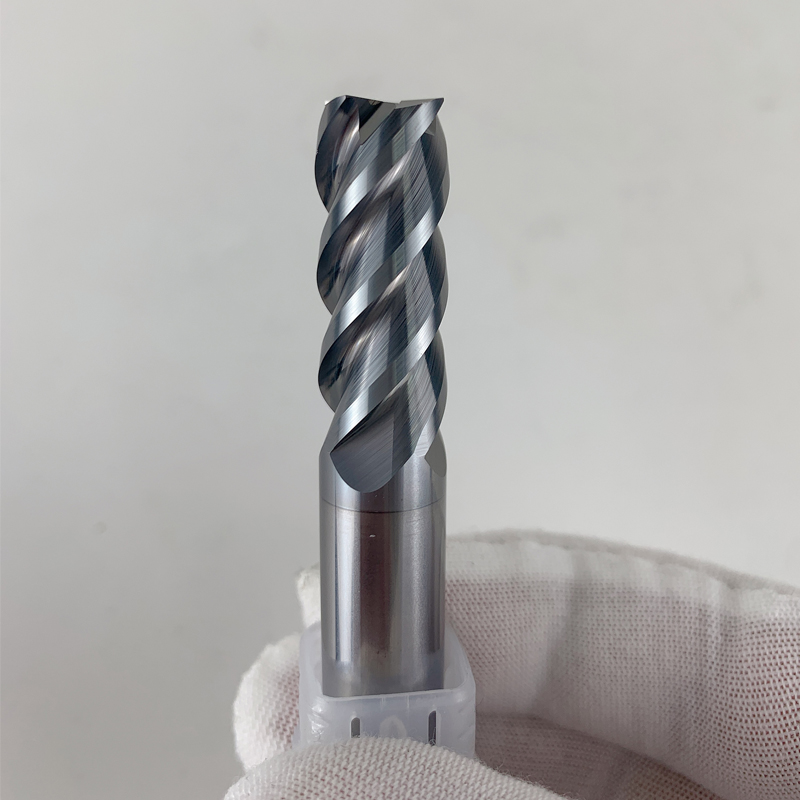
The true test of carbide milling cutter knowledge lies in practical application, where tool selection directly impacts productivity and part quality. Aluminum machining, for instance, demands tools with sharp cutting edges, high helix angles, and often polished flutes or specialized coatings to prevent material adhesion. High spindle speeds and feed rates maximize productivity, while proper chip evacuation prevents recutting and maintains dimensional accuracy.
Steel and stainless steel present different challenges, requiring robust tool geometries that withstand higher cutting forces and temperatures. Here, medium helix angles, corner radii for edge strengthening, and thermal-resistant coatings prove essential. Parameter selection must balance material removal rates with heat generation, particularly with stainless steels that work-harden if machined improperly. Coolant application becomes critical, with through-tool high-pressure systems providing both cooling and chip evacuation benefits.
Hard milling operations, machining materials above 45 HRC, demand specialized approaches with micrograin carbide substrates, heat-resistant coatings, and conservative parameters that prioritize tool life and surface integrity. Recent advancements have expanded carbide's capabilities into areas once dominated by more exotic tool materials, with specialized grades and geometries enabling efficient machining of hardened tool steels, die steels, and even some powdered metals.
For composite materials, carbide tools with specialized geometries and occasionally diamond coatings provide solutions for carbon fiber, fiberglass, and other abrasive composites. These applications require careful attention to fiber orientation, delamination prevention, and dust control, with tool geometries designed to shear fibers cleanly rather than pull them from the matrix.
While carbide milling cutters represent higher initial investment compared to high-speed steel, their economic justification becomes clear through total cost analysis. The fundamental equation considers not just tool price, but tool life, machine utilization, and part quality. A carbide tool costing three times more than its HSS counterpart but lasting ten times longer while enabling faster machining speeds produces substantially lower cost per part.
Implementation requires systematic planning, beginning with application analysis to identify where carbide tools will provide maximum return. Pilot programs allow parameter development and verification before full-scale implementation. Staff training ensures proper handling, installation, and troubleshooting—critical elements since carbide's brittleness makes it susceptible to damage from improper use.
Ongoing optimization involves monitoring tool performance, tracking cost metrics, and staying informed about technological advancements. As carbide technology continues evolving with improved substrates, advanced coatings, and innovative geometries, maintaining current knowledge ensures competitive machining performance. In modern manufacturing, carbide milling cutters aren't merely consumables but strategic investments that directly impact productivity, quality, and ultimately, profitability across diverse machining applications.
person: Mr. Gong
Tel: +86 0769-82380083
Mobile phone:+86 15362883951
Email: info@jimmytool.com
Website: www.jimmytool.com


