

What Is a Carbide End Mill Used For?
Date:2025-12-13Number:1732In the world of precision machining, few tools are as indispensable—or as versatile—as the carbide end mill cutter. Whether you're working in aerospace, automotive manufacturing, mold and die production, or general CNC machining, understanding the role, capabilities, and proper application of carbide end mills is essential for achieving high-quality results, maintaining tool longevity, and optimizing production efficiency.
This article dives deep into the practical uses of carbide end mills, explores their material composition, compares them to alternative tooling options, and offers actionable insights for professionals looking to maximize performance in demanding machining environments. If you’ve ever asked, “What is a carbide end mill used for?”—you’re in the right place.
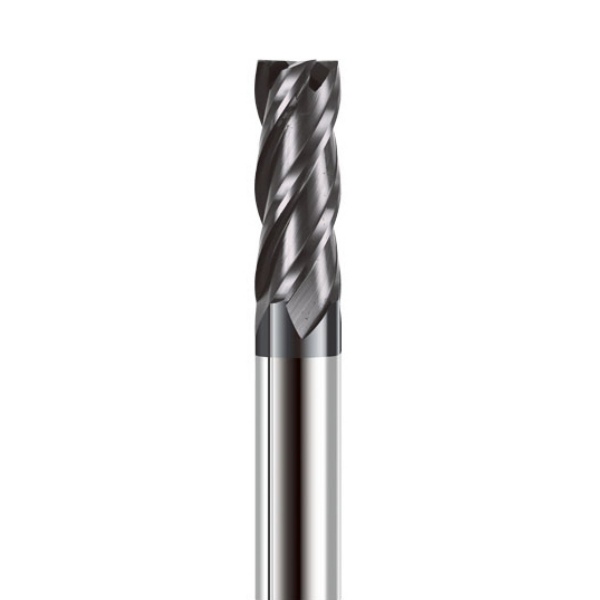
A carbide end mill cutter is a type of milling tool made primarily from tungsten carbide—a compound of tungsten and carbon known for its exceptional hardness, wear resistance, and ability to retain sharpness at high temperatures. Unlike traditional high-speed steel (HSS) end mills, carbide end mills can operate at significantly higher cutting speeds and feed rates without degrading quickly.
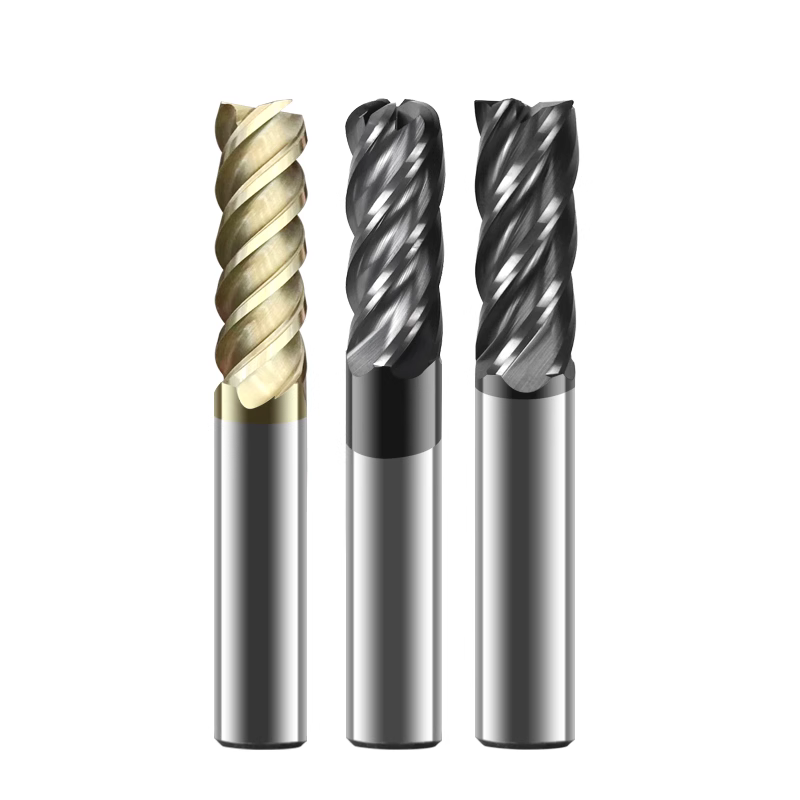
Carbide end mills come in various geometries, including square end, ball nose, corner radius, and tapered profiles, each designed for specific machining tasks such as slotting, profiling, contouring, or finishing. Their construction often includes multiple flutes (typically 2 to 8), with the number and design influencing chip evacuation, surface finish, and material compatibility.
So, what is a carbide end mill used for in real-world scenarios? The answer spans nearly every sector that relies on subtractive manufacturing:
Carbide end mills excel when cutting tough materials like stainless steel, titanium alloys, Inconel, and hardened tool steels. Their thermal stability allows them to maintain edge integrity even under extreme heat generated during high-speed operations—something HSS tools simply can’t match.
For example, in aerospace component fabrication, where parts are often machined from nickel-based superalloys, a premium carbide end mill cutter enables consistent material removal rates while minimizing tool wear and preventing workpiece deformation.
Ball nose and corner radius carbide end mills are widely used for 3D contouring and fine surface finishing. Mold and die makers rely heavily on these tools to produce intricate cavities, draft angles, and smooth surfaces that meet tight tolerances—often within microns.
The rigidity and dimensional stability of solid carbide ensure minimal deflection during light cuts, which is critical when achieving mirror-like finishes or complex organic shapes in plastic injection molds or turbine blades.
While often associated with finishing, carbide end mills are also engineered for aggressive roughing. Specialized roughing end mills—sometimes called “corncob” cutters—feature serrated flutes that break chips into smaller segments, reducing heat buildup and allowing for deeper axial passes.
In automotive transmission housing production, for instance, roughing carbide end mills rapidly remove bulk aluminum or cast iron before finishing operations take over.
Aluminum, brass, copper, and advanced composites (like carbon fiber-reinforced polymers) present unique challenges: they’re soft but prone to built-up edge, tearing, or delamination. Carbide end mills with polished flutes, high helix angles, and specialized coatings (e.g., TiB₂ or diamond-like carbon) are specifically designed to handle these materials cleanly and efficiently.
Many CNC shops use dedicated aluminum-cutting carbide end mills with 3-flute designs to balance chip clearance and surface quality—demonstrating how tailored tool selection directly impacts productivity.
The decision to invest in carbide end mill cutters isn’t just about performance—it’s also about cost-effectiveness over time. While the upfront cost per tool is higher than HSS, the total cost per part is often lower due to:
Longer tool life: Carbide can last 5–10 times longer than HSS in comparable applications.
Higher material removal rates (MRR): Faster feeds and speeds reduce cycle times.
Reduced downtime: Fewer tool changes mean more spindle uptime.
Consistent part quality: Stable cutting edges yield repeatable results across batches.
Moreover, modern carbide grades are engineered with micrograin structures and advanced binder phases (like cobalt or nickel) that enhance toughness without sacrificing hardness—making them suitable even for interrupted cuts or thin-walled components.
Not all carbide end mills are created equal. Professionals must consider several variables to match the right tool to the job:
2-flute: Ideal for soft materials (aluminum, plastics); excellent chip evacuation.
3–4 flute: General-purpose; balances speed and finish in steel and stainless.
5+ flute: Best for finishing hard materials; provides smoother surfaces but requires precise chip control.
Low helix (30°–35°): Better for roughing; stronger cutting edge.
High helix (45°–60°): Superior for finishing; reduces cutting forces and chatter.
Common coatings include:
TiN (Titanium Nitride): General-purpose, improves lubricity.
TiAlN (Titanium Aluminum Nitride): Excellent for high-temp alloys; forms protective oxide layer.
AlCrN (Aluminum Chromium Nitride): Superior oxidation resistance; ideal for dry machining.
Selecting the correct coating can extend tool life by 200% or more in certain applications.
Square end mills offer sharp corners for pockets and slots, while corner radius variants increase edge strength and reduce chipping—especially valuable in high-feed milling or when machining abrasive materials.
Even the best carbide end mill cutter can fail prematurely if misused. Here are frequent pitfalls professionals should avoid:
Running too slow: Carbide thrives at high speeds. Underutilizing RPM leads to rubbing instead of cutting, causing rapid edge dulling.
Insufficient coolant or air blast: While some carbide tools support dry machining, many benefit from directed coolant to manage heat and flush chips.
Excessive stick-out: Longer tool overhang increases vibration and deflection. Always use the shortest possible reach for the application.
Ignoring runout: Even 0.0005" of spindle or holder runout can double cutting forces on one flute, leading to premature failure.
Proper setup—including balanced toolholders, rigid workholding, and optimized CAM toolpaths—is just as critical as the tool itself.
Today’s carbide end mill cutters are the result of decades of metallurgical innovation and computational modeling. Recent advances include:
Variable pitch/flute spacing: Disrupts harmonic vibrations, enabling higher depths of cut without chatter.
Nanostructured carbide substrates: Offer improved fracture toughness for difficult-to-machine materials.
Integrated sensor-ready shanks: Emerging smart tools can monitor wear and temperature in real time (though still niche).
Manufacturers like Sandvik Coromant, Kennametal, OSG, and Harvey Tool continuously refine geometries using AI-driven simulations to predict performance under real-world conditions—bringing unprecedented precision to off-the-shelf tools.
When selecting a carbide end mill cutter, ask yourself:
1. What material am I cutting? (Hardness, abrasiveness, thermal conductivity)
2. What operation am I performing? (Roughing, slotting, profiling, finishing)
3. What machine capabilities do I have? (Max RPM, torque, coolant system)
4. What surface finish and tolerance are required?
5. Am I using proper workholding and toolholding?
Consulting manufacturer catalogs or using online tool selection guides (many now powered by interactive apps) can streamline this process. Don’t hesitate to contact technical support—reputable brands often provide free application engineering assistance.
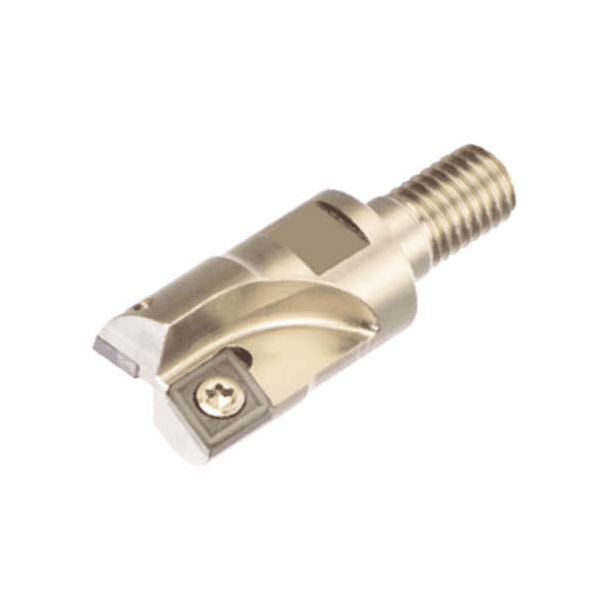
To answer the original question succinctly: A carbide end mill is used for precision cutting, shaping, and finishing of a vast array of materials—from aluminum to superalloys—with superior speed, accuracy, and durability compared to alternative tooling.
But beyond that definition lies a deeper truth: in modern manufacturing, the carbide end mill cutter is not just a consumable—it’s a strategic asset. Its performance directly influences throughput, part quality, and operational costs. By understanding its capabilities, respecting its limitations, and applying it intelligently, machinists and engineers unlock new levels of efficiency and innovation.
Whether you’re programming a 5-axis CNC mill or setting up a high-volume production line, investing time in mastering carbide end mill selection and usage pays dividends across every metric that matters.
person: Mr. Gong
Tel: +86 0769-82380083
Mobile phone:+86 15362883951
Email: info@jimmytool.com
Website: www.jimmytool.com


