

Ceramic insert vs CBN insert:Understanding the Key difference and Characteristics
Date:2026-01-26Number:1343Ceramic inserts or CBN inserts? Choosing the wrong one will not only ruin your part surface but also send your machining costs skyrocketing.
In real-world testing on hardened steel above 55 HRC, switching to CBN inserts directly extends tool life by 300%. This isn't just about efficiency—it's the core factor determining your shop's profitability.
This article will dissect the “life-or-death threshold” rule for 55 HRC through real-world parameter comparisons, revealing why the higher-priced CBN inserts can actually save you substantial downtime costs.
When selecting cutting tools, it's crucial to understand the key differences between ceramic and CBN blades. These two materials have distinct compositions, which directly impact their performance in various machining scenarios—notably in hardness, heat resistance, and durability.
Ceramic blades are primarily made from materials like alumina and silicon nitride. Alumina offers excellent wear resistance and can withstand temperatures up to 1200°C. These blades perform well in high-speed cutting of cast iron and hard steel.
Silicon nitride ceramics exhibit superior thermal shock resistance compared to pure alumina, meaning they are less prone to cracking during rapid temperature changes. Their hardness typically ranges between 93-95 HRA (Rockwell Hardness).
Ceramic inserts are more brittle than carbide, so thicker inserts are recommended for enhanced durability. While harder than standard carbide tools, they are less durable than CBN inserts.
Ceramic Insert Types:
* White ceramics (pure alumina) - Good for finishing operations
* Black ceramics (alumina + titanium carbide) - Improved toughness
* Silicon nitride ceramics - Better thermal shock resistance
CBN (cubic boron nitride) inserts are made from the second hardest material after diamond. CBN is manufactured through a high-temperature, high-pressure synthesis process that transforms hexagonal boron nitride into a cubic structure.
With a hardness of approximately 4500 HV (Vickers hardness), CBN is exceptionally well-suited for machining hardened steels and high-temperature alloys. This material maintains its hardness even at extreme temperatures up to 1400°C, significantly outperforming ceramic materials in this regard.
PCBN (Polycrystalline Cubic Boron Nitride) inserts combine CBN particles with a metal or ceramic binder. This enhances toughness while preserving outstanding wear resistance.
CBN's crystal structure exhibits excellent thermal conductivity, enabling rapid heat dissipation during cutting. This reduces the risk of thermal cracking and extends tool life in high-speed applications.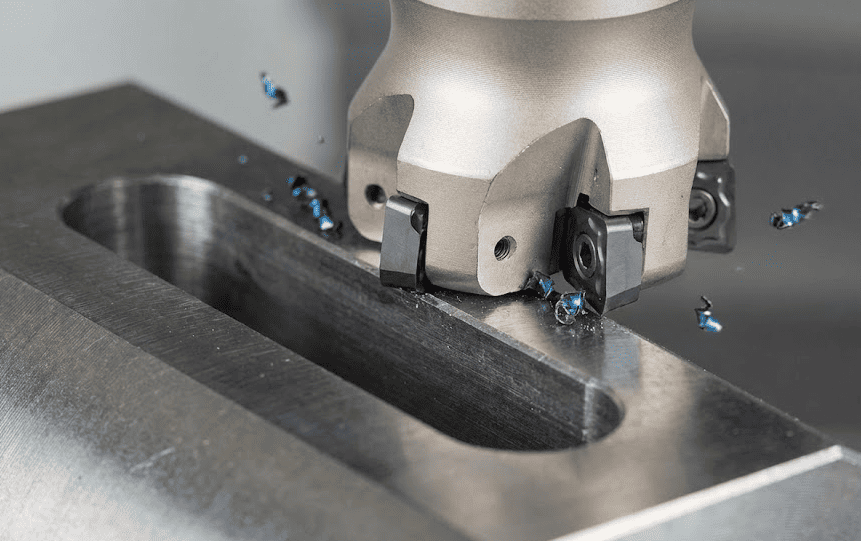
A direct comparison of these materials clearly shows that CBN outperforms ceramics in both hardness and thermal stability. While ceramics begin to soften, CBN remains sharp.
Hardness comparison:
| Material | Hardness Value | Retention at High Temp |
| CBN | 4500 HV | Excellent (up to 1400°C) |
| Ceramic | 2200-2400 HV | Good (up to 1200°C) |
Heat dissipation is another key difference. Generally, CBN inserts dissipate heat 3 to 5 times faster than ceramic inserts. This means lower temperatures during machining with CBN tools, thereby reducing thermal stress.
Ceramic inserts offer superior impact resistance compared to CBN, making them more suitable for machining materials like cast iron that involve interrupted cutting. However, for continuous cutting of hard materials such as tool steel, CBN remains the better choice despite its higher cost. This is due to its greater hardness and superior heat dissipation properties.
Should you choose ceramic inserts or CBN inserts? First, understand their respective characteristics to determine which is better suited for the specific task. Both types of inserts have advantages in different situations, primarily depending on material hardness, cutting speed, and the type of work involved.
Generally speaking, CBN inserts are the preferred choice for machining hard steel, especially materials exceeding 55 HRC hardness. We've found that machining these tough materials with CBN delivers exceptionally long tool life and excellent surface finish.
Ceramic inserts also perform well within the 50-55 HRC hardness range, where cutting data is comparable to CBN. While less expensive than CBN, they may not be as durable as CBN under extremely hard conditions.
The higher the hardness, the more pronounced the performance difference becomes. For precision parts requiring tight tolerances, CBN maintains dimensional accuracy longer due to its superior wear resistance.
Key Comparison of Hard Steel Inserts:
CBN: More suitable for hardness >55 HRC, offering longer tool life and superior surface finish.
Ceramic: Suitable for hardness 50-55 HRC, cost-effective, and ideal for use before final finishing operations.
When machining cast iron, both types of inserts offer distinct advantages. CBN inserts excel at high-speed cutting of gray and ductile iron, delivering sharp edges with long tool life.
Ceramic inserts, particularly silicon nitride (SiN) ceramic inserts, represent a cost-effective choice for cast iron applications. They achieve respectable metal removal rates at a lower price point than CBN inserts.
For ferrous metals like steel alloys, the choice of insert typically depends on production volume and speed requirements.
When casting iron parts in high volumes, the higher initial cost of CBN inserts can be offset by reduced downtime from fewer tool changes. However, for lower production runs, ceramic inserts generally offer better value for money.
In high-speed cutting applications, ceramic inserts deliver outstanding performance. They achieve cutting speeds 4-5 times faster than carbide inserts, making them an excellent choice if productivity is your top priority.
CBN inserts also handle high-speed cutting effectively, but their true advantage lies in maintaining stable performance over extended periods. While ceramic inserts may permit higher initial speeds, CBN inserts typically offer longer cutting edge life.
Both types of inserts achieve metal removal rates far exceeding traditional carbide inserts. Ceramic inserts generally perform best under the following conditions:
Speed range: 500-1000 m/min
Feed rate: Medium to high
Cutting depth: Light to medium
CBN inserts perform best between 600-1500 m/min, depending on the material being machined. This makes both insert types excellent choices for boosting throughput in production environments.
In interrupted cutting operations (where the tool repeatedly enters and exits the workpiece), material toughness is critical. Typically, CBN inserts outperform ceramic inserts under these demanding conditions.
Ceramic inserts may be brittle and prone to chipping during interrupted cutting. However, reinforced ceramic inserts now offer significantly improved performance and can be used in some interrupted cutting applications when properly selected.
For severe interrupted cutting or harsh entry/exit conditions:
CBN: Superior impact resistance and edge stability
Ceramic: Requires careful selection of rake angle and use of reinforced inserts
We recommend CBN inserts for applications like milling hardened steel or turning parts with holes or slots. For mild interrupted cuts in softer materials, reinforced ceramic inserts can deliver adequate performance at a lower cost.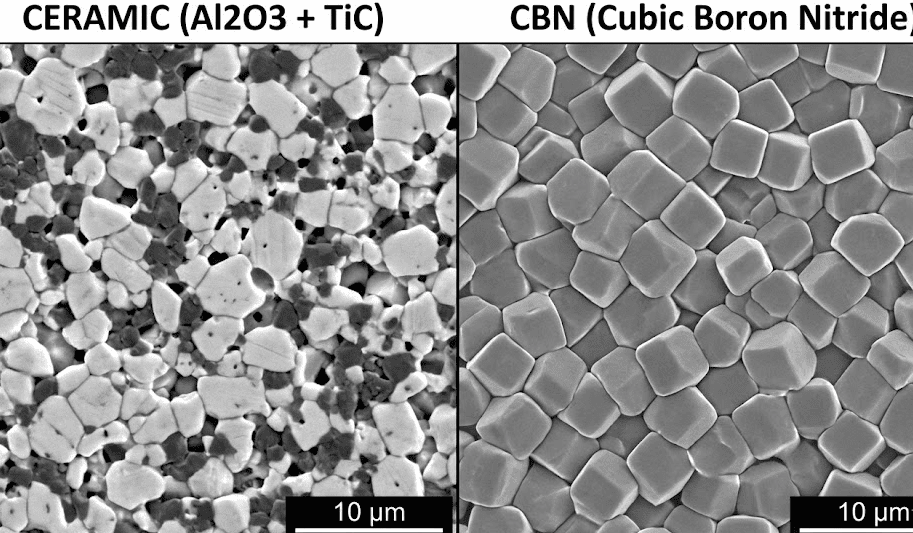
When choosing between ceramic and CBN cutting tools, it's not just about the initial price—you need to carefully calculate the economic benefits. Making the right choice means longer tool life, reduced machine downtime, and higher-quality parts, all of which translate into tangible cost savings.
At first glance, the price difference is indeed significant. Cubic boron nitride (CBN) inserts typically cost 3 to 5 times more than ceramic inserts. A single CBN insert can range from $50 to $100, while ceramic inserts usually cost only $15 to $30 each.
But does the cheaper option really save you money? Not necessarily.
We've found that while ceramic inserts have lower upfront costs, CBN inserts generally deliver superior performance over longer periods, especially in high-volume production. The extra cost of CBN can be quickly offset by fewer tool changes and extended uptime.
CBN tool life is truly top-notch! Our tests on hardened steel show CBN inserts typically last 3-5 times longer than ceramic ones. With extended tool life, fewer tool changes are needed, and downtime naturally decreases.
What factors affect tool life? Cutting speed and depth of cut are key. At high speeds (300+ m/min), CBN inserts maintain sharpness while ceramic inserts suffer significant wear.
When machining hardened steel (55+ HRC), we observed CBN inserts achieving continuous cutting for 45 minutes while maintaining wear below 0.3 mm. Under identical conditions, ceramic inserts reached this wear level within 10-15 minutes.
Such a significant difference in tool wear translates to substantially fewer interruptions in your production process.
When evaluating cutting tools, a key question is: How much loss does machine downtime cause?
Each tool change leads to production stoppage, resulting in economic loss. With CBN tools, tool changes may occur 3-4 times per shift. However, ceramic tools can increase this frequency to 10-15 changes per shift.
Additionally, CBN tools permit higher cutting speeds. We have successfully run CBN tools at speeds 20-30% faster than comparable ceramic tools without compromising tool life. This translates to producing more parts per hour, thereby boosting output.
Consider these efficiency factors:
Reduced setup time: Fewer tool changes mean more production time.
Part consistency: Less tool wear leads to more stable part dimensions.
Increased cutting speeds: Faster production rates with CBN tools.
Clearly, even with the higher initial cost of CBN tools, they typically deliver greater overall productivity gains.
Let's crunch the actual numbers. When calculating total holding costs, consider the following factors:
Initial tooling investment
Number of tool changes per part
Losses due to machine downtime
Labor costs for tool changes
Product quality stability
For example, producing 1,000 hard steel parts might cost roughly as follows:
Using ceramic inserts at ¥20 each, you'd likely need 10 inserts to complete the job, totaling ¥200 in tooling costs. Add downtime losses from changes, amounting to about ¥500.
Using CBN inserts at 75 yuan each, only 2-3 inserts may be needed, totaling 150-225 yuan. Downtime losses could also be reduced to around 150 yuan.
Thus, for high-volume machining of hard materials, CBN inserts prove more cost-effective. The key lies not in the unit price of the inserts, but in the overall production costs and machining time.
When machining with ceramic and CBN inserts, selecting the right machining conditions is crucial. Since each insert type has specific requirements, choosing correctly can make the job easier, while choosing incorrectly can ruin it.
CBN inserts excel in high-speed cutting, typically delivering optimal results on work-hardened steel at feed rates between 600 and 1200 meters per minute. This high-speed capability makes them highly popular in production environments prioritizing efficiency.
Ceramic inserts generally require higher cutting speeds, typically ranging from 800 to 1500 meters per minute. They deliver outstanding performance when machining cast iron and heat-resistant alloys.
We have observed that operating inserts below the recommended cutting speed can be counterproductive. Excessively low speeds lead to:
Increased built-up edge formation
Premature tool failure
Poor surface finish
When machining work-hardened steel (hardness 45-65 HRC), CBN inserts maintain sharpness longer at high speeds, while ceramic inserts may perform better at similar speeds under interrupted cutting conditions.
For both types of inserts, temperature control is critical, though for different reasons. CBN inserts conduct heat well but are prone to thermal shock. Ceramic inserts withstand higher temperatures better, but rapid cooling may cause cracking.
I recommend trying these temperature control methods:
Slow feed-in - Avoid plunging the tool into the workpiece abruptly.
Steady cutting - Maintain consistent feed rates and speeds throughout the cutting process.
Smooth tool paths - Ensure smooth entry and exit movements.
For CBN inserts, maintaining stable temperatures is crucial. Sudden temperature changes can cause micro-cracks, shortening tool life.
Ceramic inserts actually benefit from heat generation, as they are engineered for high-temperature environments. This “thermal buffering” helps protect the cutting edge.
Different types of cutting tools require varying coolant applications. Below is a guide on which coolant is best suited for each type of tool:
| Insert Type | Coolant Recommendation | Notes |
| CBN | Light coolant or oil mist | Helps prevent thermal shock |
| Ceramic | Typically dry machining | Coolant can cause thermal shock |
When machining with CBN inserts, applying a small amount of coolant helps better control temperature and prevents insert damage from excessive thermal shock. The coolant should be directed at the cutting zone.
For ceramic inserts, we generally recommend dry cutting. Ceramic inserts perform best at high temperatures, and sudden cooling can cause cracking. If coolant must be used, ensure it is sprayed continuously without interruption.
If you want to clear chips while minimizing temperature fluctuations, air cooling is suitable for both types of inserts.
To achieve optimal tool performance, proper setup is crucial for both CBN and ceramic tools. We recommend the following:
For CBN tools:
Use the shortest possible rigid toolholder.
Ensure the workpiece is securely clamped.
Set the feed rate between 0.05-0.2 mm/rev during finishing operations.
For ceramic tools:
Higher feed rates (0.1–0.3 mm/rev) typically yield better results.
A particularly rigid setup is required.
Avoid any vibration or chatter.
The importance of machine rigidity cannot be overstated. Even minor vibrations can damage these high-end tools, especially ceramic ones.
We've also found that the correct rake angle is beneficial. For CBN tools, a 15-20° main rake angle works well. Ceramic tools typically perform better at a 10-15° main rake angle, allowing for slightly more aggressive cutting.
When choosing between ceramic and CBN inserts, the surface finish of the finished product significantly impacts your end product. Selecting the right insert not only affects the appearance of the part but also determines its performance in practical applications.
Ceramic inserts typically produce smoother surfaces than carbide inserts, reducing the need for subsequent finishing operations. They perform best at high cutting speeds, which helps achieve uniform surfaces.
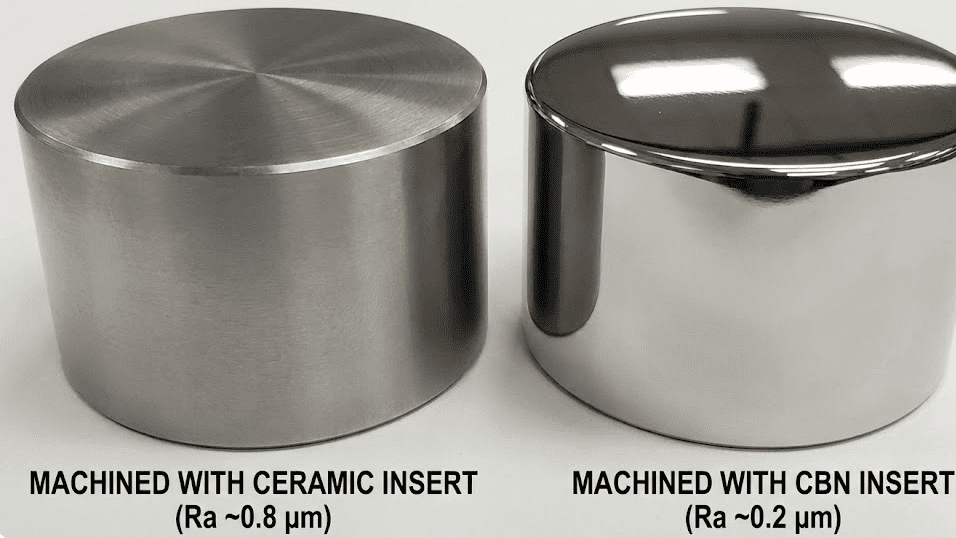
However, cubic boron nitride (CBN) inserts can elevate surface finish to even higher levels. Due to their exceptional hardness and thermal stability, CBN tools achieve superior surface quality, particularly on hardened materials exceeding 45 HRC.
Let’s compare the typical Ra values (surface roughness) you might expect:
| Insert Type | Typical Ra Value Range | Best Applications |
| Ceramic | 0.8-3.2 μm | High-speed finishing of cast iron, heat-resistant alloys |
| CBN | 0.2-0.8 μm | Super-finishing of hardened steels, precision components |
When machining hard materials, the advantages of CBN tools become particularly evident.
When it comes to maintaining tight tolerances, ceramic and CBN inserts each have their strengths but are suited for different scenarios.
Ceramic inserts maintain good dimensional accuracy during high-speed cutting, but their drawback is brittleness. That is:
Suitable for stable, continuous cutting operations.
Perform poorly in interrupted cutting conditions.
More prone to chipping, which compromises accuracy.
CBN inserts excel at maintaining dimensional stability during extended production runs. Their superior wear resistance means:
Better retention of tight tolerances (typically within ±0.005 mm).
More consistent results across batches.
Less frequent tool changes, resulting in fewer errors.
If your application requires high-precision parts, CBN inserts generally offer superior long-term dimensional consistency, though they come with a higher initial cost.
In practice, these differences in surface finish become apparent under specific conditions.
A flywheel manufacturer discovered that while ceramic inserts delivered acceptable results at 50 HRC hardness, CBN inserts achieved a 30% improvement in surface finish on the same part at 55+ HRC hardness. This enhanced finish completely eliminated secondary operations.
Another tool life comparison test demonstrated that in hard turning applications, CBN inserts lasted 3:1 longer than ceramic inserts while consistently delivering superior surface quality throughout the tool's entire life cycle.
Key observations from industry case studies:
Ceramic inserts perform well within the 45-55 HRC range, with cutting data comparable to CBN inserts.
CBN inserts maintain sharp cutting edges longer, delivering more consistent surface quality.
The higher initial cost of CBN inserts is typically offset by reduced secondary finishing operations.
Your specific material and production requirements will ultimately determine which insert type offers the optimal balance between surface finish and cost-effectiveness.
Within the 50-55 HRC range, ceramic inserts offer exceptional cost-effectiveness as an entry-level solution. They leverage heat generated by high cutting speeds to soften the metal for effective machining. However, once workpiece hardness surpasses 60 HRC, the brittleness of ceramic causes the cutting edge to fracture upon contact.
Maintaining a cutting speed of 800–1500 m/min with a feed rate of 0.1–0.3 mm/rev maximizes ceramic's “thermal softening” effect. Since ceramic lacks the impact resistance of CBN, machine vibrations exceeding 0.05 mm reduce its tool life by 80%.
Situations where ceramic inserts are selected:
Machining materials with hardness below 45 HRC
Budget constraints
Performing rough machining
Handling interrupted cuts
Operating at high speeds, but not at maximum speeds
Situations where CBN inserts are selected:
Machining hardened materials (especially those with hardness between 45-70 HRC)
Requiring exceptional surface finish quality
Where tool life is critical for minimizing downtime
Long-run production justifies the higher upfront cost
Need for maximum material removal rates
We observe many factories initially relying primarily on ceramic inserts, adopting CBN inserts only when performance advantages are evident and the additional cost can be justified.
Remember, correct application parameters are equally important as insert selection. Even the best inserts will fail prematurely if speed, feed rate, or depth of cut are improperly set.
A single CBN insert typically costs 3-5 times more than ceramic, but it reduces tool changes from 10 per shift to about 2. In Jimmytool's practical tests, CBN maintained continuous cutting for over 45 minutes, while ceramic showed noticeable dimensional deviations after just 15 minutes under identical conditions.
This “long-distance runner” characteristic directly boosts spindle utilization rates. When calculating total cost of ownership (TCO)—including labor costs, downtime losses, and part rework rates—CBN actually reduces the per-part machining cost by approximately 25% compared to ceramic.
There's no “best” cutting insert—only the most suitable one. 55 HRC is the critical threshold that determines your profitability.
If you primarily process parts below 50 HRC, ceramic inserts can save you significant upfront costs. Once you venture into super-hard machining, CBN inserts may have a higher unit price, but their exceptionally long life and elimination of secondary finishing operations are the real secrets to cost savings.
At Jimmytool, we've seen too many customers lose costly machine hours by refusing to replace tools. Quality inserts aren't just consumables—they're your confidence in delivering high-precision parts.
Every Jimmytool-recommended insert undergoes millions of real-world test cycles. We don't chase flashy spec sheets; we ensure your machines run reliably overnight, even unattended.
Stop wasting time on chipped edges and unstable dimensional tolerances. Jimmytool offers specialized cutting solution packages tailored for different materials.
Which insert should be selected for machining steel exceeding 60 HRC?
CBN inserts must be the primary choice. At the extreme hardness of 60 HRC, ceramic inserts become excessively brittle and will chip rapidly. CBN maintains a hardness of 4500 HV even at 1400°C, making it the only choice to ensure stable cutting edges.
Why do users still choose CBN inserts despite their 3-5 times higher cost?
Because total production costs are lower. Though individually pricier, CBN inserts require only about 1/4 the replacement frequency of ceramic ones. Reducing downtime for tool changes by 10 times per shift saves enough machine-hour costs to cover several times the price difference.
Can ceramic inserts use coolant during machining?
Dry cutting is recommended. Ceramic materials are extremely sensitive to sudden temperature changes, and uneven cooling can cause thermal shock cracks. If chip evacuation is necessary, using compressed air or oil mist is significantly safer than direct coolant spraying.
How can tool selection eliminate grinding operations?
Switch to CBN finishing inserts. They consistently achieve surface roughness (Ra values) between 0.2–0.8 μm, directly producing mirror-like finishes comparable to grinding machines. Ceramic inserts typically maintain roughness between 0.8–3.2 μm and are better suited for roughing or semi-finishing operations.
What advantages do ceramic inserts offer when machining cast iron?
Cost-effectiveness. When processing gray or ductile cast iron, silicon nitride (SiN) ceramic inserts achieve high-speed metal removal exceeding 1000 m/min. In applications without extreme hardness requirements, they accomplish 80% of CBN's workload at one-fifth the cost.
person: Mr. Gong
Tel: +86 0769-82380083
Mobile phone:+86 15362883951
Email: info@jimmytool.com
Website: www.jimmytool.com


