

ER Tap Holders Precision Toolhold for Reliable Thread Production
Date:2026-02-26Number:1115ER tap holders represent a specialized evolution of the ubiquitous ER collet system, engineered specifically to address the unique challenges of thread cutting in CNC machining environments. While standard ER collet holders excel at gripping end mills and drills with exceptional concentricity, tapping operations introduce dynamic requirements that demand additional mechanical capabilities. The fundamental challenge of tapping lies in the precise synchronization required between spindle rotation and axial feed—a relationship mathematically determined by the thread pitch. Even minor discrepancies between machine feed rate and actual tap pitch can generate excessive axial forces leading to thread form errors, surface finish degradation, and catastrophic tap breakage.
ER tap holders incorporate sophisticated tension-compression mechanisms that provide the axial float necessary to compensate for these inevitable minor discrepancies. This mechanical compliance protects both the cutting tool and the workpiece while maintaining the thread quality essential for proper assembly and component function. Understanding the design principles, application requirements, and selection criteria for these specialized holders is essential for anyone responsible for thread production in manufacturing environments, whether in high-volume production or precision job shop operations.
The threading process imposes unique demands on toolholding systems that distinguish it from other machining operations. When a tap engages a pre-drilled hole, the relationship between rotational speed and axial feed must exactly match the thread pitch—typically expressed as millimeters per revolution or threads per inch. In rigid tapping systems, modern CNC machines achieve this synchronization electronically, with the control system coordinating spindle rotation and Z-axis movement with high precision.
However, even the most sophisticated CNC systems cannot account for all variables affecting the tapping process. Tap manufacturing tolerances mean that actual thread pitch may vary slightly from nominal specifications. Thermal effects during machining can cause dimensional changes in both tool and workpiece. Machine positioning inaccuracies, while minimal, still exist. These factors combine to create small discrepancies between commanded and actual thread formation, generating axial forces that transmit directly through the tap.
Standard rigid toolholding systems transmit these forces entirely through the tap, potentially causing edge chipping, thread distortion, or complete tool failure. ER tap holders address this limitation by introducing controlled axial compliance between machine spindle and cutting tool. The tension-compression mechanism allows the tap to float slightly forward or backward during the threading cycle, absorbing axial forces that would otherwise damage the tool or compromise thread quality.
The defining feature of ER tap holders lies in their internal mechanical design, which provides the axial float essential for compensation. Within the holder body, a spring-loaded mechanism allows the collet and tap assembly to move longitudinally against controlled resistance. This movement occurs in both directions—tension (forward movement during tapping) and compression (backward movement during retraction)—creating a floating action that protects the tap from excessive axial loads.
The amount of axial float varies by holder design and size, with typical compensation ranges of 0.5 to 1.0 millimeters or more depending on the specific holder configuration. This range provides sufficient movement to accommodate the minor discrepancies between machine feed and tap pitch while maintaining the positional accuracy necessary for correct thread depth. The spring tension is carefully calibrated to provide smooth, consistent movement without introducing excessive play that could affect thread quality.
During the tapping cycle, the tension-compression mechanism functions continuously, making micro-adjustments as the tap progresses through the hole. If the machine feed slightly exceeds the tap's natural pitch, the holder compresses, allowing the tap to retract slightly relative to the holder. If machine feed lags behind the tap pitch, the holder extends, maintaining proper cutting engagement. This dynamic compensation occurs seamlessly throughout the operation, invisible to the operator but essential for consistent thread production.
Modern CNC machines equipped with rigid tapping capability represent the standard environment for ER tap holder application. Rigid tapping, also called synchronous tapping, maintains precise electronic coordination between spindle rotation and Z-axis movement, theoretically eliminating the need for mechanical compensation. However, the combination of rigid tapping with tension-compression holders provides optimal results by addressing real-world variables that pure electronic control cannot eliminate.
ER tap holders designed for synchronous operation typically incorporate limited axial compensation specifically calibrated for the small corrections needed in rigid tapping applications. These holders provide just enough float to accommodate pitch tolerances and minor synchronization variations without introducing excessive movement that could affect thread depth accuracy. The tension-compression range is carefully engineered to balance protection requirements with positional precision.
For older machines without rigid tapping capability, ER tap holders with more substantial compensation ranges become essential. In these applications, the holder must accommodate greater synchronization discrepancies while still producing acceptable thread quality. While modern machines with rigid tapping are preferred for precision work, properly selected tap holders can enable reliable tapping on equipment with less sophisticated control systems.
The implementation of ER tap holders delivers measurable benefits across multiple aspects of thread production. Tap life extension represents perhaps the most significant advantage, with properly protected taps lasting substantially longer than those used in rigid holders. By absorbing axial forces that would otherwise concentrate at the cutting edges, the tension-compression mechanism prevents the overload conditions that cause premature edge wear, chipping, and catastrophic breakage.
Thread quality improvements result from the consistent cutting conditions maintained through proper axial compensation. When taps operate without overload, they maintain proper cutting geometry throughout the thread formation process, producing more accurate thread forms and better surface finishes. The floating mechanism also accommodates minor misalignments between tap and hole, preventing the thread distortion that can occur when taps are forced into imperfectly aligned positions.
Process reliability increases significantly with proper tap holder implementation. Reduced tap breakage minimizes machine downtime for tool replacement and eliminates the costly process of removing broken taps from workpieces—a task that can scrap expensive components when extraction proves impossible. Consistent thread quality reduces inspection requirements and eliminates rework operations, streamlining production flow and improving overall equipment effectiveness.
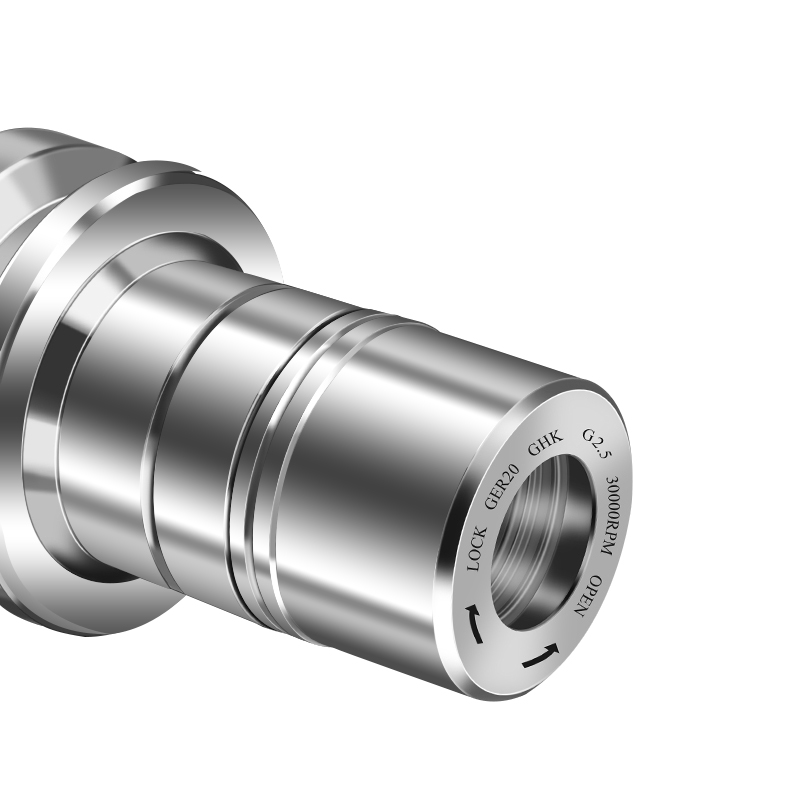
ER tap holders utilize the same collet system that has made ER toolholders ubiquitous in machining, providing exceptional gripping force and concentricity for the tap shank. The ER collet's 360-degree gripping action ensures uniform clamping pressure around the tap, preventing slippage during the high-torque conditions of threading operations while maintaining the concentricity essential for thread accuracy.
Tap shank configurations vary, with some taps featuring drive squares for positive torque transmission while others rely entirely on collet friction. ER collets accommodate both designs effectively, though taps with drive squares require proper orientation within the collet to ensure the square engages correctly with the holder's drive mechanism. The collet's collapse range allows accommodation of slight variations in tap shank diameter while maintaining adequate gripping force.
Collet selection should match the tap shank diameter precisely within the collet's recommended gripping range. Using a collet that is too large and collapsed excessively can reduce gripping force and concentricity, while forcing a tap into an undersized collet can damage both components. Proper collet selection ensures optimal force transmission and tap stability throughout the threading cycle.
Coolant strategy represents an important consideration in ER tap holder selection and application. Many tension-compression tap holders are not designed for through-tool coolant delivery, as coolant entering the internal mechanism can interfere with floating components or wash away necessary lubrication. For these holders, external flood coolant provides the cooling and chip evacuation required for most tapping applications.
However, advanced tap holder designs increasingly incorporate internal coolant capability for applications where cooling and chip evacuation are essential. These specialized holders feature sealed designs that protect internal mechanisms from coolant ingress while delivering fluid precisely to the cutting zone. For deep hole tapping, difficult materials, or high-production applications, coolant-through holders may provide significant advantages in tool life and process reliability.
The choice between standard and coolant-through designs should consider material characteristics, hole depth, and specific cooling requirements. For most general applications, properly directed flood coolant with standard holders provides adequate performance. For challenging applications where heat generation or chip evacuation presents difficulties, the investment in coolant-through holders may be justified by improved results.
Selecting the appropriate ER tap holder requires consideration of multiple factors that influence both performance and compatibility. Tap size range determines the required ER collet series, with common sizes including ER16, ER20, ER25, and ER32 accommodating progressively larger tap diameters. The holder's stated tap capacity should encompass both current requirements and potential future applications within a reasonable range.
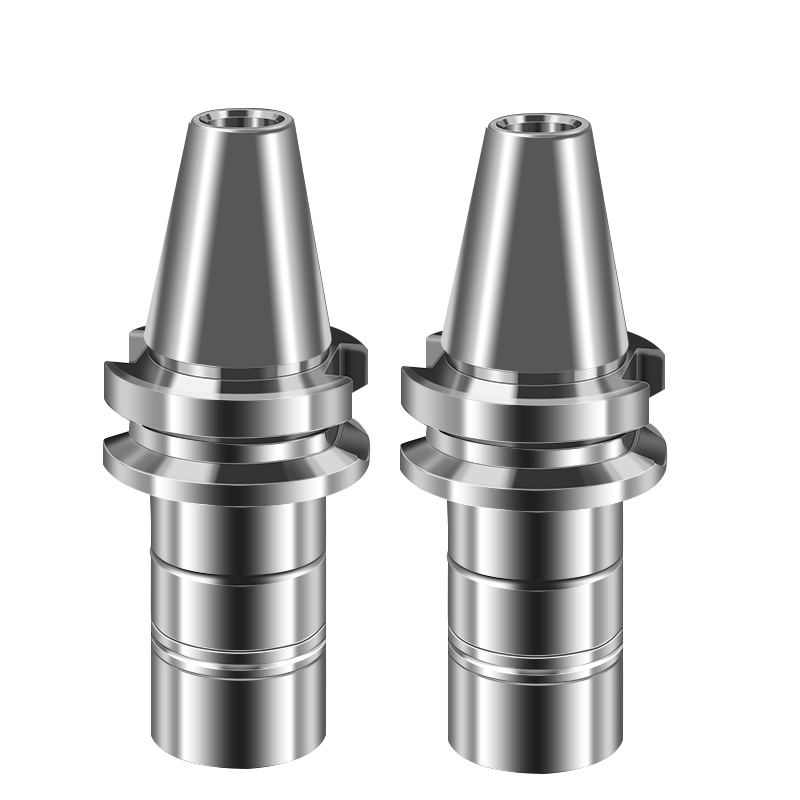
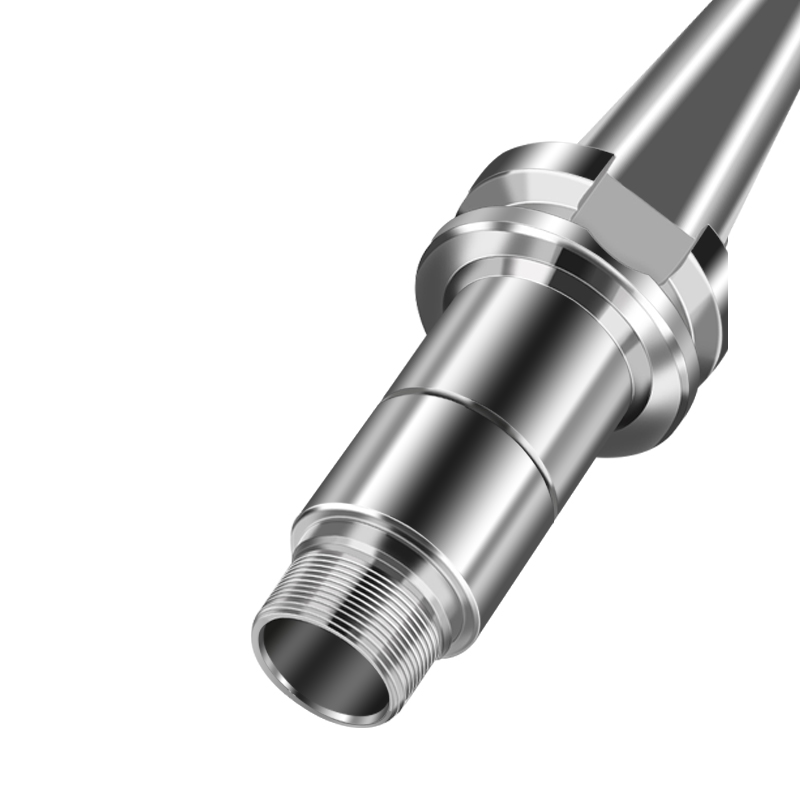
Machine spindle interface represents another critical compatibility consideration, with tap holders available in various shank configurations including straight cylindrical, CAT/BT steep taper, HSK, and CAPTO designs. The holder must match both the machine's spindle type and any automatic tool changer requirements for proper operation in production environments. Additionally, clearance dimensions including overall length and maximum diameter must accommodate the machine's work envelope.
Tension-compression characteristics vary among holder designs, with some providing substantial float for general applications while others offer limited, precisely controlled compensation optimized for synchronous tapping. The choice should align with the machine's rigid tapping capability and the specific requirements of the application. For modern machines with excellent synchronization, holders with limited compensation often provide optimal results.
Proper installation ensures optimal tap holder performance and prevents operational issues. The tap must be securely gripped within the appropriate ER collet, with sufficient clamping force to transmit torque without slippage while avoiding excessive pressure that could distort the tap. Collet nuts should be tightened to recommended torque specifications using appropriate wrenches, not over-tightened which can damage components.
Length offset determination requires attention to the holder's internal mechanism. When assembled, the actual protruding length may differ slightly from nominal dimensions due to the holder's internal float. These dimensional considerations affect tool length offsets in CNC programs and must be accounted for during setup to ensure correct thread depth.
Maintenance requirements include regular inspection of the tension-compression mechanism for smooth operation and proper function. The floating components should move freely without sticking or excessive play, providing consistent compensation throughout the holder's service life. Cleaning should remove chips and debris that could interfere with mechanism function, with lubrication according to manufacturer recommendations.
The investment in quality ER tap holders typically delivers substantial returns through improved process reliability and reduced tooling costs. While specialized tap holders command premium prices compared to standard ER collet holders, their ability to protect taps and ensure thread quality justifies the additional expense in production environments where tap breakage or thread defects carry significant costs.
Implementation should begin with identification of high-value or problematic tapping operations where tap holder benefits will be most apparent. Critical applications involving expensive materials, challenging tap sizes, or difficult-to-machine alloys represent ideal candidates for initial deployment. Performance documentation before and after implementation provides quantitative justification for broader adoption.
For manufacturers standardizing on ER tap holders, establishing consistent setup procedures and operator training ensures maximum benefit. Clear documentation of tool assembly methods, length offset determination, and maintenance requirements supports reliable performance across shifts and operators. With proper selection, installation, and maintenance, ER tap holders provide reliable, cost-effective solutions for precision thread production across diverse manufacturing applications.
person: Mr. Gong
Tel: +86 0769-82380083
Mobile phone:+86 15362883951
Email: info@jimmytool.com
Website: www.jimmytool.com


