

Best Carbide End Mills for Steel Machining
Date:2026-01-30Number:1512Steel machining represents one of the most demanding and rewarding challenges in modern manufacturing, where the selection of appropriate carbide end mills directly determines productivity, tool life, and part quality. Unlike softer materials that forgive suboptimal tool choices, steel alloys demand precision in every aspect of tool selection—from substrate composition and coating technology to geometry design and cutting parameters. The diverse family of steel materials, ranging from mild carbon steels to hardened tool steels and corrosion-resistant stainless alloys, presents a spectrum of machining characteristics that require tailored approaches and specialized tooling solutions.
The evolution of carbide end mill technology has fundamentally transformed steel machining capabilities. Where once high-speed steel tools limited speeds and feeds, modern carbide tools enable aggressive material removal rates while maintaining precision and extending tool life. However, this performance potential can only be realized through informed selection and proper application. This comprehensive guide explores the critical considerations for choosing and using carbide end mills specifically for steel machining, providing practical insights developed through extensive industrial experience and technical research.
Steel alloys present unique machining challenges that directly influence carbide end mill requirements. The fundamental characteristics of steel—its strength, work hardening tendency, thermal conductivity, and chip formation behavior—create specific demands on cutting tools. Carbon steels, while relatively machinable, generate significant cutting forces and produce continuous chips that must be efficiently evacuated. Alloy steels introduce additional elements like chromium, molybdenum, and nickel that increase strength and hardness, demanding more robust tool geometries and specialized coatings. Stainless steels add the challenges of work hardening, poor thermal conductivity, and material adhesion, requiring particularly careful parameter selection and tool design.
The thermal dynamics of steel machining represent a critical consideration. Unlike materials with higher thermal conductivity, steel tends to concentrate heat at the cutting edge, potentially leading to thermal softening, accelerated wear, and dimensional inaccuracy in the workpiece. This thermal management challenge makes coating selection particularly important, as modern coatings like TiAlN and AlTiN provide thermal barriers that protect both the tool substrate and the workpiece. Additionally, the chip formation characteristics of different steel types influence flute design and chip evacuation strategies, with stringy chips from softer steels requiring different approaches than the broken chips typical of harder alloys.
Tool failure modes in steel machining follow predictable patterns that inform tool design and selection. Flank wear, the gradual wearing away of the tool's clearance faces, represents the most desirable failure mode when it occurs progressively and predictably. Crater wear on the rake face indicates chemical interaction between tool and workpiece materials, often addressed through coating optimization. Edge chipping and catastrophic fracture typically result from excessive loads, vibration, or improper tool geometry for the application. Understanding these failure modes allows for preventive strategies through parameter adjustment, tool selection, and process optimization.
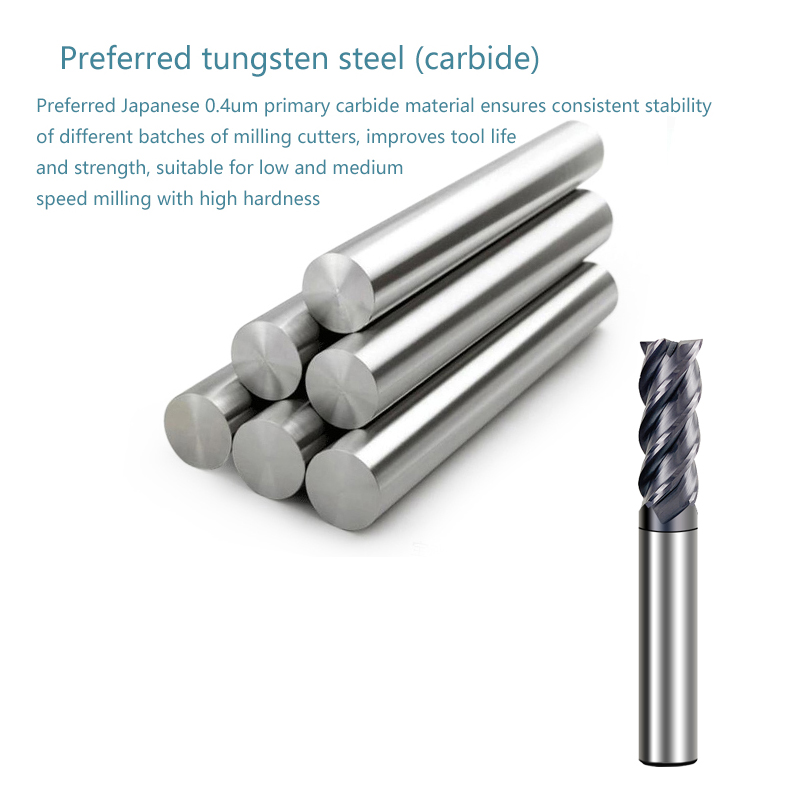
The foundation of any carbide end mill's performance lies in its substrate—the specific formulation of tungsten carbide and cobalt binder that determines the tool's fundamental characteristics. For steel machining, substrate selection involves balancing two primary properties: hardness for wear resistance and toughness for shock resistance. Fine-grain carbide substrates, with particle sizes below one micron, provide exceptional hardness and edge sharpness suitable for finishing operations and stable cutting conditions in pre-hardened steels. These substrates maintain their cutting edges longer under consistent loads but are more susceptible to chipping during interrupted cuts or when machining with radial runout.
Medium-grain substrates offer the balanced approach suitable for most general steel machining applications, providing adequate hardness for wear resistance while maintaining sufficient toughness for the minor interruptions and variations common in steel milling operations. For particularly demanding applications involving heavy roughing, interrupted cuts, or unstable machining conditions, coarse-grain or high-cobalt substrates provide enhanced toughness at the expense of some wear resistance. The optimal choice depends on the specific steel alloy, machining operation, and stability of the setup.
Specialized substrate formulations have emerged to address specific steel machining challenges. Substrates with added tantalum and titanium carbides improve high-temperature performance for machining heat-resistant alloys. Gradient substrates, with cobalt content varying from surface to core, combine surface hardness with core toughness. Micrograin substrates with grain sizes below 0.5 microns enable exceptional edge sharpness and precision for finishing hardened steels. Each substrate type represents a careful engineering compromise, with selection guided by the relative importance of wear resistance versus shock resistance for the specific application.
Modern coating technologies transform carbide end mills from mere cutting tools into sophisticated thermal and chemical management systems. For steel machining, coatings serve multiple critical functions: providing thermal insulation to protect the substrate, reducing friction at the chip-tool interface, preventing material adhesion and built-up edge, and enhancing wear resistance through extreme surface hardness. The selection of appropriate coatings represents one of the most impactful decisions in optimizing steel machining performance.
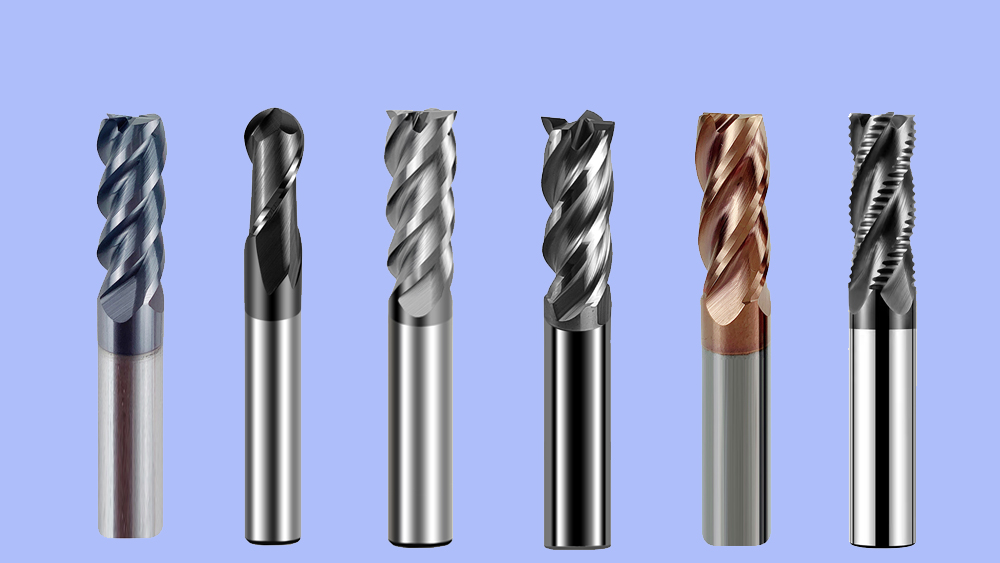
Titanium aluminum nitride (TiAlN) coatings have become the industry standard for general steel machining applications, offering excellent thermal stability and oxidation resistance up to approximately 800°C. Their aluminum oxide layer that forms during cutting provides self-lubricating properties and thermal protection. Aluminum titanium nitride (AlTiN) coatings, with higher aluminum content, extend this thermal protection to nearly 900°C, making them ideal for high-speed applications and difficult-to-machine alloys. Both coatings work by forming protective aluminum oxide layers at cutting temperatures, effectively creating a thermal barrier that redirects heat into the chip rather than the tool.
For more specialized applications, multilayer coatings combine different materials in alternating nanolayers to achieve optimized combinations of hardness, lubricity, and thermal protection. Titanium carbonitride (TiCN) coatings provide exceptional hardness for abrasive applications but with lower thermal resistance than TiAlN variants. Chromium-based coatings offer enhanced chemical stability for corrosive environments or when machining materials prone to adhesion. Diamond-like carbon (DLC) coatings, while primarily used for non-ferrous applications, find niche use in certain stainless steels where their extreme lubricity reduces built-up edge formation.
The effectiveness of any coating depends fundamentally on proper substrate preparation and coating adhesion. Modern physical vapor deposition (PVD) processes create coatings with controlled microstructure, residual stress, and interface quality. Coating thickness typically ranges from 2 to 5 microns, balancing enhanced performance with maintenance of precise cutting geometries. Post-coating treatments like polishing or edge honing further optimize performance for specific applications, particularly in finishing operations where edge sharpness and surface finish are paramount.
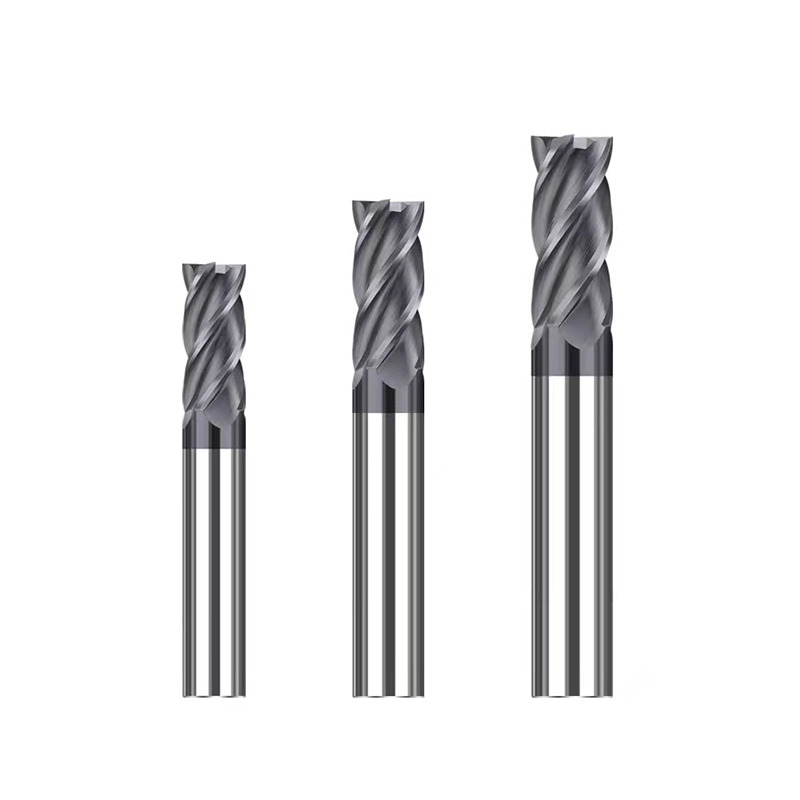
The geometry of carbide end mills represents the physical interface between tool and workpiece, where design decisions directly influence cutting forces, chip formation, heat generation, and ultimately tool life and part quality. For steel machining, geometric optimization involves balancing competing requirements: sufficient edge strength to withstand cutting forces, adequate sharpness to minimize power consumption and heat generation, efficient chip evacuation to prevent recutting, and stable cutting action to minimize vibration and chatter.
Helix angle selection significantly impacts steel machining performance. Moderate helix angles between 30 and 35 degrees provide an optimal balance for most steel applications, offering reasonable axial forces for stable cutting while enabling adequate chip evacuation. Lower helix angles around 25 degrees increase edge strength for interrupted cuts or hard materials but generate higher cutting forces and less efficient chip evacuation. Higher helix angles approaching 40 degrees improve shearing action and chip evacuation but reduce edge strength and may increase susceptibility to deflection in deep-pocket applications.
Flute design considerations extend beyond simple count to encompass flute shape, core diameter, and chip space geometry. Four-flute designs represent the most common configuration for steel machining, providing adequate chip space while maintaining rigidity and enabling higher feed rates. Three-flute designs offer increased chip space for applications with high material removal rates or in gummy materials that produce bulky chips. Variable helix and variable pitch designs, with intentionally uneven flute spacing, effectively disrupt harmonic vibrations that cause chatter, particularly valuable in extended-reach applications or when machining thin-walled components.
Corner design profoundly influences tool life in steel machining. Sharp corners, while geometrically precise, create stress concentrations that lead to premature chipping and failure. Small corner radii, typically between 0.2 and 0.8 millimeters, distribute stresses more evenly, dramatically increasing corner strength and tool life without significantly impacting part geometry. For applications where sharp corners are absolutely required, specialized corner strengthening through edge preparation or chamfering can provide some protection against chipping. The choice between square end, corner radius, and ball nose tools depends on both part requirements and machining strategy considerations.
The full potential of carbide end mills for steel machining can only be realized through proper parameter selection and strategic machining approaches. Cutting speed, expressed as surface feet per minute or meters per minute, must balance material removal rate with tool life considerations. For carbon steels, speeds typically range from 200 to 400 SFM (60 to 120 m/min), while alloy steels and stainless steels require more conservative speeds from 100 to 250 SFM (30 to 75 m/min). The specific selection within these ranges depends on steel hardness, tool diameter, machine capability, and operational priorities.
Feed per tooth selection influences chip thickness, cutting forces, and surface finish. For steel machining, chip loads typically range from 0.001 to 0.005 inches per tooth (0.025 to 0.125 mm), with finer feeds for finishing operations and coarser feeds for roughing. Modern high-efficiency machining approaches utilize chip thinning effects through reduced radial engagement to enable higher feed rates without increasing chip thickness beyond tool capabilities. Depth of cut decisions involve balancing material removal requirements with tool rigidity and machine power, with axial depths typically between 0.5 and 2 times tool diameter and radial engagements from 10% to 50% of tool diameter depending on the specific operation.
Coolant application represents a critical element in steel machining success. Flood coolant provides both cooling and chip evacuation benefits, with proper nozzle positioning essential for delivering coolant to the cutting interface. Through-tool coolant systems offer significant advantages in deep-pocket or cavity applications, providing both cooling at the cutting edge and chip evacuation from the cutting zone. For certain high-speed applications, minimum quantity lubrication (MQL) systems deliver precise amounts of lubricant directly to the cutting interface, reducing thermal shock while maintaining adequate lubrication. The choice between these approaches depends on machine capability, tool design, and specific application requirements.
Machining strategy extends beyond simple parameter selection to encompass toolpath optimization. Modern computer-aided manufacturing systems enable sophisticated approaches like trochoidal milling, which maintains constant tool engagement through circular tool motion, reducing cutting forces and heat generation. Adaptive clearing strategies similarly maintain consistent radial engagement regardless of pocket geometry, enabling higher material removal rates while protecting tool life. Conventional toolpaths still have their place in specific applications, particularly in finishing operations where predictability and surface finish quality take precedence over maximum material removal rates.
Successful implementation of carbide end mills for steel machining requires systematic planning and ongoing optimization. Initial selection should consider the full context of application requirements, machine capabilities, and production objectives. Pilot testing under controlled conditions allows parameter development and verification before full-scale implementation. Documentation of successful parameters, tool performance, and lessons learned creates institutional knowledge that accelerates future optimization efforts.
Performance monitoring through both quantitative measurement and qualitative observation enables continuous improvement. Tool life tracking, surface finish measurement, dimensional accuracy verification, and cutting force monitoring (where available) provide data for parameter refinement. Visual inspection of wear patterns on used tools offers insights into potential adjustments—uniform flank wear suggests optimal conditions, while chipping indicates excessive loads or vibration, and cratering may signal inadequate cooling or inappropriate coating selection.
Economic considerations extend beyond simple tool cost per part to encompass machine utilization, quality consistency, and production reliability. While premium carbide tools command higher initial prices, their extended life and improved performance typically justify the investment through reduced changeover time, fewer interruptions, and more consistent part quality. The most economical tool is rarely the cheapest per unit, but rather the one that delivers the lowest total cost considering all operational factors.
As steel machining continues evolving with new materials, advanced machines, and sophisticated applications, staying informed about tooling developments remains essential. New substrate formulations, coating technologies, and geometric innovations regularly expand the capabilities of carbide end mills. Maintaining relationships with technical suppliers, participating in industry training, and sharing experiences within professional networks ensures access to the latest advancements and best practices. In the demanding world of steel machining, knowledge and careful application transform carbide end mills from mere cutting tools into strategic assets that drive productivity, quality, and competitive advantage.
person: Mr. Gong
Tel: +86 0769-82380083
Mobile phone:+86 15362883951
Email: info@jimmytool.com
Website: www.jimmytool.com


