

Thread Mill Cutters: Complete Guide to Modern Threading
Date:2026-02-03Number:1448The superiority of carbide thread mill cutters stems from their ability to combine the material advantages of tungsten carbide with innovative cutting geometries specifically designed for thread generation. Unlike taps that must match thread size exactly, a single thread mill cutter can produce multiple thread sizes within its diameter range, dramatically reducing tooling inventory requirements. This guide explores the technical foundations, application strategies, and economic considerations that define successful thread mill cutter implementation in precision manufacturing environments, providing practical insights for shops transitioning to or optimizing their thread milling operations.
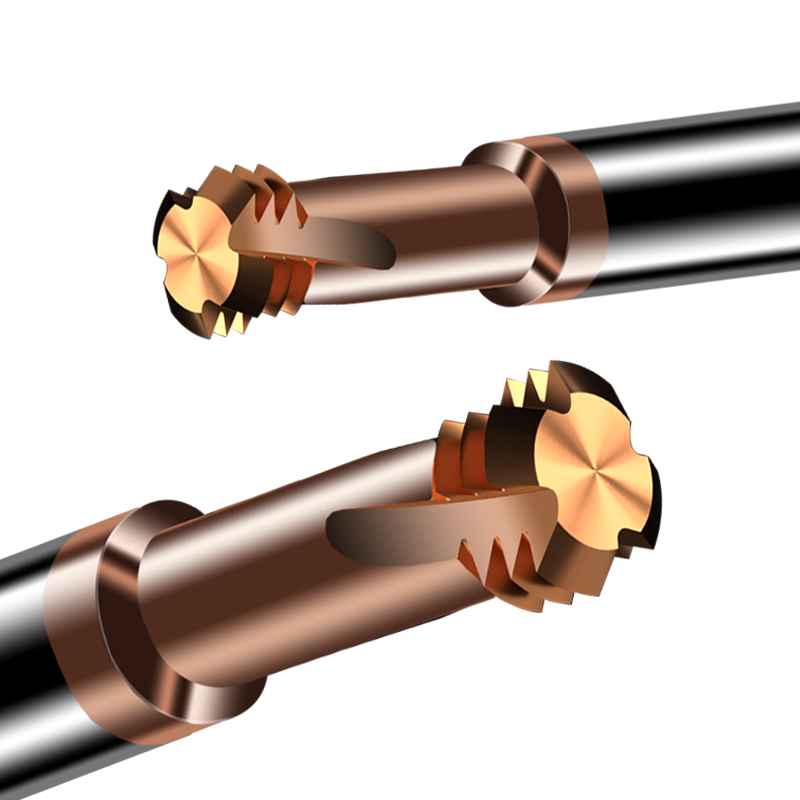
Carbide thread mill cutter construction begins with advanced substrate engineering that balances the extreme hardness required for cutting performance with sufficient toughness to withstand the complex forces generated during helical interpolation. The tungsten carbide and cobalt binder formulation undergoes precise manufacturing processes to create tools capable of maintaining sharp cutting edges through extended production runs while resisting the wear patterns specific to thread generation. This material foundation provides the durability necessary for thread milling's continuous cutting action, where tools maintain engagement throughout the helical toolpath rather than the intermittent contact of conventional milling operations.
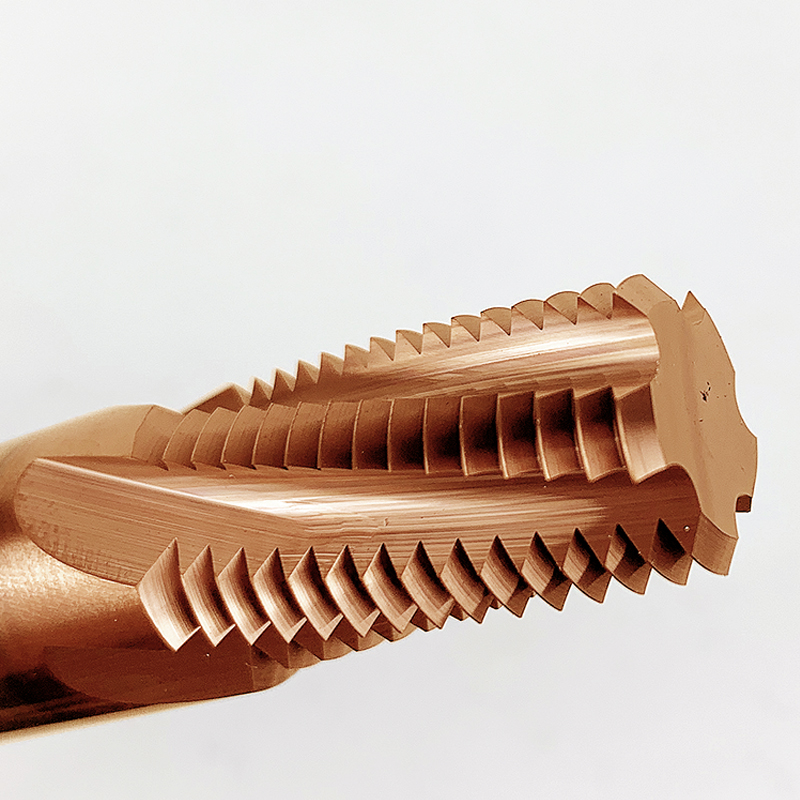
Thread geometry design represents a critical aspect of cutter performance, with cutting profiles precisely ground to match specific thread forms and standards. Single-point thread mills feature a single cutting tooth that generates the complete thread profile through multiple helical passes, offering maximum flexibility for different thread sizes and materials. Multi-point designs incorporate multiple teeth spaced along the cutter's axis, enabling faster cycle times through reduced passes but with less size flexibility. Full-form thread mills contain the complete thread profile in their cutting geometry, producing finished threads in a single helical revolution for maximum productivity in high-volume applications. Each design approach serves specific production requirements and represents different balances between flexibility, productivity, and tool complexity.
Coating technologies play a crucial role in thread mill cutter performance by reducing friction at the cutting interface, managing heat generation, and preventing material adhesion in challenging applications. Titanium aluminum nitride (TiAlN) coatings provide excellent thermal protection for thread milling operations where heat accumulation can compromise both tool life and thread quality. Diamond-like carbon (DLC) coatings offer exceptional lubricity for non-ferrous materials where aluminum or copper adhesion presents significant challenges. These advanced surface treatments, applied through precise physical vapor deposition processes, extend tool life while maintaining the dimensional accuracy essential for precision thread production across diverse materials and applications.
Thread milling offers fundamental advantages that address many limitations inherent to conventional tapping operations. The most significant benefit lies in the elimination of tap breakage risk, particularly valuable in expensive components or difficult-to-machine materials where broken tap removal represents a costly and time-consuming recovery process. Unlike taps that transmit torque forces directly into both tool and workpiece, thread mill cutters generate threads through controlled radial engagement and helical motion, significantly reducing stress concentrations and preventing the catastrophic failures common with tapping operations in challenging materials or deep-hole applications.
Flexibility represents another key advantage, as a single thread mill cutter can produce various thread sizes within its diameter range, dramatically reducing tooling inventory requirements and changeover complexity. This capability proves particularly valuable in job shop environments or low-volume production where thread size variety would otherwise necessitate extensive tap collections. Additionally, thread milling accommodates non-standard thread forms, left-hand threads, and specialized thread profiles without requiring custom tooling, providing design flexibility unavailable with conventional tapping approaches. The same cutter can produce both through-holes and blind holes with appropriate programming, further enhancing operational versatility across different part configurations and production requirements.
Quality control benefits emerge from thread milling's controlled material removal process, which typically produces threads with superior surface finish and dimensional accuracy compared to tapped threads. The helical interpolation process generates chips that are easily evacuated from the cutting zone, preventing chip packing that can compromise thread quality in blind holes or difficult materials. Thread mill cutters can also compensate for minor hole size variations through programming adjustments, maintaining thread quality despite workpiece inconsistencies that would cause rejection with traditional tapping methods. This programming control extends to thread size adjustment capabilities, allowing fine-tuning of thread fit without tool changes—a valuable feature for achieving specific assembly requirements or compensating for material spring-back in elastic alloys.
Carbide thread mill cutters perform effectively across diverse material families, with steel alloys representing perhaps their most valuable application area. In carbon and alloy steels, thread milling provides controlled thread generation that manages cutting forces while maintaining tool integrity through extended production runs. For stainless materials with work-hardening tendencies, thread milling's continuous cutting action and reduced tool pressure prevent the surface hardening that can compromise tapped thread quality and tool life. Hardened steels above 45 HRC benefit particularly from thread milling's controlled engagement, as conventional tapping often proves impractical or impossible in these challenging materials, while carbide thread mills can successfully generate precision threads with appropriate parameter selection and toolpath strategies.
Aluminum and non-ferrous alloys present different threading challenges that thread milling addresses through specialized approaches. High-silicon aluminum alloys, notoriously abrasive to cutting tools, benefit from carbide's wear resistance combined with thread milling's reduced contact pressure. For soft, gummy materials like pure aluminum or copper alloys, thread milling's chip control advantages prevent material adhesion and packing that commonly plague tapping operations. The programming flexibility of thread milling allows optimization of cutting parameters specifically for material characteristics, adjusting helical pitch, radial engagement, and cutting speeds to match material properties rather than accepting the fixed geometry limitations of conventional taps.
Exotic materials including titanium, Inconel, and other high-temperature alloys demonstrate thread milling's particular advantages in demanding applications. These materials' combination of high strength, low thermal conductivity, and work-hardening characteristics makes conventional tapping exceptionally challenging, with high breakage rates and poor thread quality common results. Thread milling manages these challenges through reduced cutting forces, controlled heat generation, and programming adaptability that accommodates material-specific requirements. The elimination of reverse rotation for tool retraction—a requirement in tapping that often causes thread damage in difficult materials—provides additional quality advantages in these premium alloys where component value justifies optimized threading approaches.
Successful thread milling implementation requires attention to several key factors beyond simple tool selection. Machine capability represents the foundational consideration, as thread milling demands CNC equipment with helical interpolation capability and sufficient programming sophistication to generate the required toolpaths. Modern CNC controls typically include thread milling cycles or simplify programming through conversational interfaces, but understanding the underlying helical motion principles remains valuable for troubleshooting and optimization. Rigidity throughout the machining system proves particularly important for thread quality, as any deflection during the helical interpolation will directly affect thread form and dimensional accuracy.
Programming approach significantly influences thread milling results, with several strategies available depending on application requirements and machine capabilities. Full-diameter thread milling employs the complete thread form in a single helical revolution, offering maximum productivity but requiring precise hole preparation and tool alignment. Multi-pass thread milling uses smaller radial engagements over multiple helical revolutions, reducing cutting forces and improving thread quality in difficult materials or less rigid setups. The specific programming details—including entry and exit approaches, radial engagement percentages, and helical pitch calculations—require careful development based on material characteristics, thread specifications, and tool capabilities to achieve optimal results.
Parameter optimization balances productivity with thread quality and tool life considerations. Cutting speeds for carbide thread mills in steel typically range from 100 to 250 surface feet per minute, with more conservative speeds for stainless materials and higher speeds possible in non-ferrous alloys. Feed rates must synchronize with spindle rotation to generate the correct thread pitch, with additional considerations for radial engagement percentages that influence chip formation and cutting forces. Coolant application proves particularly important in thread milling operations, as the enclosed cutting environment in blind holes or deep threads requires effective chip evacuation and heat management to maintain tool performance and thread quality throughout the cutting process.
Economic analysis must consider both direct and indirect factors when evaluating thread milling implementation. While carbide thread mill cutters represent higher initial investment than comparable taps, their multi-size capability, reduced breakage risk, and extended tool life typically justify the premium through reduced tooling inventories, fewer production interruptions, and improved part quality. The programming investment required for thread milling proves most justifiable in environments with thread variety, challenging materials, or high component values where threading reliability directly impacts overall manufacturing costs. As with many advanced machining technologies, the most significant economic benefits often emerge not from direct tool cost comparisons but from improved process reliability, reduced scrap rates, and enhanced production flexibility across diverse threading requirements.
person: Mr. Gong
Tel: +86 0769-82380083
Mobile phone:+86 15362883951
Email: info@jimmytool.com
Website: www.jimmytool.com


