

ER Toolholders: Complete Guide to Precision Toolhold
Date:2026-02-09Number:1236ER toolholders represent the international standard for precision toolholding systems in modern manufacturing, providing the critical interface between machine spindle and cutting tool that directly influences machining accuracy and process reliability. These sophisticated clamping systems employ precision-engineered collets and toolholder bodies to secure cutting tools with exceptional concentricity and gripping force. The widespread adoption of ER systems across global manufacturing reflects their proven combination of versatility, precision, and reliability. Originally developed by Rego-Fix in the 1970s, the ER system has become the default choice for countless machining operations where tool performance and dimensional accuracy are paramount considerations.
The fundamental design principle involves a mechanical arrangement where a precision-ground collet compresses uniformly around a cutting tool when drawn into a matching tapered nose by a retaining nut. This compression creates a 360-degree gripping force that centers the tool with exceptional accuracy while providing sufficient clamping force to withstand substantial cutting loads. The ER designation originates from the German standard "Einspannsystem mit Radialkraft" (clamping system with radial force), reflecting its superior performance characteristics compared to earlier collet designs. This guide explores the technical foundations and best practices for successful ER toolholder implementation in modern manufacturing environments.
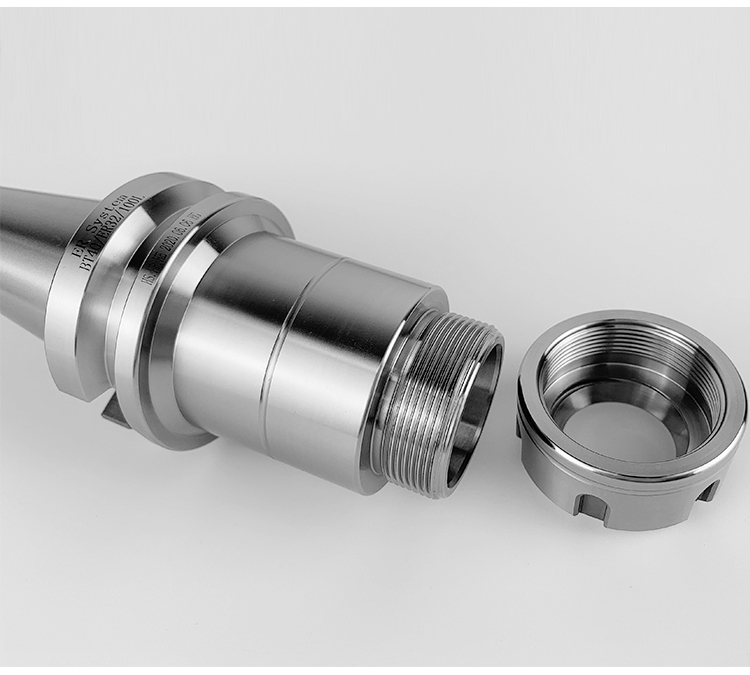
ER toolholder construction begins with precision-machined steel bodies manufactured to exacting tolerances that ensure proper interface with machine spindles. These toolholder bodies feature standardized taper connections including CAT (BT), HSK, and CAPTO designs that match specific machine tool requirements. The internal taper geometry within the toolholder nose is precisely ground to match corresponding collet dimensions, creating a mating surface that ensures uniform collet compression and accurate tool alignment. External surfaces incorporate features for proper balancing, coolant delivery when equipped, and identification markings that facilitate tool management in production environments.
ER collets represent the core of the toolholding system, manufactured from high-grade spring steel that provides the necessary elasticity for proper compression. These precision components feature a series of precisely machined slots that allow radial compression when drawn into the toolholder's tapered nose, creating uniform gripping force. Collet accuracy classes vary significantly, with standard tolerance collets suitable for general applications while precision-ground collets provide exceptional concentricity for high-speed or fine-finishing operations. The number and configuration of collet slots influence both gripping characteristics and collapse range, with standard ER collets typically featuring 16 or 20 slots that balance gripping force with flexibility.
Retaining nuts complete the ER toolholding system, providing the mechanical force necessary to draw collets into the toolholder nose and generate proper clamping pressure. These components incorporate precision threads that match corresponding toolholder features, with specialized designs including various drive configurations for proper tightening. Modern retaining nut designs often incorporate balancing features and reduced mass for high-speed applications, with specialized sealing arrangements that prevent coolant ingress. Proper nut selection and maintenance prove critical to system performance, as worn components can compromise clamping force or cause improper collet seating that affects machining accuracy.
The concentricity performance of properly assembled ER systems represents one of their most significant advantages in precision machining. High-quality ER systems can achieve tool runout measurements below 0.003mm when assembled with precision components under optimal conditions, providing the stability necessary for fine surface finishes and extended tool life. This exceptional concentricity results from the precise mechanical interaction between collet, toolholder, and cutting tool, with each component manufactured to exacting tolerances. The 360-degree gripping action centers tools more effectively than set-screw or side-lock toolholders that can push tools off-center during tightening.
Clamping force capabilities provide sufficient security for a wide range of machining operations while maintaining flexibility for quick tool changes. The mechanical advantage generated by the tapered interface creates substantial radial force that securely grips cutting tools against both rotational and axial loads. This gripping force proves adequate for most conventional milling, drilling, and tapping operations while allowing reasonable collapse ranges that accommodate slight tool diameter variations. For particularly demanding applications, specialized ER systems with enhanced clamping mechanisms provide additional security without sacrificing versatility.
Versatility represents perhaps the most compelling advantage of ER toolholder systems, with single collet sizes accommodating tool diameter ranges typically around 1mm that reduce collet inventory requirements. This flexibility allows manufacturers to secure various tool sizes with a limited selection of collets, simplifying tool management while reducing capital investment. ER systems accommodate diverse tool types including end mills, drills, reamers, taps, and specialized cutting tools, making them suitable for complete machining processes. This versatility extends to different machine types and spindle interfaces, with ER toolholders available for virtually all standard machine taper configurations.
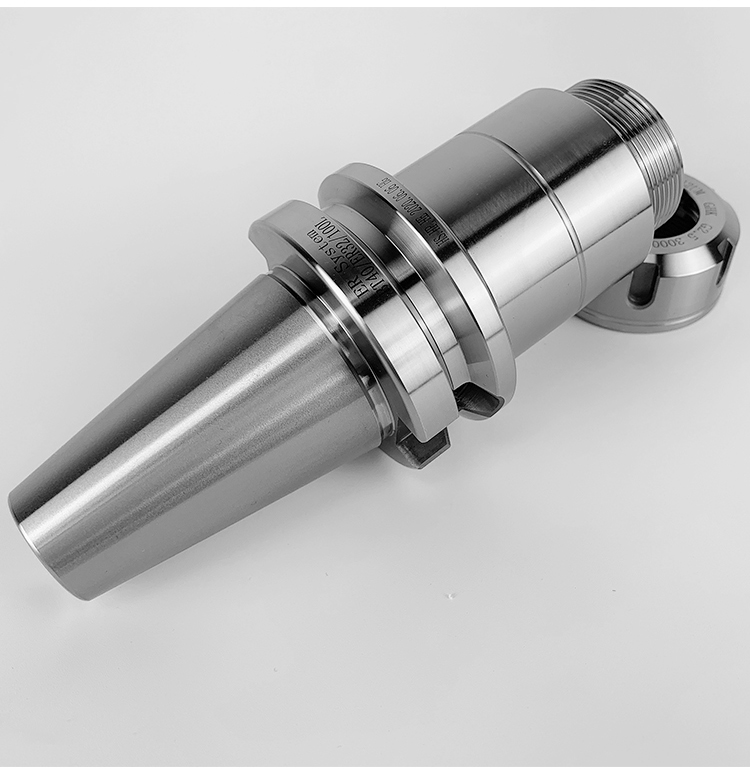
Toolholder body selection begins with proper spindle interface identification, as incorrect taper matching can compromise both machining performance and machine safety. CAT (BT) taper toolholders represent the most common spindle interface for general machining applications, with standardized taper angles and flange configurations that ensure proper seating. HSK toolholders provide enhanced performance for high-speed applications through their hollow shank design that improves rigidity. CAPTO systems offer superior torque transmission for heavy cutting applications through their polygonal drive interface. Each spindle interface type offers specific advantages for particular applications.
Collet size selection follows standardized ER designations that range from ER-8 for miniature applications to ER-50 for large diameter tools. ER-16, ER-20, and ER-32 represent the most common sizes for general machining applications, providing balanced performance across typical tool diameter ranges. Smaller ER sizes suit precision applications with miniature tools, while larger sizes accommodate substantial cutting tools for heavy material removal operations. Proper collet selection considers both tool diameter and required collapse range, with the general guideline recommending selection of the smallest collet size that properly accommodates the tool diameter.
Performance grade selection differentiates between standard and precision toolholding components based on application requirements. Standard grade ER systems provide adequate performance for general machining applications where tight tolerances are not critical. Precision grade systems incorporate enhanced manufacturing tolerances and superior materials that deliver exceptional concentricity for demanding applications including high-speed machining and precision boring. The economic justification for precision components depends on specific application requirements, with improved machining results typically justifying additional investment where surface finish or dimensional accuracy significantly influence process economics.
Proper toolholder assembly begins with thorough component inspection and cleaning to ensure optimal performance and prevent contamination. Toolholder tapers require regular cleaning to remove debris that could interfere with proper spindle seating, while collets should be inspected for wear before each use. Cutting tools must be properly prepared with clean shanks free from burrs or contamination. Assembly procedures follow specific sequences that ensure proper component seating, with attention to recommended torque values for retaining nuts that provide sufficient clamping force without damaging components. These assembly practices significantly influence toolholding performance and machining results.
Balancing considerations become increasingly important as rotational speeds increase, with unbalanced tool assemblies potentially causing vibration that compromises surface finish and reduces tool life. ER systems can be balanced through various methods including material removal or balancing rings. The balancing requirement depends on rotational speed, with general guidelines suggesting balancing for applications exceeding 8,000 RPM or when machining results indicate vibration-related issues. Proper balancing improves machining quality and enhances workplace safety by reducing stress on spindle bearings and other machine components.
Maintenance procedures ensure long-term performance and reliability, beginning with regular inspection routines that identify wear or damage. Toolholder tapers should be examined for fretting or galling, while collets require inspection for cracked slots or excessive wear. Retaining nuts need thread condition verification to ensure proper tightening capability. Cleaning protocols remove chips and contaminants that could affect component fit or function. Documentation practices track component usage and maintenance history, supporting preventive replacement before failures occur that could interrupt production or compromise part quality.
Cost analysis for ER toolholding systems must consider both initial investment and long-term operational economics. While individual ER components typically cost less than comparable dedicated toolholding systems, complete system requirements can represent significant capital investment. This investment typically delivers substantial returns through improved machining performance, reduced tooling costs, and enhanced process flexibility. The modular nature allows incremental investment aligned with actual production needs, with additional components acquired as requirements evolve rather than through substantial upfront expenditures.
Implementation strategy should begin with comprehensive assessment of current and anticipated machining requirements. Pilot implementations allow performance verification under controlled conditions before full-scale deployment. Training programs ensure proper system use and maintenance, with particular attention to assembly procedures and inspection protocols. Gradual implementation allows experience accumulation and process refinement, with lessons learned from initial applications informing subsequent expansion decisions.
The ongoing evolution of ER toolholding technology continues to enhance performance capabilities while expanding application possibilities. Advancements in materials science provide components with enhanced wear resistance and durability. Improved manufacturing technologies deliver tighter tolerances and better surface finishes. Innovative designs address specific application challenges including high-speed requirements and heavy cutting conditions. These developments ensure that ER toolholder systems remain at the forefront of precision toolholding technology, offering proven solutions that balance technical capabilities with practical implementation considerations across diverse machining applications and production environments.
person: Mr. Gong
Tel: +86 0769-82380083
Mobile phone:+86 15362883951
Email: info@jimmytool.com
Website: www.jimmytool.com


