

Best Carbide Drill Bits for Metal and Industrial Use
Date:2026-02-02Number:1232Carbide drill bits represent a transformative advancement in hole-making technology, offering performance characteristics that traditional high-speed steel tools simply cannot match. These precision instruments, crafted from tungsten carbide particles bonded with cobalt, have revolutionized drilling operations across industries from aerospace manufacturing to automotive production and general metalworking. The adoption of carbide drill bits signifies more than just a tooling upgrade—it represents a fundamental shift toward higher productivity, improved hole quality, and reduced total drilling costs in precision manufacturing environments.
The superiority of carbide drill bits stems from their exceptional material properties, including extreme hardness, excellent wear resistance, and the ability to maintain cutting edges at elevated temperatures. Where HSS drills would soften and fail, carbide tools continue to perform, enabling higher speeds, deeper holes, and more consistent results. This guide explores the technical considerations, application strategies, and economic factors that define successful carbide drill bit implementation in modern manufacturing operations.
Carbide drill bit construction begins with precisely engineered tungsten carbide powders blended with cobalt binders in carefully controlled proportions. This mixture undergoes sophisticated pressing and sintering processes at temperatures approaching 1,400°C, transforming into the dense, homogeneous structure that provides carbide's signature performance characteristics. The resulting material offers approximately three times the hardness of high-speed steel while maintaining sufficient toughness for demanding drilling applications.
Drill point geometry represents a critical design element that directly influences drilling performance. Standard 118-degree points serve general-purpose applications, while 135-degree split points provide better centering and reduced walking tendencies in harder materials. Specialized geometries like parabolic flutes enhance chip evacuation in deep-hole applications, and coolant-through designs deliver cutting fluids directly to the cutting edge for improved heat management and chip removal. Each geometric feature represents an engineering solution to specific drilling challenges, with selection depending on material characteristics, hole requirements, and production objectives.
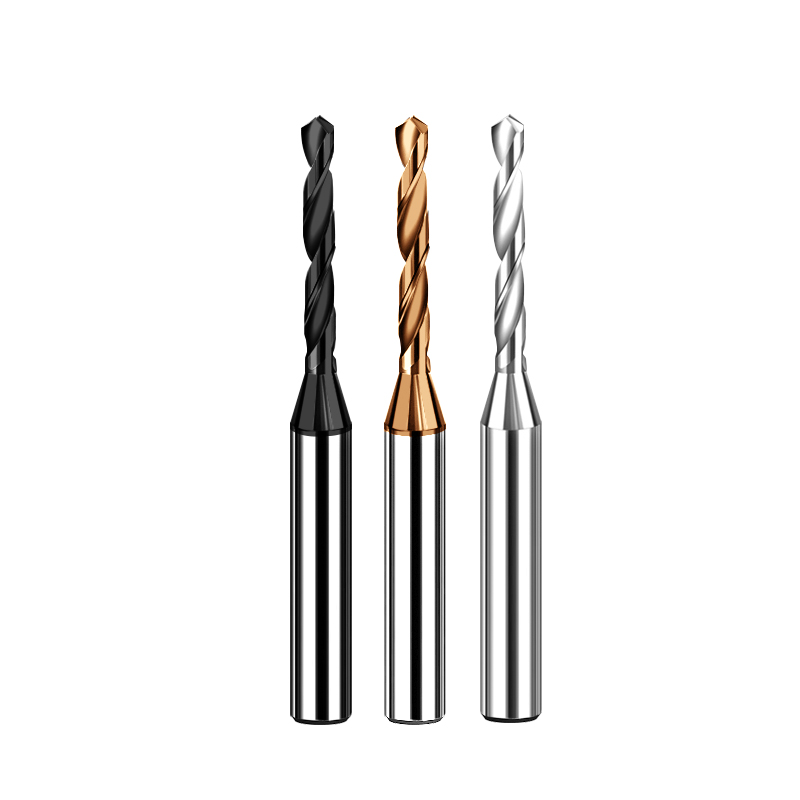
Coating technologies significantly enhance carbide drill bit performance by providing thermal barriers, reducing friction, and preventing material adhesion. Titanium nitride (TiN) coatings offer general wear resistance and are easily recognizable by their gold color. Titanium aluminum nitride (TiAlN) provides superior thermal protection for high-speed applications, while diamond-like carbon (DLC) coatings excel in non-ferrous materials where aluminum adhesion presents challenges. These nanometer-thin layers, applied through physical vapor deposition processes, can extend tool life by 300% or more in appropriate applications while improving hole quality and consistency.
Carbide drill bits excel across a broad range of materials, with steel alloys representing perhaps their most important application area. In carbon steels, carbide drills enable significantly higher cutting speeds than HSS alternatives while maintaining excellent hole quality and dimensional accuracy. For alloy steels and stainless materials, specialized carbide grades with enhanced toughness and thermal-resistant coatings prevent premature failure while managing the work-hardening tendencies and poor thermal conductivity that characterize these challenging materials. Hardened steels above 45 HRC require particular attention to substrate selection and point geometry to balance cutting capability with tool integrity.
Aluminum and non-ferrous metals present different drilling challenges that carbide tools address through specialized designs. High helix angles and polished flutes prevent material adhesion and facilitate chip evacuation in soft, gummy alloys. For copper and brass applications, sharp cutting edges and specialized coatings minimize burr formation while extending tool life. Composite materials like carbon fiber reinforced polymers demand carbide's hardness to withstand abrasive fibers while specialized point geometries control delamination and ensure clean hole exits. Each material family requires specific tool adaptations to optimize performance and maximize value.
Cast iron drilling benefits particularly from carbide's wear resistance, as the abrasive nature of iron particles rapidly degrades HSS tools. Carbide's ability to maintain sharp cutting edges through extended production runs makes it economically advantageous despite higher initial costs. For high-silicon aluminum alloys, carbide drill bits provide the only practical solution for maintaining hole quality and tool life in production environments. The material-specific nature of carbide drill performance necessitates careful application analysis and tool selection to realize the full benefits of this advanced drilling technology.
Parameter selection represents the crucial link between carbide drill bit capability and realized performance. Cutting speed, expressed as surface feet per minute, must balance material removal rate with tool life considerations. For carbon steels, speeds typically range from 100 to 250 SFM, while stainless steels require more conservative speeds from 60 to 150 SFM. Feed rates, measured in inches per revolution, influence chip formation, cutting forces, and hole quality. Typical feed rates for carbide drills in steel range from 0.002 to 0.010 inches per revolution, with specific selection depending on drill diameter, material hardness, and hole depth requirements.
Coolant application plays a vital role in carbide drill performance, particularly in deep-hole or high-production applications. Through-tool coolant systems deliver cutting fluids directly to the cutting edges, providing both cooling and chip evacuation benefits that extend tool life and improve hole quality. Flood coolant applications require proper nozzle positioning to ensure adequate fluid reaches the drilling interface. For certain materials like cast iron or magnesium, dry drilling may be appropriate, but generally requires specialized tool geometries and parameter adjustments to manage heat generation and chip control.
Peck drilling cycles represent an essential technique for deep-hole applications, allowing chip evacuation and coolant penetration while reducing heat accumulation. The specific peck depth depends on material characteristics and drill diameter, typically ranging from one to three times the drill diameter. For through-hole drilling, reducing feed rates during breakthrough prevents exit burrs and protects drill points from damage. These application techniques, combined with proper parameter selection, transform carbide drill bits from simple cutting tools into precision hole-making systems that deliver consistent results across production runs.
While carbide drill bits command premium prices compared to HSS alternatives, their economic justification becomes clear through comprehensive cost analysis. The fundamental equation extends beyond simple tool price to encompass tool life, hole quality, machine utilization, and production reliability. A carbide drill costing four times more than its HSS counterpart but lasting twenty times longer while enabling faster drilling speeds produces substantially lower cost per hole—often reducing total drilling costs by 50% or more in appropriate applications.
Implementation requires systematic planning beginning with application analysis to identify where carbide drills will provide maximum return. Pilot programs allow parameter development and verification before full-scale implementation, with careful documentation of optimal settings for each material and application. Staff training ensures proper handling, installation, and troubleshooting—particularly important since carbide's brittleness makes it susceptible to damage from improper setup or use. Proper storage, handling procedures, and inventory management protect the investment in premium tooling.
Performance monitoring through tool life tracking, hole quality assessment, and cost-per-hole calculation enables continuous optimization and justifies expanded implementation. As drilling requirements evolve and new carbide technologies emerge, maintaining current knowledge ensures continued competitive advantage. In precision manufacturing environments, carbide drill bits represent not merely consumable tools but strategic investments that directly impact productivity, quality, and profitability across diverse drilling applications and production scenarios.
person: Mr. Gong
Tel: +86 0769-82380083
Mobile phone:+86 15362883951
Email: info@jimmytool.com
Website: www.jimmytool.com


