

How to Identify Reliable Carbide End Mill Cutter Suppliers
Date:2025-12-02Number:651As someone who’s spent over 15 years in precision machining—first as a shop floor operator, then as a tooling procurement specialist, and now running my own CNC job shop—I’ve learned the hard way that not all carbide end mill cutter suppliers are created equal. The difference between a reliable supplier and a fly-by-night vendor can mean the difference between hitting your delivery deadlines or watching your spindle wear out faster than expected. In this article, I’ll walk you through the practical, field-tested steps I use to vet carbide end mill cutter factories and ensure I’m partnering with suppliers who deliver consistent quality, technical support, and real value—not just low prices.
Before diving into how to identify trustworthy suppliers, let’s address why this matters so much. Solid carbide end mills are high-precision cutting tools used in demanding applications—from aerospace titanium milling to medical implant manufacturing. A subpar tool might seem like a minor cost saving upfront, but it can lead to:
Premature tool failure
Poor surface finishes requiring rework
Unplanned machine downtime
Increased scrap rates
Higher overall cost per part
In my experience, the cheapest tool is almost never the most economical choice in the long run. That’s why I prioritize reliability over price alone—and why I always dig deep before committing to a new carbide end mill cutter factory.
Many suppliers present themselves as “factories” when they’re actually middlemen reselling tools from third-party producers. To avoid this trap, I always ask for concrete proof of in-house production:
Factory audit reports: Reputable carbide end mill cutter factories should be able to provide ISO 9001 certification or similar quality management documentation.
Video tours: During the pandemic, I started requesting short video walkthroughs of their production floor. Real factories will show you their CNC tool grinders (like ANCA or Walter), coating chambers (for TiAlN, AlCrN, etc.), and metrology labs.
Material traceability: Ask if they use certified tungsten carbide blanks (e.g., from Kennametal, Sandvik, or Chinese equivalents like Zhuzhou Cemented Carbide Group). A legitimate factory won’t hesitate to share material certificates.
I once partnered with a supplier who claimed to be a “top-tier Chinese factory.” After six months of inconsistent performance, I visited their facility—only to find they were assembling tools from outsourced blanks with no in-house grinding capability. Lesson learned: verify, don’t assume.
A reliable carbide end mill cutter factory doesn’t just take orders—they offer application engineering support. When I evaluate a new supplier, I test their knowledge with specific questions:
“What flute geometry would you recommend for slotting 6061-T6 aluminum at 18,000 RPM?”
“Can your 4-flute end mill handle full radial engagement in hardened D2 tool steel (58–60 HRC)?”
“Do you offer custom corner radii or variable helix designs?”
If the response is generic or sales-driven (“Our tools are very sharp and durable!”), that’s a red flag. But if they ask follow-up questions about your machine rigidity, coolant type, or chip evacuation strategy—that’s a sign they understand real-world machining.
One of my best suppliers in Taizhou, China, even sent me a sample batch with three different helix angles so I could test them on our Okuma mill. That level of collaboration is rare—and invaluable.
Never skip this step. Even if a supplier checks all the boxes on paper, nothing beats hands-on validation. Here’s my standard testing protocol:
1. Visual inspection: Check for burrs, inconsistent edge prep, or coating defects under magnification.
2. Runout measurement: Use a dial indicator to verify TIR (Total Indicated Runout). Anything over 0.005 mm on a 6mm shank raises concerns.
3. Cutting trials: Machine a representative part using your standard parameters. Track:
Tool life (minutes or parts per tool)
Surface finish (Ra values)
Chip formation consistency
Any chipping or edge breakdown
I keep a detailed log of every test run. Over time, this data helps me compare suppliers objectively—not just by anecdote.
Consistency is king in carbide tooling. A good carbide end mill cutter factory implements rigorous QC at multiple stages:
Raw material inspection (hardness, grain size)
Post-grinding dimensional checks (diameter tolerance, flute depth)
Coating thickness verification (via XRF or cross-section SEM)
Final functional testing (optional but ideal)
Ask specifically: “What percentage of your tools undergo 100% inspection vs. sampling?” Factories serious about quality often inspect critical dimensions on every single tool, especially for diameters under 6mm where tolerances are tightest.
I once switched to a new supplier because they implemented automated optical inspection (AOI) systems that caught micro-chipping invisible to the naked eye. That small investment on their part saved me thousands in scrapped aerospace components.
Machining doesn’t stop at 5 p.m.—and neither should your supplier’s support. I’ve found that reliable carbide end mill cutter factories:
Respond to technical inquiries within 24 hours (even across time zones)
Provide clear lead times and update proactively if delays occur
Offer bilingual engineering support if sourcing internationally
When I had a midnight emergency during a high-priority defense contract run, my go-to supplier in Jiangsu answered WeChat at 1 a.m. their time and walked me through adjusting feed rates over voice call. That kind of partnership is worth its weight in solid carbide.
Don’t rely solely on testimonials on their website. Instead:
Ask for 2–3 current customers in your industry (aerospace, mold & die, automotive, etc.)
Search forums like Practical Machinist or CNCZone for mentions of the factory name
Look up their export history via platforms like Panjiva or ImportGenius (if importing to the U.S.)
I once discovered a “premium” supplier was actually banned by a major German machine builder for supplying counterfeit-coated tools. That info only surfaced after I called a reference they didn’t list publicly.
If a carbide end mill cutter factory quotes prices 30–40% below market average, dig deeper. Common shortcuts include:
Using recycled or off-spec carbide powder
Skipping stress-relief heat treatment
Applying thin or non-uniform coatings
Falsifying hardness reports
Remember: high-performance micrograin carbide isn’t cheap to produce. Sustainable pricing usually reflects genuine quality.
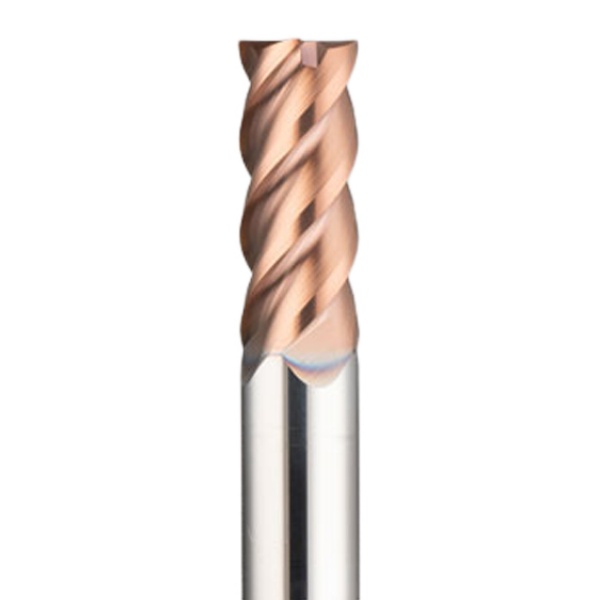
After decades in this trade, I’ve come to see tooling suppliers as extensions of my own team. The best carbide end mill cutter factories don’t just ship boxes—they help me solve problems, improve cycle times, and win more business.
So take your time. Visit facilities if possible. Test rigorously. Communicate openly. And remember: reliability isn’t a feature—it’s the foundation.
If you’re sourcing globally (especially from China, Germany, or the U.S.), focus on partners who blend manufacturing integrity with technical fluency. Because in precision machining, your tools are only as good as the people behind them.
I’ve managed tooling procurement for shops ranging from 3-axis jobbers to 5-axis aerospace specialists. Today, I advise manufacturers on optimizing cutting tool strategies while running my own high-mix CNC operation in the Midwest. My inbox is always open for fellow machinists—feel free to reach out with your toughest end mill challenges.
person: Mr. Gong
Tel: +86 0769-82380083
Mobile phone:+86 15362883951
Email: info@jimmytool.com
Website: www.jimmytool.com


