

Indexable Drills: Complete Guide to U-Drill Technology
Date:2026-02-07Number:1429Indexable drills, commonly known as U-drills or quick-change drills, represent a transformative advancement in hole-making technology that has fundamentally changed drilling operations in modern manufacturing environments. These innovative tools employ replaceable carbide inserts mounted on a solid steel body, creating a modular drilling system that combines the efficiency of traditional twist drills with the economic advantages of indexable cutting technology. The adoption of indexable drilling systems has enabled manufacturers to achieve significantly higher penetration rates, improved hole quality, and reduced tooling costs compared to conventional solid carbide or high-speed steel drilling approaches. This technology has proven particularly valuable in high-volume production environments, large diameter hole applications, and deep hole drilling operations where traditional drilling methods face limitations in performance, tool life, or economic viability.
The fundamental concept behind indexable drill technology involves separating the cutting function from the tool body, allowing manufacturers to replace only the worn cutting edges rather than the entire drilling tool. This modular approach delivers substantial economic benefits while maintaining consistent drilling performance across extended production runs. Unlike solid drills that become completely unusable when their cutting edges wear, indexable drills simply require insert replacement—a quick and cost-effective process that minimizes machine downtime and reduces overall tooling expenditures. This guide explores the technical foundations, application strategies, and economic considerations that define successful indexable drill implementation in modern manufacturing operations across diverse industries and material applications.
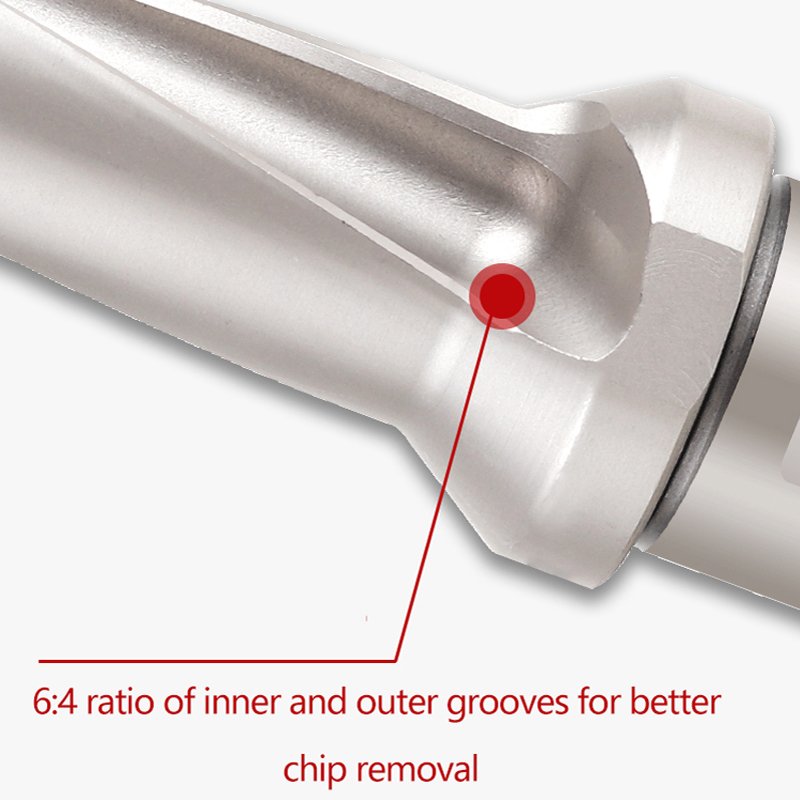
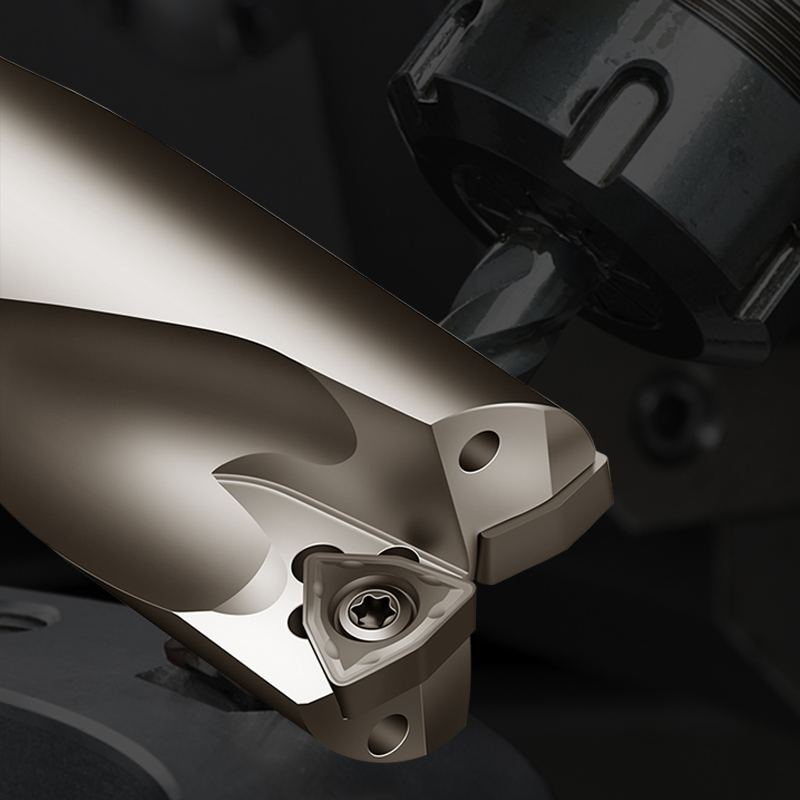
Indexable drill construction centers on a robust steel body designed to provide maximum rigidity and vibration damping during the demanding conditions of drilling operations. These tool bodies incorporate precision-machined insert pockets that position cutting inserts with exacting accuracy to ensure proper cutting geometry and chip formation. The pocket design represents a critical engineering element, as it must secure inserts against the substantial axial and radial forces generated during drilling while allowing efficient chip evacuation around the tool periphery. Modern indexable drill systems employ various locking mechanisms including screw-clamp, pin-lock, and wedge systems, each offering specific advantages in insert security, replacement convenience, and accessibility in confined machining spaces.
Insert design forms the heart of indexable drill performance, with modern carbide inserts incorporating sophisticated geometries specifically engineered for drilling applications. Unlike turning or milling inserts adapted for drilling purposes, dedicated drill inserts feature specialized chip breaker designs that manage the unique chip formation and evacuation challenges inherent to hole-making operations. These inserts typically incorporate reinforced cutting edges to withstand the high mechanical loads concentrated at the drill point, with specialized corner geometries that balance cutting performance with edge strength. Advanced coating technologies including titanium aluminum nitride (TiAlN), aluminum titanium nitride (AlTiN), and specialized multilayer coatings provide thermal protection and wear resistance for the demanding conditions encountered during continuous drilling operations.
Coolant delivery systems represent another critical design element in modern indexable drills, with through-tool coolant capabilities becoming standard for most serious drilling applications. These internal coolant channels direct high-pressure cutting fluids directly to the cutting edges, providing essential cooling, lubrication, and chip evacuation assistance throughout the drilling process. The strategic placement of coolant outlets ensures optimal fluid delivery to both the primary cutting edges and secondary guiding pads, managing heat generation while facilitating chip removal from deep holes or challenging materials. For particularly demanding applications, specialized drill bodies feature dual coolant channels that deliver fluids to both cutting edges and peripheral areas, maximizing cooling effectiveness and chip control across diverse drilling conditions.
The economic advantages of indexable drilling systems emerge most clearly through their modular tooling approach, which significantly reduces tooling costs compared to solid carbide alternatives. While the initial investment in indexable drill bodies exceeds that of comparable solid tools, the long-term savings generated by replaceable inserts typically deliver substantial cost reductions over extended production periods. This economic model proves particularly advantageous for larger diameter holes where solid carbide drills become prohibitively expensive, and for applications involving multiple hole sizes where a single drill body can accommodate various diameters through interchangeable insert sizes or adjustable tool designs. The ability to quickly replace worn inserts without removing the entire tool from the machine spindle further enhances productivity by minimizing changeover time and maintaining consistent drilling performance throughout production runs.
Performance characteristics of indexable drills typically surpass those of conventional twist drills in several key areas, beginning with significantly higher penetration rates enabled by the advanced insert materials and optimized cutting geometries. Modern carbide inserts allow surface speeds two to three times higher than possible with high-speed steel tools, while the specialized chip breaker designs facilitate more aggressive feed rates without compromising chip control or hole quality. The rigidity of indexable drill bodies, combined with their precisely located cutting inserts, provides exceptional stability during drilling operations, resulting in improved hole straightness, better diameter control, and superior surface finishes compared to conventional drilling methods. This stability proves particularly valuable in deep hole applications or when drilling in challenging materials where tool deflection or vibration could compromise hole quality or tool integrity.
Versatility represents another significant advantage of indexable drilling systems, with many modern designs capable of performing multiple operations beyond simple hole drilling. Combination tools can incorporate drilling, chamfering, and spot facing capabilities in a single tool, reducing tool changes and improving process efficiency. Adjustable diameter designs allow hole size variation without changing tools, providing flexibility for prototyping or low-volume production applications. Specialized geometries accommodate various entry conditions including flat surfaces, angled approaches, and interrupted cuts that would challenge conventional drilling tools. This operational flexibility, combined with the economic advantages of insert-based tooling, makes indexable drills increasingly attractive across diverse manufacturing sectors and application scenarios.
Material-specific considerations significantly influence indexable drill selection and application strategies, with different material families demanding specialized approaches to achieve optimal results. Steel and cast iron applications typically employ inserts with reinforced cutting edges and wear-resistant coatings to manage the higher cutting forces and abrasive conditions characteristic of these materials. The excellent chip-breaking properties of cast iron allow particularly aggressive parameters, while steel alloys require more balanced approaches that consider work hardening tendencies and stringy chip formation. Stainless steels and high-temperature alloys demand specialized insert grades with enhanced heat resistance and lubricious coatings to manage the poor thermal conductivity and work hardening characteristics that complicate drilling operations in these challenging materials.
Non-ferrous material drilling benefits from specialized insert geometries and surface treatments designed to address the unique characteristics of aluminum, copper, and their alloys. Sharp cutting edges and polished insert surfaces prevent material adhesion in gummy alloys, while specialized chip breaker designs manage the bulky chips characteristic of these materials. For high-silicon aluminum alloys, wear-resistant insert grades maintain cutting performance despite the abrasive silicon particles, while copper alloys benefit from insert geometries that minimize burr formation and facilitate clean chip evacuation. The higher thermal conductivity of most non-ferrous materials allows more aggressive parameters than possible with steel alloys, but requires attention to potential thermal expansion issues that could affect hole dimensional accuracy in precision applications.
Parameter optimization for indexable drills requires balancing multiple factors to achieve optimal performance while maintaining tool integrity and hole quality. Cutting speed selection typically follows manufacturer recommendations based on insert grade and material characteristics, with adjustments for specific application conditions including hole depth, machine rigidity, and coolant effectiveness. Feed rate optimization considers chip formation characteristics, with sufficient feed pressure necessary to ensure proper chip breaking while avoiding excessive forces that could damage inserts or compromise hole quality. Modern CNC capabilities allow peck drilling cycles for deep hole applications, with optimized peck depths and retract distances that balance chip evacuation needs against cycle time considerations. Coolant pressure and volume requirements vary based on hole diameter and depth, with through-tool systems typically requiring 500-1000 PSI for effective chip evacuation in demanding applications.
Successful indexable drill implementation begins with proper machine preparation and setup procedures that ensure optimal performance from these precision tooling systems. Machine rigidity represents a fundamental requirement, as any vibration or deflection during drilling operations can compromise insert life, hole quality, and tool integrity. Spindle condition including runout accuracy and taper cleanliness directly influences drilling performance, with excessive runout particularly detrimental to insert life and hole dimensional control. Coolant system capability must match tool requirements, with adequate pressure, volume, and filtration to support through-tool coolant delivery and effective chip evacuation. These machine preparation steps, while often overlooked, frequently determine the success or failure of indexable drilling implementations.
Tool setup and maintenance procedures significantly impact indexable drill performance and longevity. Proper insert installation requires careful attention to manufacturer specifications for torque values and seating verification, as improperly secured inserts can shift during operation with catastrophic results. Insert pocket maintenance ensures proper insert positioning and clamping force, with regular cleaning preventing chip accumulation that could compromise insert seating or coolant flow. Runout verification after tool assembly identifies potential issues before they affect production quality, with most manufacturers recommending maximum runout limits to ensure optimal performance. These setup procedures, while adding initial time investment, prevent downstream problems and ensure consistent drilling performance across production runs.
Economic analysis for indexable drilling applications should consider both direct and indirect cost factors to accurately assess the technology's value proposition. Direct costs include tool body investment, insert consumption rates, and coolant system requirements, while indirect factors encompass machine utilization, changeover time, hole quality consistency, and production reliability. While indexable drills typically demonstrate higher initial costs than conventional drilling tools, their long-term economic advantages often prove compelling through reduced tooling expenditures, improved productivity, and enhanced process reliability. The break-even point where indexable drilling becomes economically advantageous varies based on production volume, hole specifications, and material characteristics, but generally occurs relatively quickly in medium to high-volume applications or when drilling larger diameter holes.
The ongoing evolution of indexable drill technology continues to expand application possibilities while improving performance across diverse manufacturing sectors. Advancements in insert materials provide enhanced wear resistance and fracture toughness for increasingly demanding applications. Improved coating technologies offer better thermal protection and lubricity in high-temperature machining conditions. Innovative tool designs increase rigidity while reducing mass for higher speed capabilities. These developments, combined with growing implementation experience across industries, ensure that indexable drilling technology remains at the forefront of hole-making innovation. For manufacturers seeking to improve drilling productivity, reduce tooling costs, and enhance hole quality consistency, indexable drills offer compelling solutions that balance performance advantages with economic benefits across diverse application scenarios and production environments.
person: Mr. Gong
Tel: +86 0769-82380083
Mobile phone:+86 15362883951
Email: info@jimmytool.com
Website: www.jimmytool.com


