

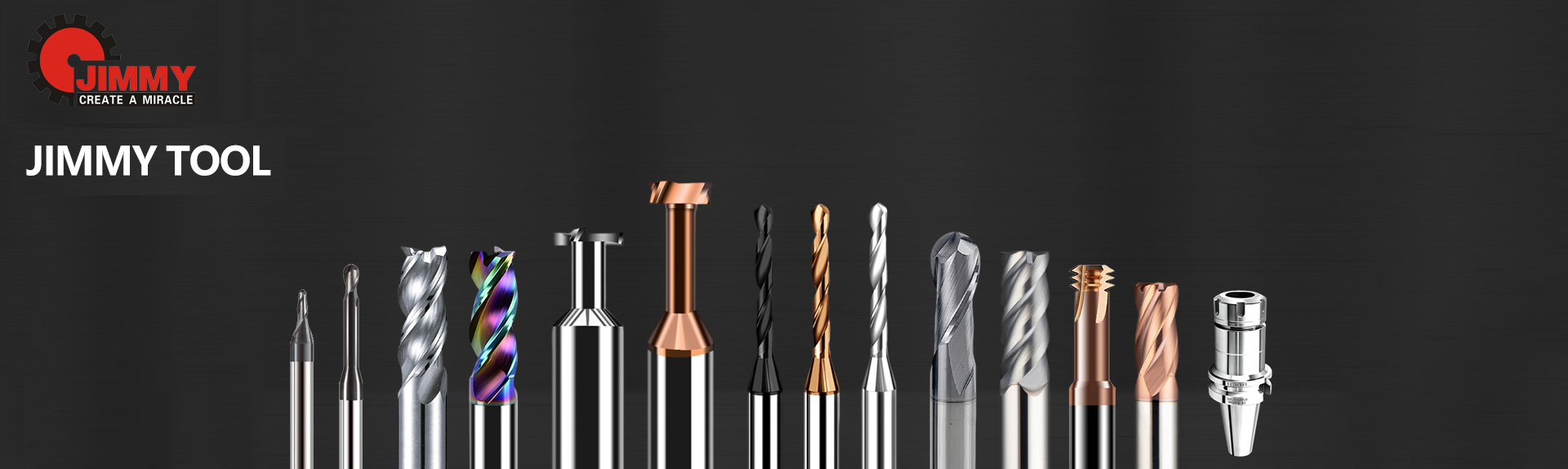
The Importance of Edge Prep (Honing) on Carbide End Mills: Why a “Sharp” Edge Isn’t Always Better
Date:2026-05-21Number:1395A freshly ground carbide end mill looks perfect under magnification. The cutting edge comes to a crisp, sharp intersection—exactly what most machinists believe they want. But that razor-sharp edge, untouched after grinding, carries a hidden vulnerability that shortens tool life and creates unpredictable performance in difficult materials.
The vulnerability is this: a perfectly sharp carbide edge is also perfectly brittle at the microscopic scale. During the grinding process, the diamond wheel leaves behind micro-fractures, burrs, and residual stress concentrated right at the cutting edge—the exact point that will experience the highest mechanical and thermal loads during machining. When this unprotected edge enters the cut, those micro-fractures become initiation sites for chipping, which then propagates along the cutting edge and destroys the tool long before the carbide substrate is fully worn.
The solution is edge preparation—a controlled, precision honing process that removes those grinding-induced defects and replaces the fragile sharp edge with an engineered radius, measured in microns. Edge preparation increases the stability of the cutting edge, improving tool life, surface finish, and process reliability.
As Bill Shaffer, former VP of Conicity Technologies, explains: “When you make a cut with an edge that hasn‘t been prepared, it’s like hitting a crack in a windshield with a hammer”. The crack starts small, propagates with each impact, and eventually causes catastrophic failure.
At JimmyTool, we consider edge preparation a core quality process—not an optional upgrade. Our precision-ground carbide tools feature application-specific edge preparation, with the exact radius, shape, and consistency verified through documented quality control. In this article, we‘ll explore the science of edge prep, explain why it matters so profoundly for tool life and performance, and show you how to specify the right edge prep for your material.
A conventionally ground carbide cutting edge is not truly sharp at the atomic level. Because of grinding grit-induced brittleness, it’s riddled with microscopic defects—what manufacturers call “grinding marks” and “micro-chipping.”
These grinding-induced defects—micro-chipping, burrs, and uneven edge quality—create stress concentrations along the very edge that takes the brunt of the cutting forces. When the edge hits a workpiece, stress will concentrate at a gouge or chisel-like defect and cause breakage. A small chip then becomes a big one, and that‘s when tool life disappears.
Edge prep keeps that edge strong. By removing the weak, damaged layer and imparting a precise radius to the cutting edge, we transform the tip from a liability into a load-bearing, wear-resistant feature. This means protecting against micro-chipping and edge breakage from the very first cut.
The geometry of edge preparation can be defined by the K-factor: the ratio of the form on the rake face relative to the flank face of the tool. In practice, many tools are honed with a waterfall-style prep, where the radius is larger on the rake face and tapers down the flank face. This asymmetric shape strengthens the edge where chip flow generates maximum stress while preserving the sharpness needed for clean shearing.
Did you know? Conicity Technologies coined the term “edge prep” in 1999 specifically for carbide cutting tools—a vocabulary now adopted industry-wide—and their patented “waterfall hone” is the most widely used asymmetric edge prep geometry in the industry.
The impact of edge prep on tool life is not marginal—it’s transformative. GWS Tool Group research shows that tools with a proper edge prep last twice as long and significantly resist chipping vs. unhoned tools in the same cut.
Table 2.1: How Edge Prep Transforms Carbide Tool Performance
| Performance Metric | Unhoned Carbide Edge | Properly Honed Carbide Edge |
|---|---|---|
| Initial Condition | Jagged with grinding marks and micro-chips, low fatigue strength | Smooth, uniform, no residual defects, high fatigue strength |
| Wear Mechanism | Immediate micro-chipping → rapid chipping growth → catastrophic failure | Gradual, predictable flank/crater wear; consistent tool life |
| Tool Life (Relative) | Baseline (1×) | 2×+ (GWS Tool Group data); up to 5× in hardened steels |
| Surface Finish on Part | Inconsistent; micro-chipped edge degrades finish quickly | Consistent, predictable Ra throughout tool life |
| Process Predictability | Unpredictable; tool life varies, unexpected breakage risk | Predictable wear; enables tool life management strategies |
| Cutting Force & Heat | Higher friction at jagged edge → increased heat generation | Lower friction at smooth edge → cooler cutting |
Edge preparation can dramatically extend tool life, improve process stability, and reduce overall tool costs by creating stronger, more durable cutting edges. A properly prepared cutting edge has higher fatigue strength and is not susceptible to immediate chipping or flaking.
Perhaps most critically, edge prep transforms tool failure from an unpredictable event into a predictable process. Unhoned tools can break unexpectedly at any point—their micro-chips grow rapidly and unpredictably. A honed tool, by contrast, exhibits gradual flank wear that can be monitored and planned around. This predictability is what enables large-scale manufacturers to implement tool life management—changing tools after a defined number of cycles rather than waiting for a failure that might scrap a $5,000 part.
Upload Your Drawing for a Custom Tool with Documented Edge Prep →
Edge preparation is not a “one-size-fits-all” process. Different materials require different edge geometries. An edge prep that dramatically improves tool life in hardened steel can ruin performance in aluminum.
| Material Group | Recommended Edge Prep | Rationale |
|---|---|---|
| Aluminum / Non-Ferrous | Sharp edge with minimal hone (<5 µm) or high-positive polished rake | Prevent material adhesion (BUE); sharp edge shears cleanly with minimal force; heavier edge radii cause rubbing and smearing |
| Steels / Alloy Steels (e.g., 4140) | Light-to-medium hone (10–20 µm); may use waterfall-style prep | Balance sharpness for low cutting forces with sufficient edge strength to resist micro-chipping in tough alloys |
| Stainless Steels (e.g., 304, 316) | Medium hone (15–25 µm) with polished surface | Prevent work hardening from rubbing; polished edge reduces built-up edge tendency common in stainless |
| Hardened Steels (HRC 48–65) | Heavy hone (20–40 µm); distinct T-land or waterfall prep required | Maximum edge strength to resist chipping in abrasive hardened material; the heavier radius distributes cutting forces and protects against impact loading |
| Titanium / Nickel Alloys | Medium-heavy hone (15–30 µm) | Provide thermal stability and mechanical strength at the high temperatures generated in these low-thermal-conductivity materials |
These are not arbitrary ranges. They represent the accumulated experience of carbide tool manufacturers and the edge preparation pioneers who developed the waterfall hone geometry. The K-factor and radius for each material are carefully calibrated to create the optimal edge profile for that material‘s specific combination of hardness, abrasiveness, and chip formation behavior.
A shop that switches from machining 4140 steel to D2 tool steel at 58 HRC without changing the edge prep—or worse, using the same unhoned edge for both—is essentially running the tool into a material mismatch. The edge that worked fine in annealed alloy steel will micro-chip immediately in hardened tool steel. The tool “failed early,” but the root cause was edge preparation, not carbide grade or coating.
JimmyTool’s edge prep philosophy: We don‘t apply a single edge prep to all tools. Our application engineering team specifies the exact edge preparation—radius, K-factor, and surface finish—based on your workpiece material, hardness, and operation type. Each tool’s edge is then verified under magnification and shipped with documentation confirming the specified edge prep has been achieved.
Edge preparation has moved from a niche practice to a standard requirement in high-performance manufacturing. Industry leaders across tooling and manufacturing now advocate for it as an essential quality parameter.
As one industry technical director notes: “Edge prep is what we call the ‘black art.’ But that ‘black art’ is now mostly a thing of the past as edge preparation has become the industry standard for quality and performance”. Edge preparation isn’t merely a technical step; it‘s a competitive advantage that separates commodity-grade cutters from premium tooling.
For shops evaluating tooling suppliers, the presence or absence of documented edge preparation is one of the most reliable indicators of overall quality. A manufacturer that invests in precision edge prep is also investing in substrate quality, grinding precision, and coating uniformity. Conversely, a tool that arrives with an unhoned, untested edge is almost certainly cutting corners in other areas as well.
JimmyTool quality integration: At JimmyTool, edge preparation is not a “special request”—it’s integrated into our standard manufacturing process. We document the edge radius, K-factor, and surface finish for each tool, providing customers with verifiable quality data rather than verbal assurances. This is what we mean when we say edge prep is a “core quality process, not an optional upgrade.”
If you‘re uncertain whether your current tooling supplier is providing proper edge preparation—or if you’re experiencing unexplained tool chipping or unpredictable tool life—here are practical steps you can take:
Request documentation: Ask your supplier for the specified edge prep parameters (radius in microns, type of prep) for the tools you‘re purchasing. Reputable manufacturers should be able to provide this data.
Visual inspection under magnification: At minimum 30× magnification (ideally 100× or more), examine the cutting edge of a new tool. A properly honed edge should appear smooth and uniform. An unhoned or poorly honed edge will show grinding marks, irregular micro-chipping, or an inconsistent radius.
Tool life comparison: Run a controlled trial—same part, machine, program, and material—comparing your current tool against a premium tool with documented edge prep. Measure tool life in parts per edge, not hours. The difference is often substantial enough to be visible within the first test run.
Surface finish measurement: Track Ra values over the tool‘s life. An unhoned edge typically produces surface finish that degrades rapidly as micro-chips form, while a honed edge maintains more consistent Ra values.
Chip examination: Under consistent parameters, a properly honed edge should produce chips with a more uniform appearance. Irregular, torn, or discolored chips can indicate edge degradation that hasn’t yet progressed to visible tool wear.
Need help diagnosing whether edge prep is the root cause of your tooling problems?
Our application engineering team can review your tooling setup, examine your failed tools under magnification, and recommend the correct edge preparation—and tool geometry, coating, and carbide grade—for your specific material and operation. Upload your process data and tooling details for a same-business-day analysis.
Upload Your Tooling Data for an Edge Prep Analysis →
Edge preparation is the most important step in carbide tool manufacturing that most machinists never see—but its effects are visible in every part the tool produces. The grinding process that gives a tool its geometry also introduces defects at the cutting edge, and unless those defects are systematically removed and replaced with a controlled radius, the tool enters the cut with built-in failure mechanisms.
The data from tooling researchers and manufacturers is unambiguous: proper edge preparation can double tool life, dramatically improve process stability, and transform tool failure from an unpredictable event into a managed variable. For shops machining hardened steels, stainless steels, titanium, or nickel alloys—where tooling cost and scrap risk are high—specifying the correct edge prep is not a luxury. It‘s the cheapest insurance against premature tool failure and the most direct path to consistent, cost-effective machining.
At JimmyTool, edge preparation is not a “black art”—it’s a documented, application-specific quality process. Every tool we manufacture features edge prep calibrated to the workpiece material, hardness, and operation type. And every tool ships with the verification data to prove it.
Stop accepting unpredictable tool life as normal.
Submit your part drawing and material specifications. Our application engineering team will design a custom carbide tool with the correct edge preparation for your specific application—and back it with documented quality data.
Upload Your Drawing for a Custom Tool with Documented Edge Prep →
Q1: What exactly is “edge prep” on a carbide end mill?
Edge prep is a controlled honing process applied to the cutting edge of a carbide tool after grinding. It removes grinding-induced micro-fractures and burrs, replacing the jagged, brittle, “sharp” edge with a precise, engineered radius (typically measured in microns). This controlled geometry strengthens the edge and makes it resistant to chipping from the very first cut.
Q2: Why can’t I just use a sharp, unhoned tool?
A conventionally ground, unhoned edge is microscopically jagged and brittle. The grinding process leaves behind stress risers, micro-chips, and uneven edge quality. When this weak edge enters a cut, stress concentrates at these defects, causing immediate micro-chipping that rapidly propagates. This leads to unpredictable tool failure, poor surface finish, and significantly shorter tool life compared to a properly honed tool.
Q3: What is a “waterfall hone” and the K-factor?
The “waterfall hone” is a specific, asymmetric edge prep geometry pioneered by Conicity Technologies. It features a larger radius on the rake face that smoothly tapers to a smaller radius down the flank face of the tool. The K-factor defines the shape of this edge, representing the ratio of the form on the rake face relative to the flank face. This design strengthens the edge where chip flow generates maximum stress while preserving the necessary sharpness for cutting.
Q4: How much does edge preparation extend carbide tool life?
Proper edge preparation can have a transformative impact. Research data shows that tools with a proper edge prep last twice as long as unhoned tools in the same application. In hardened steels and difficult alloys, the improvement can be even more dramatic—up to 5× longer tool life—because the primary failure mode of unhoned tools in these materials (micro-chipping and edge breakage) is directly addressed by the edge prep.
Q5: Do different materials require different edge preparations?
Absolutely. Edge prep is not a one-size-fits-all solution. Aluminum requires a very sharp edge with a minimal hone (<5 µm) to shear cleanly and prevent material adhesion. Alloy steels benefit from a light-to-medium hone (10-20 µm) for a balance of strength and sharpness. Hardened steels (HRC 48-65) demand a heavy hone (20-40 µm) or a distinct T-land for maximum edge strength and chipping resistance.
Q6: How can I tell if my current tooling supplier is properly honing the edges?
Ask your supplier to provide the specified edge prep parameters for the tools you purchase. Reputable manufacturers should be able to provide this data. You can also visually inspect a new tool under at least 30× magnification. A properly honed edge will appear smooth and uniform, while an unhoned edge will show grinding marks and irregular micro-chipping along the cutting edge.
Q7: How does JimmyTool ensure quality edge preparation on its tools?
At JimmyTool, edge preparation is a core quality process, not a special request. Our application engineers specify the exact edge prep—radius, K-factor, and surface finish—based on your workpiece material and operation. Each tool’s edge is then verified under magnification and shipped with documentation confirming the specified edge prep has been achieved, giving you verifiable quality data and predictable, reliable tool performance.
person: Mr. Gong
Tel: +86 0769-82380083
Mobile phone:+86 15362883951
Email: info@jimmytool.com
Website: www.jimmytool.com


