

Carbide vs HSS Drill Bits: Which Is Better for Metal Drilling?
Date:2026-05-27Number:1165If you’re drilling metal, the choice between carbide and HSS drill bits directly impacts tool life, hole accuracy, and production cost. The core difference is simple: carbide drill bits are harder, more heat-resistant, and built for high-speed industrial machining; HSS drill bits are tougher, more forgiving, and cost-effective for general-purpose use.
For stainless steel and hardened alloys, carbide is the only reliable option. For mild steel, aluminum, or occasional maintenance work, HSS often makes more sense. In CNC production, carbide’s longer tool life and consistent precision almost always deliver a lower cost per hole, despite the higher upfront price. The following guide breaks down the technical and economic factors so you can make the right call for your specific application.
Need help choosing the right drill bits for stainless steel or CNC machining? Contact Jimmy Tool engineers for tooling recommendations and fast quotations.
This table provides a direct, fact-based overview of the key performance differences between carbide and HSS drill bits.
| Feature | Carbide Drill Bits | HSS Drill Bits |
|---|---|---|
| Hardness (HV) | 1,500–1,800 | 700–900 |
| Heat Resistance | Up to ~800°C | Up to ~550°C |
| Tool Life | 5–15× longer | Standard |
| Toughness | Lower (brittle) | Higher (impact-resistant) |
| Cutting Speed | 3–5× faster | Standard |
| Initial Cost | Higher | Lower |
| Best Applications | Stainless steel, hardened steel, CNC mass production | General maintenance, softer metals, intermittent use |
In summary, carbide excels where precision, speed, and long runs matter; HSS wins in low-budget, flexible, or impact-prone situations.
👉 View Carbide Drill Bits
👉 Contact Engineering Support
High-speed steel (HSS) drill bits are the workhorse of general metal drilling. They are made from alloyed tool steel that can withstand the friction and heat generated during drilling without losing hardness as quickly as plain carbon steel.
HSS achieves its properties through a carefully balanced mix of alloying elements:
Tungsten and molybdenum: Provide hot hardness and wear resistance.
Chromium: Enhances hardenability and oxidation resistance.
Vanadium: Forms hard carbides that improve edge retention.
High toughness: HSS bits can flex slightly and absorb shock without snapping, making them ideal for hand-held drills and less rigid setups.
Low cost: They are significantly cheaper to purchase, which matters when you need an array of sizes for occasional use.
Easy sharpening: Dull HSS bits can be quickly re-sharpened on a bench grinder, extending their usable life at minimal expense.
Shorter tool life at high speed: In abrasive or high-temperature materials, the edge degrades quickly.
Lower heat resistance: Cutting speed must be kept moderate to avoid softening the tip.
Reduced wear resistance in hard metals: Drilling stainless steel or hardened alloys with HSS leads to rapid flank wear and frequent bit changes.
For precision drilling in production environments, HSS often ends up costing more per hole due to downtime and frequent replacements. Explore our range of HSS and metal drilling tools to find the right balance for your shop.
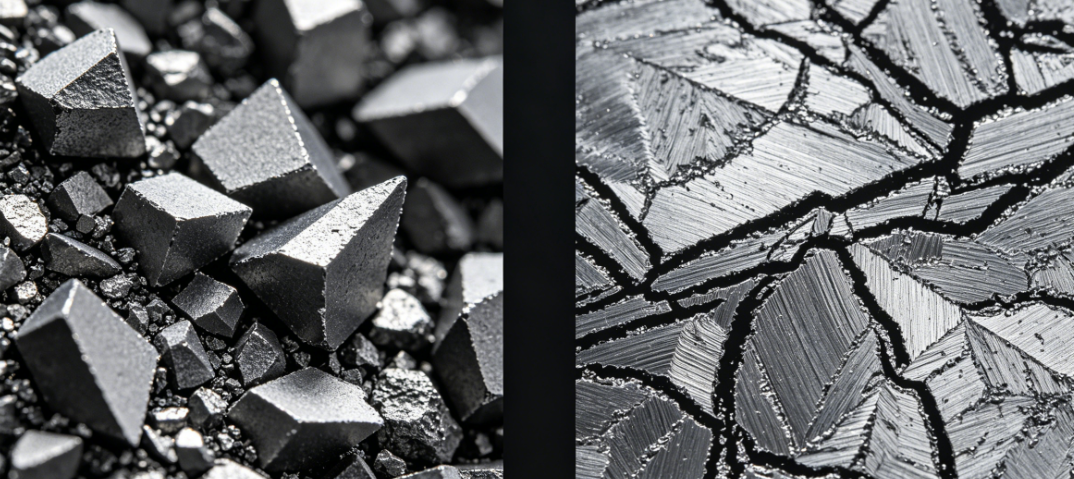
Carbide drill bits are engineered from tungsten carbide (WC) particles bonded with cobalt (Co) through a powder metallurgy process. This composition creates a tool with hardness approaching that of diamond, combined with sufficient strength to withstand high-speed machining forces.
Solid carbide bits consist of ultra-fine WC grains embedded in a cobalt matrix. By adjusting grain size (typically 0.2–5 µm) and cobalt content (3–12%), manufacturers tailor hardness and toughness to specific applications. Lower cobalt yields maximum wear resistance; higher cobalt adds impact strength for tougher materials.
Exceptional wear resistance: Carbide edges stay sharp far longer, even in abrasive materials like cast iron or carbon fiber composites.
High-speed cutting capability: You can run carbide drills at 3–5 times the speed of HSS, dramatically reducing cycle times.
Long tool life: In stainless steel, a solid carbide drill may produce 10–15 times more holes than an equivalent HSS bit.
Precision drilling: High rigidity and minimal deflection result in tighter hole tolerances and better surface finish.
Brittleness: Carbide can chip or fracture under excessive radial runout, vibration, or interrupted cuts.
Higher initial cost: The raw material and complex manufacturing process make carbide more expensive per piece.
Machine rigidity requirements: To unlock carbide’s full potential, you need a stable machine spindle with low runout and, ideally, through-coolant capability.
Looking for high-performance carbide drill bits for industrial machining? Jimmy Tool provides OEM carbide drilling solutions for stainless steel, hardened steel, and CNC applications.
In several demanding scenarios, carbide is not just an upgrade—it’s the practical necessity. The following applications call for carbide’s unique combination of hardness and heat resistance.
Carbide drill bits are recommended for stainless steel because they maintain hardness at high cutting temperatures. Stainless steel work-hardens rapidly; a dull HSS bit generates excessive heat that hardens the material further, trapping the drill and causing failure. Carbide’s sharp, heat-resistant edge cuts efficiently without creating this damaging cycle. For austenitic grades like 304 and 316, carbide with a TiAlN coating is the standard industrial choice.
Drilling hardened steel above 45 HRC is virtually impossible with HSS. The HSS edge would soften instantly. Solid carbide drills with a suitable hard-material geometry (such as a 135° split point and appropriate clearance) can handle steels up to 60 HRC in certain conditions, making them essential for mold and die repair or finished part modification.
In a CNC machining center, every second of cycle time counts. Carbide drills allow cutting speeds of 80–150 m/min in alloy steel, compared to 20–30 m/min for HSS. Coupled with 5–10 times longer tool life, this translates into fewer tool changes, less machine downtime, and a much lower cost per hole.
When you’re producing thousands of identical parts, consistency becomes critical. Carbide drills maintain hole diameter and surface finish over long batches, reducing scrap and inspection costs. The predictable tool life also allows for scheduled tool changes rather than reactive, failure-based replacement.
Need carbide drill bits for stainless steel or CNC machining? Contact Jimmy Tool for tooling recommendations and bulk order support.
Despite carbide’s performance advantages, HSS remains the logical choice in many practical situations where toughness, cost, and flexibility take priority.
In a hand-held drill, the rigidity and controlled feed required by carbide are almost impossible to achieve. HSS absorbs minor misalignments and vibration without chipping, making it safer and more forgiving for non-professional users.
Maintenance crews often encounter unknown materials, rusty bolts, or less-than-ideal working positions. An HSS bit can endure occasional abuse that would instantly destroy a carbide drill, and it can be re-sharpened on site with basic equipment.
When drilling aluminum, brass, wood, or plastics, the extreme hardness of carbide is unnecessary. HSS cuts these materials efficiently at a fraction of the cost. In fact, carbide’s brittleness can be a disadvantage in gummy materials where built-up edge increases cutting forces.
If you need a set of bits for occasional use across a range of sizes, a quality HSS set offers the best value. The lower upfront investment leaves budget for other tooling, and with proper care, HSS bits can last for years in light-duty applications.
Quantifying tool life helps move the discussion from perception to data. The table below presents realistic, test-based hole counts for an 8 mm drill in 12 mm thick plate under proper conditions—these values are indicative and may vary with exact parameters.
| Material | HSS Tool Life (Approx. Holes) | Carbide Tool Life (Approx. Holes) | Ratio |
|---|---|---|---|
| Mild Steel (1018) | 150 | 1,500 | 10× |
| Stainless Steel (304) | 35 | 450 | ~13× |
| Gray Cast Iron | 200 | 2,000 | 10× |
| Tool Steel (P20, 32 HRC) | 80 | 900 | 11× |
Wear resistance is the primary driver of these numbers. In mild steel, HSS wears gradually; in abrasive cast iron, it wears rapidly. Carbide’s near-diamond hardness resists abrasion much longer. However, what the numbers don’t show is cost per hole, which factors in tool price, regrinding, and machine downtime.
Replacement frequency directly affects production efficiency. A CNC cell drilling stainless steel with HSS might need a bit change every hour, while a carbide drill can run a full shift—or multiple shifts—before indexing. This reduced downtime often outweighs the higher tool cost.
Matching the drill bit to the material is the single most important decision in any drilling operation.
HSS is perfectly adequate for aluminum. However, polished flute carbide bits designed for aluminum can run at extreme speeds in CNC production, boosting throughput. Use a high helix angle and avoid built-up edge with proper coolant or mist.
As discussed, carbide is the definitive recommendation for production drilling in stainless steel. If you must use HSS, choose a cobalt-alloyed HSS (M35 or M42) with a split point and use low speeds with aggressive feed to stay under the work-hardened layer.
The abrasive nature of cast iron favors carbide, especially when drilling many holes. HSS dulls quickly, resulting in oversized, tapered holes. Solid carbide or carbide-tipped drills maintain hole quality over long runs.
Carbide is the only viable option. HSS cannot cut hardened steel above approximately 35 HRC without immediate failure. For steel in the 45–60 HRC range, solid carbide drills with special geometries and advanced coatings (such as AlTiN or TiSiN) are essential.
HSS is the standard choice. Carbide provides no meaningful benefit in these soft materials and is more likely to chip if a nail or hard inclusion is encountered.
👉 View Carbide Drill Bits
👉 Contact Engineering Support
The higher upfront price of carbide drill bits often raises the question: is the investment justified? The answer depends on how you measure cost.
If you drill ten holes in mild steel per week, a set of HSS bits is perfectly economical. The extra performance of carbide will never be recovered in such low-volume, intermittent use.
In any scenario where tool life is measured in shifts rather than weeks, carbide pays for itself. Consider a 10 mm stainless steel drilling job: an HSS bit costs 5anddrills35holesbeforefailing.Asolidcarbidebitcosts30 and drills 450 holes. Ignoring downtime, the HSS cost is 0.14perhole,whilethecarbideis0.07 per hole. Factor in 5 minutes per tool change, and the carbide advantage grows significantly.
In mass production, the true cost of a drill bit includes machine amortization, operator time, part inspection, and scrap risk. A worn HSS bit can produce out-of-tolerance holes, leading to costly rework. Carbide’s predictable wear patterns allow for preventive tool replacement and minimal disruption. Even if carbide were the same price as HSS, the process stability alone often justifies its use in CNC environments.
Many perceived carbide tool “failures” are actually application errors. Avoiding these mistakes will significantly improve your results.
Running too slow can cause built-up edge and chip jamming, while too fast can overheat the tool. Always follow the manufacturer’s cutting data for the specific material and coating. For TiAlN-coated solid carbide, speeds in alloy steel are typically 80–120 m/min.
Carbide generates heat at the cutting edge; efficient cooling is critical to prevent thermal cracking. Through-spindle coolant is ideal, but at minimum, direct external flood coolant aimed at the cutting zone is necessary. Interrupted or mist coolant can cause severe thermal shock.
Carbide needs a stable platform. Excessive spindle runout (more than 10 µm TIR) loads the cutting edges unevenly, causing micro-chipping and premature failure. Always check runout and use high-precision holders like hydraulic or shrink-fit chucks.
Carbide solid bits should never be used in hand-held drills. The inevitable wobble and sudden feed changes will fracture the bit. Reserve carbide for machine-based applications where controlled feed and speed are guaranteed.
These practices apply to both carbide and HSS bits, but are especially critical for protecting your carbide investment.
Generate the recommended chip thickness. Too thin a feed causes rubbing and work hardening; too heavy a feed can cause edge overload. Refer to the tooling manufacturer’s speed and feed charts and adjust for your machine’s capability.
Chips packing in the flutes create excessive torque and heat. Use peck drilling cycles, parabolic flute drills for deep holes, and high-pressure coolant to clear chips before they cause problems.
For carbide, coolant must be supplied consistently from the very start of the cut. In steel and stainless steel, a quality water-soluble coolant with proper concentration provides adequate lubrication and cooling. For some dry-machining coated carbides, compressed air may be used to evacuate chips.
Hardness doesn’t mean indestructible. Store carbide bits individually in plastic sleeves or holders to prevent edge-to-edge contact. Even light knocks between carbide tools can cause invisible micro-chipping that grows under cutting forces.
Jimmy Tool is an established provider of industrial-grade carbide and HSS cutting tools, supporting manufacturers and distributors worldwide with consistent quality and technical expertise.
Our solid carbide drills are manufactured on advanced 5-axis CNC grinders from premium sub-micron grain carbide, delivering tight tolerances and reliable tool life in demanding applications.
We collaborate with customers to develop custom geometries, specific carbide grades, and tailored coatings for unique production requirements. Our engineering team supports from design to volume delivery.
With deep experience in metal cutting, we help clients optimize their drilling processes—whether that means selecting the right point geometry for stainless steel or recommending feeds and speeds for titanium.
Jimmy Tool maintains a robust production capacity and quality management system, ensuring that every batch meets the same specification. This makes us a dependable partner for ongoing industrial procurement.
We serve aerospace, automotive, mold and die, and precision engineering companies in multiple regions, providing on-time delivery and responsive technical communication.
Looking for reliable carbide drill bit suppliers? Jimmy Tool provides industrial drilling solutions with OEM support and fast global delivery.
Are carbide drill bits better than HSS?
In terms of hardness, wear resistance, and high-speed performance, yes—carbide is superior. However, HSS is better in terms of toughness, impact absorption, and affordability. The “better” bit depends entirely on the application.
Do carbide drill bits last longer?
Yes. Under comparable conditions, carbide drill bits typically last 5 to 15 times longer than HSS, especially in hard or abrasive materials. This reduces tool change frequency and downtime.
Are HSS drill bits good for metal?
Absolutely. HSS is specifically designed for metal drilling. It works well in mild steel, aluminum, brass, and other non-hardened metals, especially in maintenance or low-volume work.
Which drill bits are best for stainless steel?
Solid carbide drill bits with a suitable coating (like TiAlN) are the best choice for stainless steel. They resist heat and wear, preventing work hardening and edge breakdown.
Can carbide drill bits be sharpened?
Yes, but only with diamond grinding wheels on specialized tool grinders. Standard bench grinders cannot effectively sharpen carbide and will likely cause micro-fractures. Many shops send dull carbide bits to professional regrinding services.
Why are carbide drill bits expensive?
The raw material (tungsten carbide powder), the energy-intensive sintering process, and the required diamond grinding equipment all contribute to the higher cost. In industrial use, the per-hole cost is often lower than HSS.
Are carbide drill bits brittle?
Yes, carbide is more brittle than HSS. It can chip or break under sudden impact, excessive runout, or improper feed. This is why rigid machine setups and correct parameters are essential.
Which drill bits are better for CNC machining?
Carbide drill bits are overwhelmingly preferred for CNC machining due to their high speed capability, long tool life, and consistent accuracy in automated, high-volume production.
👉 View Carbide Drill Bits
👉 Contact Engineering Support
person: Mr. Gong
Tel: +86 0769-82380083
Mobile phone:+86 15362883951
Email: info@jimmytool.com
Website: www.jimmytool.com


