

How Carbide Drill Bits Are Made: Materials, Sintering, Coatings & Industrial Applications
Date:2026-05-26Number:1470Carbide drill bits are the backbone of high-performance machining. When conventional high-speed steel (HSS) tools soften, wear rapidly, or fracture in tough materials, carbide steps in to drill hardened steel, titanium, composites, and ceramics with consistent precision.
This article takes you through the complete engineering journey—from the raw tungsten carbide powder to a finished, coated drill ready for CNC production. Along the way, we explain how material science, sintering technology, and surface engineering combine to deliver tool life that can be 10 times longer than HSS.
A carbide drill bit is a rotary cutting tool whose cutting portion is made primarily from tungsten carbide (WC). The “carbide” here refers to a compound of tungsten and carbon—formed not by melting, but by a carefully controlled powder metallurgy process that fuses microscopic grains into a body with near-diamond hardness.
Unlike HSS tools, which derive their properties from tempered steel microstructures, carbide tools derive their performance from:
Hardness and wear resistance that stay stable up to approximately 800°C;
High compressive strength, allowing them to withstand extreme cutting forces without deformation;
Dimensional stability that produces round, accurate holes even at high feed rates.
These qualities make carbide the default choice for modern CNC mass production where process reliability and hole quality are non-negotiable.
The performance of a carbide drill is determined at the raw material stage. The primary components are:
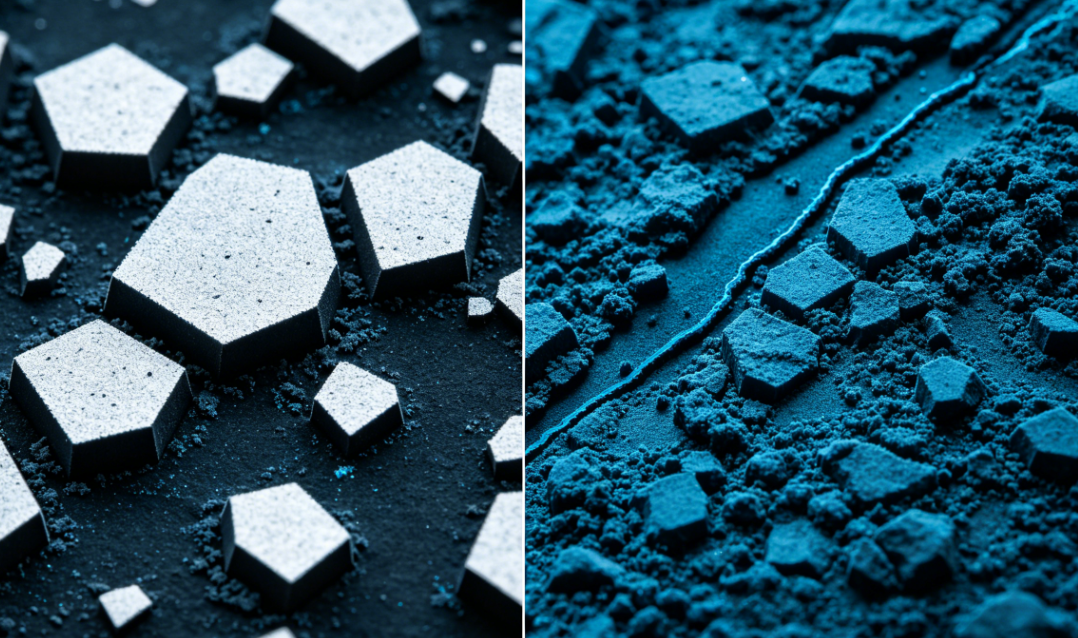
Tungsten Carbide (WC): Ultra-hard particles that provide cutting action and abrasion resistance. Typical grain sizes range from 0.2 µm (ultra-fine) to over 5 µm (coarse).
Cobalt (Co): A metallic binder that wets and holds the carbide grains together. Cobalt content typically varies from 3% to 12%.
Grain Growth Inhibitors: Small additions of vanadium carbide (VC) or chromium carbide (Cr₃C₂) that prevent excessive grain growth during sintering, keeping the microstructure fine and uniform.
The fundamental trade-off:
Lower cobalt (3–6%) + ultra-fine grains: Highest hardness and wear resistance, ideal for precision finishing and abrasive materials.
Higher cobalt (8–12%) + coarser grains: Greater fracture toughness and shock resistance, suited for interrupted cuts or less rigid setups.
This balance is why an aerospace-grade drill for titanium may have a different carbide grade than a drill for cast iron—even before coatings are applied.
Manufacturing a carbide drill is not a cutting or forming process in the traditional sense. It is a precision powder metallurgy workflow.
1. Powder Preparation & Weighing
Tungsten carbide powder, cobalt powder, and any grain control additives are precisely weighed according to the target grade recipe. Particle size distribution is tightly controlled—variation here will show up later as inconsistent tool life.
2. Ball Milling & Homogenization
The powders are mixed with a milling liquid (often ethanol) and cemented carbide balls in a ball mill for 12–24 hours. This step achieves a uniform distribution of cobalt around each WC particle. After milling, the slurry is spray-dried to produce free-flowing agglomerated powder ready for pressing.
3. Pressing (Green Compact Formation)
The powder is compacted under hydraulic or isostatic pressure—often exceeding 1,500 bar—to form the “green” body. At this stage, the shape roughly resembles the final drill blank, but it is only about 50–60% of the theoretical density and has very low strength.
4. Sintering (Liquid-Phase Sintering)
The green compacts are heated to approximately 1,380–1,450°C in a vacuum or protective atmosphere furnace. Cobalt melts, wets the WC grains, and capillary forces pull the structure together, causing massive densification. Linear shrinkage of 18–20% is common, and the final density reaches >99.5% of theoretical.
Precise control of time-temperature profiles prevents common defects such as eta-phase (carbon-deficient embrittlement) or abnormal grain growth. Some high-end tools undergo Hot Isostatic Pressing (HIP) after sintering to eliminate any residual micro-porosity, further boosting transverse rupture strength.
5. CNC Grinding & Tool Shaping
The sintered carbide blank is extremely hard (typically 1,300–1,800 HV). The only practical way to shape it is with diamond grinding wheels. High-precision 5-axis CNC grinders generate:
Helical flutes for chip evacuation;
The cutting edge and point geometry (e.g., 135° split point);
Corner radii and margins.
This step defines the tool’s final geometry, runout, and cutting performance. Grinding burn or micro-cracks can destroy a drill’s potential, so coolant, wheel dressing, and feed rates are carefully managed.
6. Quality Inspection & Sorting
Every drill is inspected for:
Diameter tolerance and roundness;
Cutting edge condition under magnification;
Concentricity (TIR) between shank and cutting diameter;
Surface finish and absence of grinding damage.
Only tools passing these strict criteria proceed to coating or packaging.
👉 View Carbide Drill Bits
👉 Contact Engineering Support
Solid Carbide Drills
Machined entirely from a single carbide blank. They offer the highest rigidity and accuracy, making them the standard for CNC precision drilling in hole diameters typically up to 25–30 mm. The trade-off is sensitivity to radial runout and sudden impact.
Carbide-Tipped Drills
A steel body holds a brazed carbide cutting insert or tip. This design combines the toughness of a steel shank with the wear resistance of carbide at the cutting zone. Cost-effective for larger diameters and general-purpose machining, but less precise than solid carbide in deep or high-speed applications.
Key Geometry Factors
118° point: Self-centering, good for softer steels and cast iron.
135° split point: Reduces thrust force and walking, essential for hardened or high-temperature alloys.
Deep hole parabolic flutes: Maximize chip evacuation space in deep drilling operations.
Choosing the wrong geometry for the material can lead to premature chipping or poor hole straightness, even with a high-quality carbide grade.
A coating is not just a color—it is a thermo-chemical barrier that separates the carbide substrate from the workpiece.
PVD (Physical Vapor Deposition) Coatings
TiN (Titanium Nitride): General-purpose, reduces built-up edge, effective up to approx. 600°C.
TiAlN (Titanium Aluminum Nitride): At cutting temperatures, the aluminum oxidizes to form a hard, protective Al₂O₃ layer on the tool surface. This makes TiAlN the workhorse for dry or high-speed drilling up to roughly 800–900°C.
CVD (Chemical Vapor Deposition) Coatings
Al₂O₃ (Aluminum Oxide): Chemically inert and highly resistant to crater wear, commonly used in high-volume cast iron drilling.
Diamond-like Carbon (DLC): Excellent for non-ferrous materials like aluminum alloys and composites, where abrasive wear and material adhesion are problematic.
Cryogenic Treatment
Deep cooling to temperatures around −185°C can transform retained austenite in the binder phase (if present) and relieve micro-stresses in the carbide grain structure, typically yielding a 5–10% improvement in wear life. It is a supplementary treatment, not a substitute for a proper grade and coating selection.
When integrated correctly into a machining process, solid carbide drills deliver:
10× tool life and more compared to HSS in abrasive materials;
Higher cutting speeds—commonly 60–150 m/min in steels where HSS would be limited to 20–30 m/min;
Tighter hole tolerances (IT8–IT9 achievable in a single pass);
Lower deflection due to high elastic modulus, improving positional accuracy.
In high-volume production lines, these advantages translate directly into fewer tool changes, less machine downtime, and lower cost-per-hole. The higher initial tool price is almost always offset by productivity gains.
Engineering-driven manufacturers like JimmyTool produce carbide drills on advanced CNC grinding platforms with strict process control, delivering consistent results from the first drill to the thousandth.
👉 View Carbide Drill Bits
👉 Contact Engineering Support
Carbide drill bits are essential wherever high-strength materials and high throughput converge:
Aerospace: Drilling nickel-based superalloys (Inconel), titanium structural parts, and CFRP/titanium stacks. Requires specialized edge geometry and through-coolant capability.
Automotive: Engine blocks, cylinder heads, brake discs—often in gray cast iron or compacted graphite iron where abrasive wear is dominant.
Mold & Die: Machining pre-hardened tool steels (P20, H13) up to HRC 48–50, where hole quality directly affects mold performance.
Medical Devices: Precision drilling of stainless steel, cobalt-chrome alloys, and Ti-6Al-4V for implants and surgical instruments.
Electronics: Micro-drilling of printed circuit boards (PCB) with micro-grain solid carbide drills down to 0.1 mm diameter.
Each application demands a specific combination of carbide grade, coating, and geometry—there is no one-size-fits-all solution.
| Feature | Carbide | HSS |
|---|---|---|
| Hardness (HV) | 1,300–1,800 | 700–900 |
| Max. Working Temp. | ~800°C | ~550°C |
| Typical Tool Life | 10× or more | Baseline |
| Toughness | Lower (brittle) | Higher |
| Cutting Speed Potential | 3–5× faster | Standard |
| Relative Cost | Higher initial | Lower |
The decision between carbide and HSS is ultimately an economic one: if the process demands high cutting speeds, long unmanned runs, or tight tolerances, carbide provides a superior return on investment.
Most carbide drill failures are not material defects—they are application errors. Follow these guidelines to extract maximum value:
Feed & Speed: Match cutting parameters to the material. For a typical medium-carbon steel with a coated solid carbide drill, cutting speeds of 80–120 m/min and feeds of 0.05–0.30 mm/rev (depending on diameter) are common starting points.
Coolant & Lubrication: Use high-pressure through-tool coolant whenever possible. It cools the cutting edge, evacuates chips, and prevents re-cutting—critical in deep holes.
Runout Control: Maintain total indicator runout (TIR) below 10 µm. Every 10 µm increase in runout can reduce tool life by 10–20% due to uneven edge loading.
Storage & Handling: Store drills in individual sleeves or holders to prevent edge-to-edge contact damage. Handle with care—carbide is hard but has low impact resistance.
Regrind Discipline: Establish a clear regrind policy. Dull or chipped edges should be reconditioned before they cause catastrophic failure that damages the tool body.
The carbide tool industry is moving toward smarter, more sustainable production:
Nano-Coating Architectures: Multilayer and nanostructured coatings (e.g., TiAlN/AlCrN nanolaminates) tailor hardness and oxidation resistance at the nanometer scale.
AI-Driven Tool Monitoring: Real-time spindle power and vibration analysis predict tool wear and automatically adjust parameters or trigger tool changes, reducing scrap.
Additive Manufacturing (3D Printing): Hybrid processes that print steel bodies with complex internal coolant channels, then braze carbide tips, enabling cooling designs impossible with conventional methods.
Micro-Grain & Binderless Carbide: Grades with grain sizes below 0.2 µm push hardness higher while maintaining acceptable toughness. Binderless WC composites open doors for ultrapure machining environments.
Circular Economy & Recycling: Cemented carbide is one of the most economically recyclable tool materials. Spent tools are chemically reclaimed, and the recovered tungsten and cobalt re-enter the powder stream, significantly lowering the carbon footprint.
JimmyTool supplies solid carbide and carbide-tipped drill bits engineered for CNC machining, metalworking, and precision manufacturing. We work with customers worldwide to provide:
OEM customization of grades, geometries, and coatings;
Application engineering support to optimize your drilling process;
Consistent quality through batch-level inspection and traceability.
Explore our carbide tooling portfolio and reach out to discuss your specific requirements.
person: Mr. Gong
Tel: +86 0769-82380083
Mobile phone:+86 15362883951
Email: info@jimmytool.com
Website: www.jimmytool.com


