

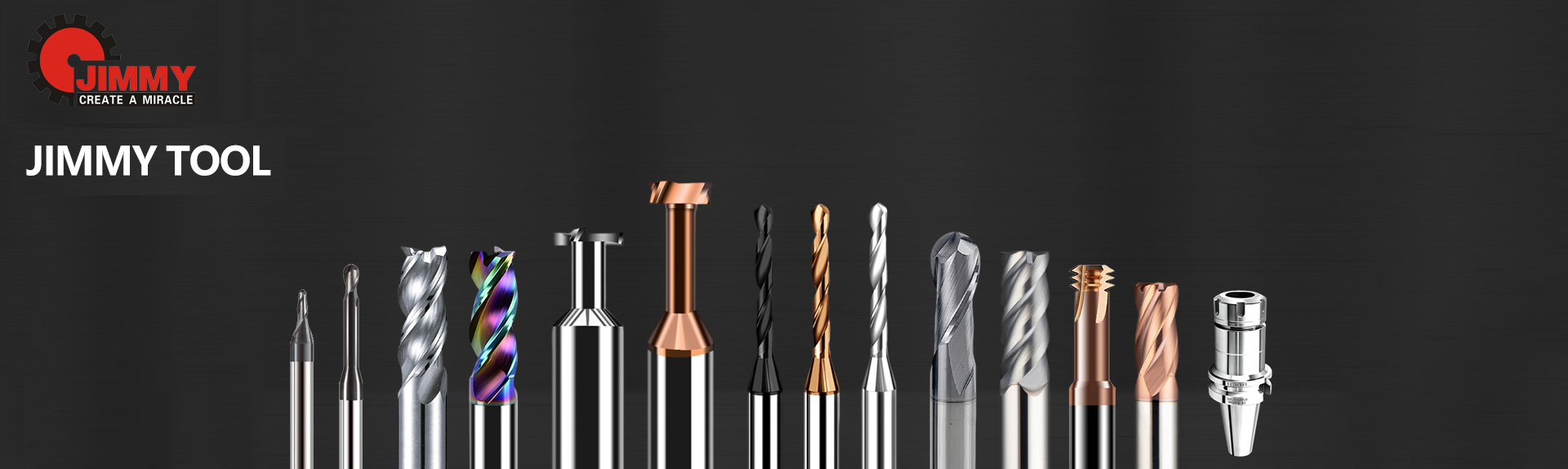
Carbide End Mills for Medical Device Machining | Titanium, 316L, Co-Cr Tools | Jimmy Tool
Date:2023-06-09Number:2154Titanium implants, 316L surgical instruments, cobalt-chrome orthopedic components, and PEEK spinal cages all require distinct cutting strategies, coatings, and tolerance control.
Jimmy Tool delivers:
| Specification | Value |
|---|---|
| Radius Tolerance | ±0.003 mm |
| Tool Runout | ±0.002 mm |
| Surface Finish | Ra 0.4 μm |
| Minimum Diameter | Ø0.5 mm |
| Material Lines | 4 |
| Experience | 15+ Years |
Insight: Medical machining tolerances are typically 3–10× tighter than standard industrial machining. Tool consistency is not optional—it is part of process validation.
Medical machining is material-driven, not component-driven.
| Material | Grade | Application | Tool Type | Coating | Target Ra | Constraint |
|---|---|---|---|---|---|---|
| Titanium | Ti-6Al-4V | Orthopedic implants | 4-flute + ball nose | AlTiN | ≤0.8 μm | Heat concentration |
| Stainless | 316L / 17-4PH | Surgical instruments | Variable helix 4-flute | TiSiN | ≤0.4 μm | Work hardening |
| Co-Cr | ASTM F75 | Joint implants | Ultrafine carbide | TiSiN | ≤0.8 μm | Tool wear |
| PEEK | Medical grade | Spinal cages | 2-flute sharp | DLC / none | ≤0.4 μm | Thermal damage |
| Titanium (Dental) | Grade 4 | Dental implants | Micro ball nose | AlTiN | ≤0.4 μm | Runout ≤0.002 |
| Aluminum / SS | 6061 / 304 | Equipment | 3–4 flute | DLC / TiAlN | ≤1.6 μm | Burr / BUE |
Core Rule: Surface finish = patient safety parameter, not aesthetic choice.
Use Case: Bone plates, screws, intramedullary nails
Challenges:
Recommended Setup:
Parameters:
Use Case: Forceps, scalpels, retractors
Challenges:
Solution:
Parameters:
Use Case: Hip & knee joints
Challenges:
Solution:
Parameters:
Use Case: Spinal cages
Challenges:
Solution:
Parameters:
Use Case: Implants, abutments
Challenges:
Solution:
Parameters:
Why Thread Milling (Not Tapping):
Parameters:
Tolerance: 6H
Core problem: heat concentration
Solution framework:
Target:
Core problem: burr formation
Solution:
Target:
| Application | Standard Tool | Jimmy Tool | Impact |
|---|---|---|---|
| Titanium implants | ±0.010 mm runout | ±0.003 mm | ↓ 40% scrap |
| 316L instruments | Standard flute | Variable helix | No burr rework |
| Co-Cr machining | Tool failure | 10–20× life | ↓ 65% cost |
| Dental micro | Unverified | ≤0.002 mm | Zero failure |
| Threading | Tap | Thread mill | No breakage |
Key Insight: In medical manufacturing, process stability > tool price.
| Criteria | Premium Brands | Jimmy Tool | Standard Suppliers |
|---|---|---|---|
| Ti tooling | ✓ | ✓ | Limited |
| Co-Cr tooling | ✓ | ✓ | No |
| Micro precision | ✓ | ✓ (verified) | Unstable |
| Traceability | ✓ | ✓ | None |
| Lead time | 3–6 weeks | 3–7 days | Fast |
| Price | High | 35–50% lower | Low |
Use AlTiN-coated arc angle end mills + high-pressure coolant.
Use variable helix tools + climb milling + ≤0.003 mm runout.
No chip jam + adjustable + safer than tapping.
No — requires ultrafine carbide + TiSiN coating.
Provide:
You’ll receive:
person: Mr. Gong
Tel: +86 0769-82380083
Mobile phone:+86 15362883951
Email: info@jimmytool.com
Website: www.jimmytool.com


