

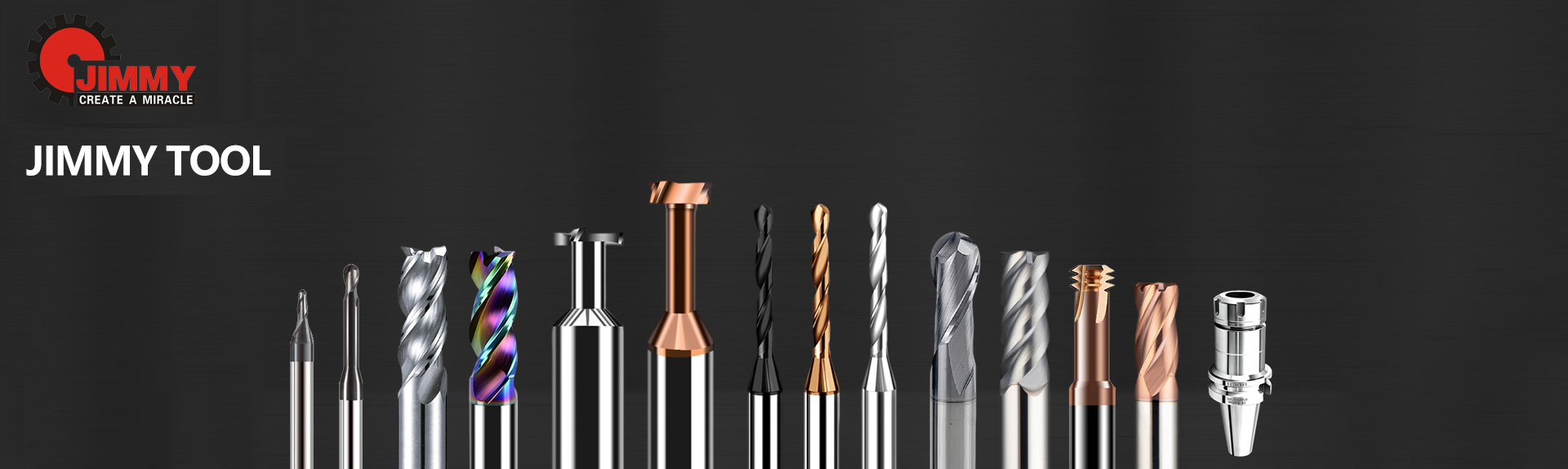
Dovetail Cutters with Special Angles for O-Ring Grooves | Hydraulic & Pneumatic Sealing Applications
Date:2026-06-05Number:614In hydraulic and pneumatic systems, sealing performance is not a secondary requirement—it is a core functional constraint. A small deviation in groove geometry can lead to leakage, pressure loss, or system failure. This is why dovetail cutters with special angles are widely used in precision machining of O-ring grooves.
A dovetail cutter is a form tool designed to machine undercut grooves with a specific angular profile. When applied to sealing applications, its role becomes highly critical: it directly determines how the O-ring compression, contact stress, and sealing integrity behave under pressure.
Standard cutters can handle general groove machining, but when sealing reliability and pressure stability are required, especially in hydraulic or pneumatic systems, custom angle dovetail cutters become essential.
At Jimmy Tool, we design and manufacture custom carbide dovetail cutters for sealing groove applications where standard tooling cannot meet engineering requirements.
A dovetail cutter is a milling tool with an angled cutting profile used to machine undercut or trapezoidal grooves. Unlike straight end mills, its geometry allows it to create interlocking or mechanically retained profiles.
In sealing systems, especially O-ring groove machining, the cutter angle directly influences:
A smaller angle increases retention but may over-compress the seal, while a larger angle reduces mechanical grip but may weaken sealing stability.
In other words, the dovetail angle is not just a geometric parameter—it is a functional sealing variable.
In industrial design, O-ring grooves are governed by strict dimensional and surface requirements. Common standards include ISO and SAE specifications such as ISO 3601.
Hydraulic systems operate under high pressure, often exceeding 100–400 bar. Groove design must ensure:
Typical groove types include:
Pneumatic systems operate at lower pressure but require higher sensitivity to leakage. Therefore:
These parameters directly influence tool selection and cutter geometry.
VIEW OUR PRODUCTS
Standard dovetail cutters are typically designed for structural machining, not sealing performance. When used for O-ring grooves, several issues can occur:
Standard angles (such as 45° or 60°) may not match engineering seal requirements. This leads to:
If the groove geometry does not properly support the elastomer, high-pressure fluid can force the O-ring into clearance gaps, causing extrusion failure.
Standard tools may not maintain tight tolerances across batch production, leading to:
For critical hydraulic components, these risks are unacceptable.
To solve sealing instability issues, custom dovetail cutters are engineered based on application-specific geometry.
Depending on sealing requirements, cutter angles can be designed as:
The angle directly defines how the groove supports the O-ring under pressure.
Precision groove machining requires:
Even minor deviation affects sealing reliability.
A sealing-grade dovetail cutter must balance:
Poor geometry design leads to chatter marks and dimensional instability.
Material choice directly affects tool life and stability.
Common options include:
Custom dovetail cutters are widely used in:
These applications require high-pressure sealing stability and repeatability.
In pneumatic assemblies, dovetail cutters are used for:
Leakage sensitivity is the primary concern.
Additional applications include:
These industries demand consistent groove geometry across mass production.
Tool performance depends heavily on carbide grade selection.
| Material | Recommended Carbide |
|---|---|
| Aluminum | Polished carbide |
| Carbon steel | Submicron carbide |
| Stainless steel | Coated fine-grain carbide |
| Hardened steel | Ultra-fine grain carbide |
Coating options:
Proper selection improves tool life and groove consistency.
VIEW OUR PRODUCTS
At Jimmy Tool, manufacturing follows a controlled engineering workflow:
Customer drawings (CAD/STEP/PDF) are analyzed for:
We define:
Based on application:
High-precision grinding ensures:
Coatings improve:
Inspection includes:
| Factor | Standard Cutter | Custom Cutter |
|---|---|---|
| Sealing accuracy | Medium | High |
| Leakage risk | Higher | Low |
| Tool life | Moderate | Long |
| Production stability | Variable | Consistent |
| Cost per part | Higher long-term | Optimized |
In sealing applications, tooling cost is minor compared to failure cost.
Jimmy Tool supports global OEM manufacturers with:
We specialize in non-standard dovetail cutters for industrial sealing systems.
A dovetail cutter is used to machine undercut or angled grooves, commonly for mechanical retention and sealing applications.
Yes, but only when properly designed. Standard cutters may not meet sealing tolerance requirements.
It depends on pressure and seal design, typically ranging from 30° to 60°, but must follow engineering specifications.
Common causes include incorrect groove geometry, poor surface finish, or improper O-ring compression.
Yes, custom cutters can be designed based on drawings and application requirements.
If you are designing hydraulic or pneumatic sealing systems and require non-standard groove geometry, Jimmy Tool can provide custom carbide dovetail cutters engineered for your exact application.
Simply send us your drawing, groove specification, or CAD file, and our engineering team will provide:
Precision sealing starts with precision tooling.
VIEW OUR PRODUCTS
person: Mr. Gong
Tel: +86 0769-82380083
Mobile phone:+86 15362883951
Email: info@jimmytool.com
Website: www.jimmytool.com


