

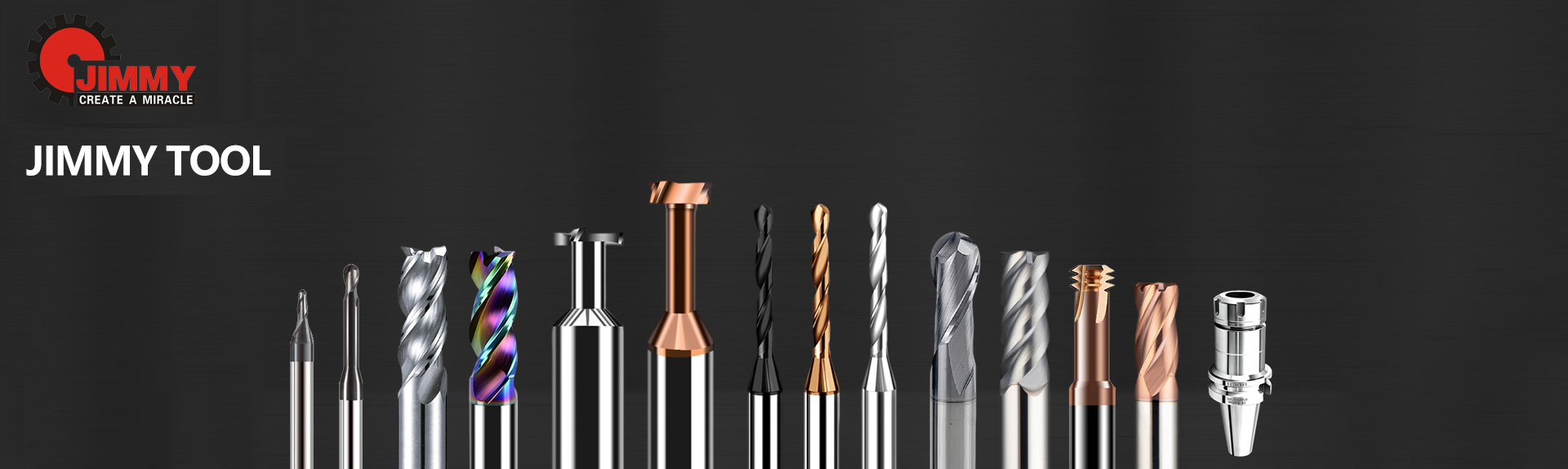
Custom T-Slot Cutters for DIN 508 & DIN 650 Standards: Achieving Precise Slot Widths
Date:2026-06-04Number:1294For machine tool builders, fixture manufacturers, and precision engineering companies, achieving the correct T-slot geometry is critical for clamping performance, positioning accuracy, and long-term reliability. While standard T-slot cutters are suitable for many applications, they often fail to meet the requirements of specialized fixtures, legacy equipment, or custom machine tables.
When slot widths fall outside standard dimensions or tighter tolerances are required, manufacturers increasingly rely on custom T-slot cutters designed specifically for their application.
Whether you're producing fixture plates, CNC machine tables, automation tooling, or aerospace workholding systems, selecting the right cutter geometry directly affects machining quality and assembly performance.
At Jimmy Tool, we design and manufacture custom carbide T-slot cutters for DIN-standard and non-standard applications, helping customers achieve precise slot dimensions, longer tool life, and consistent machining results.
Before designing a custom cutter, it is essential to understand the standards that define T-slot systems.
DIN 650 is the German industrial standard that specifies the dimensions of T-slots used on:
The standard defines critical dimensions such as:
These dimensions ensure compatibility between machine tables and clamping components.
While DIN 650 defines the slot itself, DIN 508 specifies the dimensions of T-slot nuts that fit inside those slots.
The standard controls:
Together, DIN 508 and DIN 650 create a standardized clamping system used throughout Europe and many international manufacturing facilities.
A T-slot is only effective if the corresponding T-slot nut fits correctly.
Even a small deviation in slot width can cause:
For high-precision fixture systems, slot width tolerances often need to be maintained within ±0.02 mm.
view our products
Designing a custom T-slot milling cutter starts with understanding the critical dimensions of the slot.
The neck width corresponds to the narrow opening at the top of the slot.
This dimension determines:
Insufficient clearance can lead to tool rubbing and poor surface finish.
The T-slot width is typically the most important dimension.
It controls:
Even minor deviations may affect fixture performance and assembly accuracy.
Slot depth influences cutter design parameters such as:
Deep T-slots often require specialized cutter geometries to maintain stability during machining.
Not all T-slots use the same corner profile.
Applications may require:
The cutter profile must match the final slot requirements.
Tolerance expectations vary significantly between industries.
| Application | Typical Tolerance |
|---|---|
| General Fixtures | ±0.05 mm |
| Production Tooling | ±0.03 mm |
| Precision Fixtures | ±0.02 mm |
| Aerospace Tooling | ±0.01 mm |
The tighter the tolerance, the more important cutter quality becomes.
Many manufacturers focus primarily on machining the slot itself. However, the actual goal is ensuring reliable system performance after assembly.
A slot that is too wide allows movement during clamping.
A slot that is too narrow prevents proper installation.
Both situations can compromise fixture performance.
Correct slot dimensions ensure that clamping forces are distributed evenly across the workholding system.
Improper slot geometry can create:
In automated production environments, fixture repeatability is critical.
Accurate slot dimensions help ensure:
Well-machined T-slots reduce wear on:
This lowers maintenance costs and extends equipment service life.
view our products
While standard cutters cover many applications, custom tooling becomes necessary in several common scenarios.
Many fixture manufacturers use proprietary slot dimensions such as:
These sizes often cannot be machined efficiently using standard tools.
Older European and Japanese machine tools frequently use discontinued slot dimensions.
Custom cutters allow manufacturers to restore equipment while maintaining original specifications.
Custom workholding systems often require:
A custom cutter can eliminate secondary machining operations.
High-value production tooling frequently demands:
Custom carbide cutters help achieve these requirements efficiently.
For large production runs, a dedicated cutter often reduces:
The resulting productivity gains can quickly offset tooling costs.
At Jimmy Tool, custom cutter development follows a structured engineering process.
We review:
This ensures all functional dimensions are understood before tool design begins.
Key design parameters include:
The geometry is optimized based on the slot design and workpiece material.
Material selection has a major impact on tool performance.
Typical applications include:
| Workpiece Material | Recommended Carbide |
|---|---|
| Carbon Steel | Submicron Carbide |
| Stainless Steel | Tough Submicron Grade |
| Cast Iron | Wear-Resistant Grade |
| Hardened Steel | Ultra-Fine Grain Carbide |
| Aluminum | High-Polish Carbide |
Internal Link Suggestion:
Anchor Text:
Carbide Grade Selection Guide: Submicron vs Ultra-Fine Grain Carbide
Different coatings improve performance in different materials.
Best for:
Recommended for:
Ideal for:
Before production, we verify:
This reduces development risk and improves first-run success.
Choosing the right substrate is just as important as choosing the correct geometry.
| Feature | Carbide T-Slot Cutter | HSS T-Slot Cutter |
|---|---|---|
| Tool Life | Excellent | Moderate |
| Wear Resistance | Excellent | Fair |
| Cutting Speed | High | Low |
| Heat Resistance | High | Moderate |
| Surface Finish | Excellent | Good |
| Cost Per Part | Lower | Higher |
Although carbide tools cost more initially, they typically provide a significantly lower machining cost per slot in production environments.
Manufacturing or repairing machine tables according to DIN 650 specifications.
Precision fixture systems require highly consistent slot dimensions.
Robotic production systems depend on accurate workholding and repeatable positioning.
Custom slots are frequently used in mold manufacturing for locating and clamping components.
Aircraft fixtures often require extremely tight dimensional control and specialized slot profiles.
Jimmy Tool supports OEM customers worldwide with engineered custom T-slot cutter solutions.
We manufacture:
Our tooling utilizes premium carbide grades selected according to application requirements.
Benefits include:
High-precision CNC grinding ensures:
Each production batch can be inspected for:
Inspection reports are available upon request.
We regularly support:
with both prototype and high-volume production requirements.
Whether you need a non-standard slot width, a special profile, or a high-performance carbide T-slot cutter for production machining, Jimmy Tool can provide a solution tailored to your exact requirements.
Simply send us:
Our engineering team will review your project and provide tooling recommendations along with a quotation.
view our products
DIN 650 defines T-slot dimensions, while DIN 508 defines the T-slot nuts designed to fit those slots.
Yes. Jimmy Tool designs and manufactures custom T-slot cutters based on customer drawings or specifications.
Depending on the application, custom cutters can be manufactured to support slot tolerances as tight as ±0.01 mm.
For most CNC machining applications, carbide cutters provide longer tool life, higher cutting speeds, and lower overall production costs.
Providing slot dimensions, workpiece material, machine type, and production volume helps us recommend the most suitable cutter design.
Yes. Popular coating options include AlTiN, TiSiN, and DLC, depending on the material being machined.
Generally no. T-slot cutters are designed for specific slot dimensions to ensure accuracy and proper fit.
Common industries include machine tool manufacturing, aerospace, automotive tooling, mold making, automation equipment, and fixture production.
person: Mr. Gong
Tel: +86 0769-82380083
Mobile phone:+86 15362883951
Email: info@jimmytool.com
Website: www.jimmytool.com


