

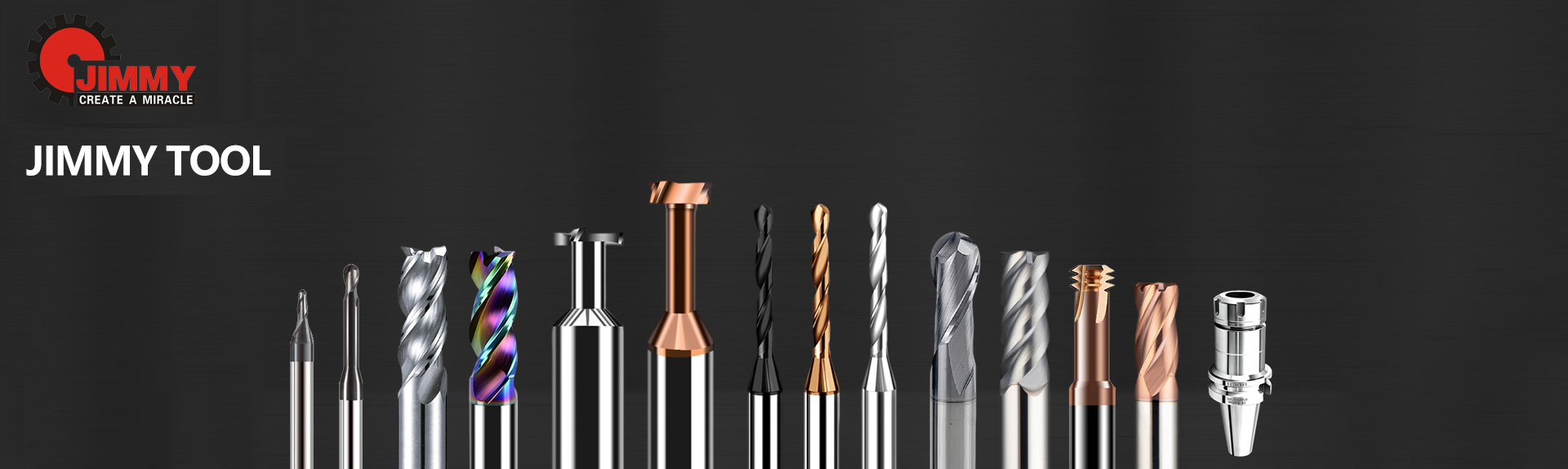

Aerospace Carbide End Mills for Titanium, Inconel & Aluminum Machining
When it comes to aerospace machining, the margin for error is zero. Whether you're cutting Ti6Al4V titanium brackets, Inconel 718 turbine components, or 7075 aluminum structural frames, the aerospace carbide end mill you choose directly determines surface integrity, dimensional accuracy, and ultimately — flight safety. Jimmy Tool has specialized in aerospace-grade milling solutions since 2016, delivering carbide end mills with radius tolerance controlled within ±0.003mm and runout verified to ±0.002mm across every batch.
This page covers the exact tool recommendations, coating selections, and machining parameters for the three most common aerospace alloys. You'll also find a quick-select comparison table and a clear cost-per-part decision framework — so you can choose the right tool the first time.
Request a Free Tool Recommendation
Aerospace Material × Tool Type: Quick Comparison
Not all aerospace alloys machine the same way. The table below maps the most common aerospace materials to their recommended end mill type, coating, and expected surface finish — so you don't have to cross-reference six spec sheets before making a call.
| Aerospace Material | Hardness (HRC) | Recommended Tool | Coating | Surface Finish (Ra) | Key Challenge |
|---|---|---|---|---|---|
| Ti6Al4V Titanium | 36–38 | Arc angle end mill / 4-flute ball nose | AlTiN | Ra 0.8 μm | Low thermal conductivity → heat concentration |
| Inconel 718 | 40–44 | 4-flute flat end mill / CBN inserts | TiSiN | Ra 1.6 μm | Work hardening + rapid tool wear |
| 7075-T6 Aluminum | — | PCD milling cutter / 3-flute end mill | Uncoated or DLC | Ra 0.4 μm | BUE (built-up edge) at high speed |
| 15-5PH Stainless | 33–38 | Variable-helix 4-flute end mill | AlTiN / TiAlN | Ra 1.6 μm | Chipping on interrupted cuts |
| Maraging Steel | 50–54 | Tapered ball nose / CBN grade | TiSiN multi-layer | Ra 0.8 μm | High hardness + stress fracture risk |
Machining Ti6Al4V Titanium — Aerospace Structural Components
Ti6Al4V is the workhorse of aerospace structures — landing gear brackets, airframe frames, engine pylons. It's strong, lightweight, and corrosion-resistant. It's also one of the hardest materials to machine efficiently because its thermal conductivity is only 6.7 W/m·K — roughly 10 times lower than steel. That heat has nowhere to go except straight into your cutting edge.
Arc Angle End Mill with AlTiN Coating
The corner-radius (arc angle) geometry distributes cutting forces over a larger edge area, reducing stress concentration that causes micro-chipping in titanium's work-hardened surface layer. Use a 4-flute design with helix angle between 35°–45° for the best balance of chip evacuation and cutting stability.
Set your axial depth of cut (Ap) to 1×D or less. Keep radial engagement below 15% of diameter for trochoidal paths — this dramatically reduces heat buildup at the cutting edge. Spindle speeds in the range of 50–120 m/min cutting velocity are the established safe zone for Ti6Al4V. Push above 150 m/min without adequate coolant, and tool life collapses within a single pass.
Run high-pressure coolant (at minimum 70 bar) directed at the flute root, not just flood coolant from above. Internal coolant-through toolholders (HSK or BT precision holders) deliver coolant exactly where chip welding starts.
Jimmy Tool's arc angle series for titanium is manufactured from ultra-fine grain carbide substrate (grain size 0.3–0.5μm) with a dual-layer AlTiN PVD coating applied at 400–500°C. This keeps the coating stress-free while delivering oxidation resistance up to 900°C at the cutting interface — critical when you can't dump the heat into the workpiece.
Machining Inconel 718 — Turbine Discs, Combustion Rings & Engine Shafts
Inconel 718 is where cutting tools go to die if the wrong grade is selected. The material work-hardens rapidly — the instant you slow down a pass mid-cut, the surface you're about to re-enter is harder than when you started. It also has high tensile strength at elevated temperatures (above 650°C), meaning it doesn't soften the way steels do when heat builds up.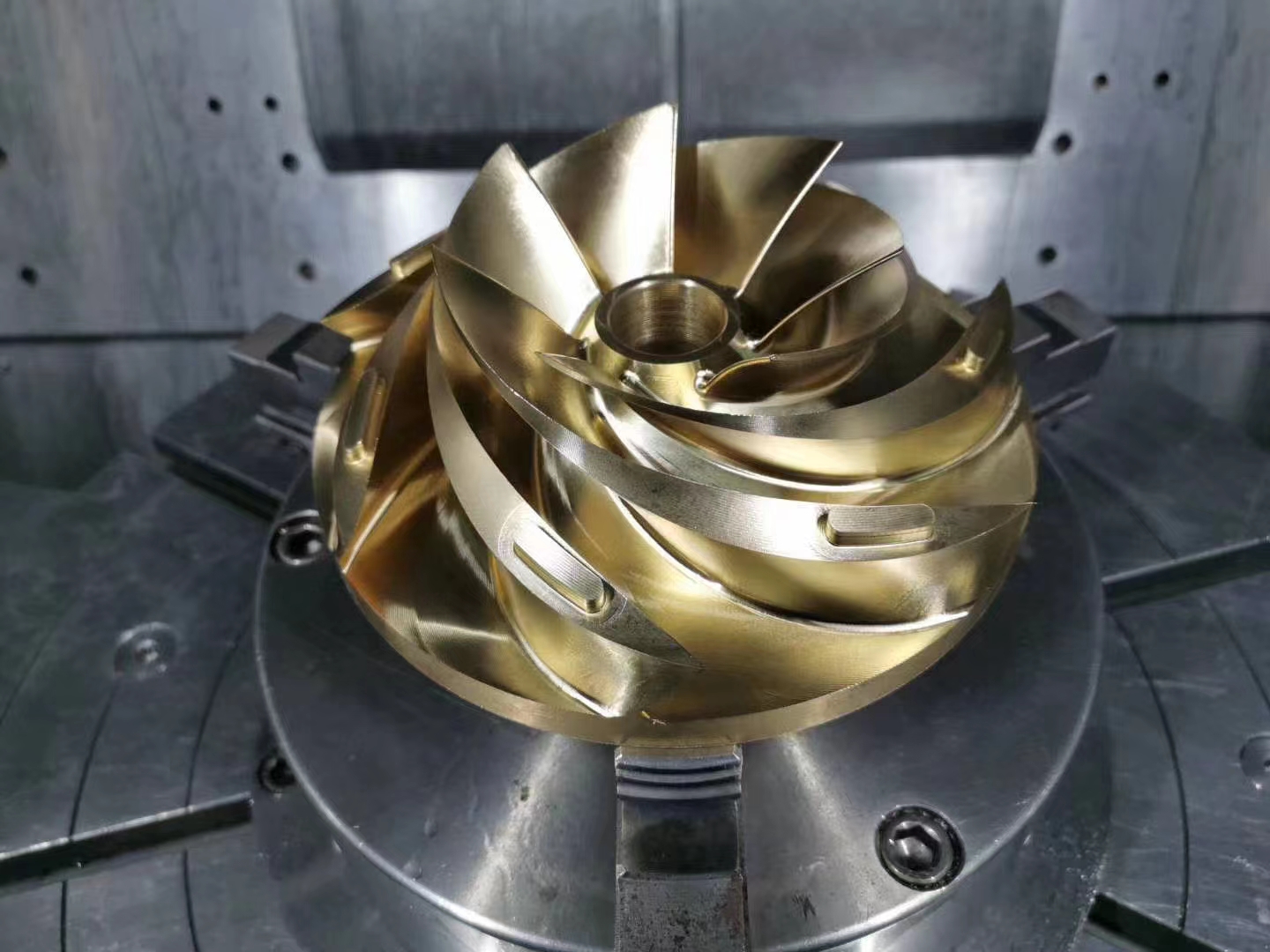
4-Flute Solid Carbide End Mill with TiSiN Coating + Aggressive Chip Control Geometry
TiSiN coating provides hardness above 3,500 HV — significantly harder than standard AlTiN — and remains stable at cutting temperatures exceeding 1,000°C. This directly addresses Inconel's tendency to generate sustained high cutting temperatures in the chip formation zone.
For roughing Inconel 718, use a high-feed milling strategy: shallow axial depth (Ap ≤ 0.3×D) but aggressive feed per tooth (fz = 0.04–0.08mm). This concentrates cutting forces radially rather than axially, reducing the chance of deflection-induced chipping. For finish passes, switch to a fine-pitch variable-helix end mill to suppress chatter, targeting Ra 1.6 μm or better.
Avoid stopping the spindle mid-cut under any circumstances. Program a retract path that lifts the cutter clear before any dwell or feed hold. Inconel's work-hardening activates faster than most machinists expect.
Machining Aerospace Aluminum — 7075-T6 & Al-Li Structural Panels
Aerospace aluminum — particularly 7075-T6 and the newer Al-Li alloys — looks like an easy win compared to titanium. In practice, the challenge flips: the issue isn't heat, it's built-up edge (BUE). At high spindle speeds, aluminum galls onto the cutting edge, degrading surface finish from Ra 0.4 μm to Ra 1.6 μm mid-batch without any obvious sign of wear.
RECOMMENDED TOOLING // 7075-T6 / Al-Li Alloy
PCD Milling Cutter or Uncoated 3-Flute Carbide End Mill
PCD (polycrystalline diamond) cutters are the premium solution for high-volume aerospace aluminum machining. Their near-zero friction coefficient with aluminum virtually eliminates BUE at cutting speeds up to 1,500–3,000 m/min. For thin-wall panel machining where vibration is a concern, a 3-flute solid carbide end mill with a high positive rake angle (12°–15°) and mirror-polished flutes provides exceptional chip evacuation without PCD's tooling cost.
Run climb milling paths exclusively — conventional milling on 7075-T6 at high spindle speeds accelerates flute wear and leaves a torn surface that fails Ra requirements. Target chip load between 0.05–0.12mm per tooth for 3-flute tools. Add a mist coolant or air blast — flood coolant on aluminum often re-deposits chips into the cut zone.
Request a Free Tool Recommendation
Aerospace Tool Selection: Cost & Decision Logic
Buying the cheapest aerospace milling tool is never actually cheap. The real calculation is cost per part — not cost per tool. A carbide end mill that lasts 40 parts at $28 beats a $12 tool that fails after 12 parts every time.
| Factor | Standard Grade Tool | Jimmy Aerospace Grade | Impact |
|---|---|---|---|
| Radius tolerance | ±0.008–0.012mm | ±0.003–0.005mm | Direct dimensional accuracy of finish pass |
| Runout (toolholder) | ±0.008mm | ±0.002–0.005mm | Chatter suppression, surface finish stability |
| Substrate grain size | 0.8–1.2 μm | 0.3–0.5 μm (ultra-fine) | Edge sharpness retention in HRSA |
| Coating hardness | 2,200–2,800 HV (TiN) | 3,200–3,500 HV (TiSiN/AlTiN) | Tool life in titanium & Inconel |
| Batch consistency | Variable lot-to-lot | Verified batch-to-batch | Predictable tool change intervals in production |
For aerospace OEM or Tier-1 contract manufacturers running validated machining processes, unpredictable tool life is the costliest variable. A single out-of-spec part in flight-critical components means scrapping the part, re-qualifying the process, and potentially triggering a customer audit. Consistency matters more than peak performance.
When comparing tool suppliers, ask three questions: What is the lot-to-lot radius variance? Can you provide substrate hardness test data per batch? Do your HSK toolholders meet G2.5 balance grade at 25,000 RPM? If a supplier can't answer all three, production risk is on you.
Aerospace Machining Capability — Jimmy Tool Credentials
Jimmy Tool entered the aerospace tooling market in 2016 after five years supplying precision carbide tools to automotive and mold manufacturing customers. The transition required re-engineering substrate specification, tightening coating process windows, and introducing dedicated inspection protocols for radius tolerance and runout verification.
Current manufacturing capabilities include: solid carbide end mills from Ø0.5mm to Ø25mm, custom helix angle specification, 5-axis CNC grinding on Walter Helitronic platforms, and full traceability from raw material lot to finished tool batch. Radius tolerance is verified on every tool using Zoller presetter systems. Runout of toolholder bodies is confirmed within ±0.002–0.005mm using master arbor testing.
Aerospace Milling FAQ
What is the best carbide end mill for machining titanium alloy aerospace parts?
For Ti6Al4V — the most common aerospace titanium grade — use a 4-flute arc angle (corner radius) carbide end mill with AlTiN PVD coating. Set cutting speed at 60–100 m/min, use trochoidal milling paths with radial engagement ≤15% of diameter, and run high-pressure through-coolant at 70+ bar. Ultra-fine grain carbide substrate (grain size ≤0.5 μm) is the single biggest factor in edge retention when machining titanium.
How do I prevent tool chipping when milling Inconel 718?
Three causes drive Inconel chipping: thermal shock from interrupted cuts, work hardening from dwelling mid-pass, and insufficient coating hardness. Fix thermal shock by using TiSiN-coated tools with ≥3,000 HV hardness. Eliminate mid-cut dwell by programming clean retract paths before any feed hold. Use high-feed milling strategies (Ap ≤ 0.3×D, aggressive fz) to keep the cutting edge in motion and avoid the work-hardened zone.
Is PCD milling worth it for aerospace aluminum over carbide?
For high-volume production runs on 7075-T6 (500+ parts per year), PCD pays off clearly: cutting speeds 5–10× higher than carbide, near-zero BUE, and tool life measured in thousands of parts vs. hundreds. For lower volumes or prototype work, a polished 3-flute carbide end mill with DLC coating delivers comparable surface finish (Ra ≤ 0.4 μm) at a fraction of the PCD cost.
What toolholder should I pair with aerospace end mills?
Pair precision carbide end mills with HSK-A63 or BT30/BT40 shrink-fit or high-precision collet holders, not standard ER collet chucks. For spindle speeds above 12,000 RPM, confirm the holder is balanced to G2.5 at 25,000 RPM. Runout at the tool tip should be verified below 0.003mm for finishing passes in flight-critical components. Toolholder runout is frequently the hidden variable that explains inconsistent surface finish results when the tool grade hasn't changed.
Get Your Aerospace Machining Solution
Tell us your material, part geometry, and tolerance requirements. We'll recommend the right carbide end mill, coating, and toolholder combination — with data.
Request a Free Tool Recommendation


